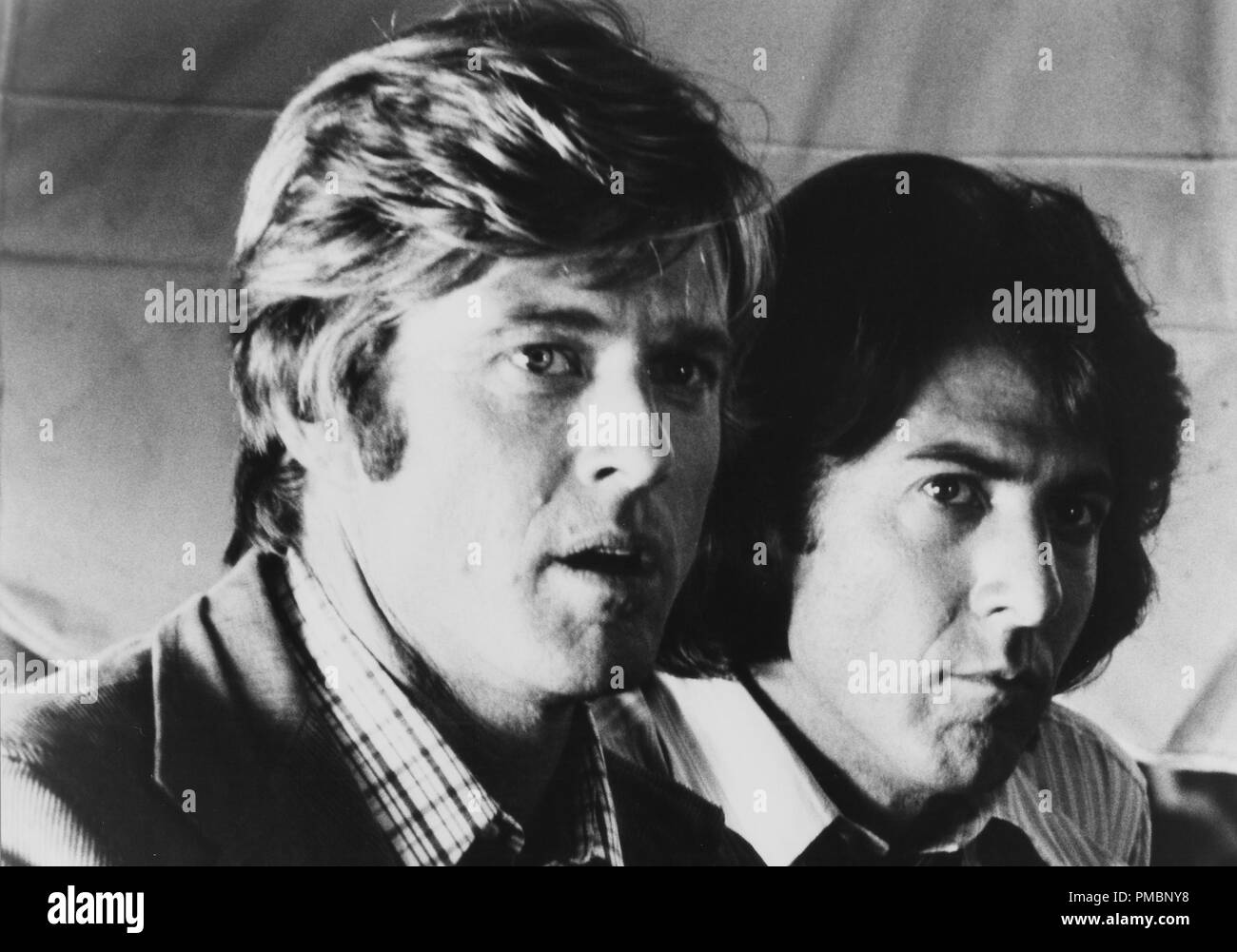
If you’ve ever sat through a modern political thriller and felt like something was missing—maybe the grit, the cigarette smoke, or just the sheer, exhausting tension of people actually working for a living—it’s probably because you’re comparing it to the gold standard. I’m talking about All the President’s Men. Honestly, it is the definitive dustin hoffman robert redford movie.
Released in 1976, this film didn't just tell a story about a break-in. It basically reshaped how we look at the government. It made nerds with typewriters look like action heroes. It’s been decades, but the movie’s shadow is so long it still covers every "gate" scandal that pops up in the news today.
Why This Specific Pairing Worked
You’ve got Robert Redford playing Bob Woodward and Dustin Hoffman as Carl Bernstein. On paper, it’s a bit of a weird match. Redford was the golden boy, the ultimate movie star. Hoffman was the method guy, the character actor who’d just come off The Graduate and Midnight Cowboy.
Warner Bros. actually forced Redford to star in it. He wanted to produce it as a small, black-and-white indie-style flick. The studio basically said, "No Redford, no money." So he stepped in. Then they realized they needed someone just as big to play Bernstein so it didn’t look like the Woodward show.
The chemistry is kind of legendary because they weren't trying to be buddies. They were trying to be reporters. In the film, Woodward is the polished, slightly stiff Republican, while Bernstein is the messy, caffeine-fueled guy who’ll trick a secretary into giving up a lead. They’re a classic "odd couple," but with higher stakes than a sitcom.
The Obsessive Realism of the Set
Here’s a fun fact most people miss: they couldn't film in the actual Washington Post newsroom. The staff there was getting too distracted by the Hollywood circus. People were giggling and doing their makeup instead of writing.
So, what did the production do? They spent nearly $500,000—which was a massive chunk of their $8.5 million budget—to recreate the newsroom in California. They didn't just build a set; they moved trash. They literally hauled boxes of actual garbage and old newspapers from the real DC office to the Burbank studio just to get the "vibe" right.
They also bought 167 desks from the same company that supplied the Post. They even got the same paint color. If you look at the background of the dustin hoffman robert redford movie, every single desk has a different "personality." It feels lived-in because it basically was.
The Most Famous Line That Never Happened
We all know the phrase: "Follow the money."
It’s the most iconic piece of advice in the history of investigative journalism. Everyone thinks Mark Felt (the real "Deep Throat") said it. But he didn't. Screenwriter William Goldman actually made it up. It’s not in the book. It’s not in the original reporting. It’s just a great piece of writing that became a cultural fact.
The Struggle of the "Boring" Scenes
A lot of movies would have added a car chase or a gunfight to spice things up. This movie does the opposite.
One of the best shots is a long, slow zoom-out in the Library of Congress. Woodward and Bernstein are going through hundreds of tiny little cards. The camera moves all the way to the top of the dome, making them look like ants. It’s a visual way of saying, "They are looking for a needle in a haystack, and the haystack is the size of a city."
It’s tedious. It’s slow. And yet, it’s incredibly tense. You’re watching two guys use a phone book and a landline to bring down a presidency. No internet. No Google. Just blistered feet and a lot of dimes for payphones.
Is It Actually Accurate?
Mostly, yeah. It covers roughly the first seven months of the investigation. It ends before Nixon actually resigns, which is a bold choice for a movie. It stops when the reporters realize the conspiracy goes all the way to the top, but before the final hammer falls.
Some stuff was tweaked for drama, obviously. In the movie, Woodward catches Bernstein rewriting his copy, and they have this prickly moment where Woodward realizes Bernstein is actually a better writer. In real life, they were a bit more professional, but the "forced partnership" makes for better cinema.
Key Players in the Production
- Director: Alan J. Pakula (the master of paranoia)
- Cinematographer: Gordon Willis (known as the "Prince of Darkness")
- Screenplay: William Goldman (who won an Oscar for this)
- Support: Jason Robards as Ben Bradlee (he won an Oscar too)
Actionable Insights: Why You Should Watch It Now
If you haven't seen it, or if it's been years, you're missing out on a masterclass in pacing. Here’s how to get the most out of your next viewing:
- Watch the lighting: Gordon Willis used harsh fluorescent lights for the newsroom and pitch-black shadows for the garage meetings. It’s a literal battle between light (truth) and dark (corruption).
- Listen to the background: The sound of typewriters in the newsroom was recorded to sound like machine-gun fire. It’s a war of words.
- Notice the "Long Takes": There are scenes where the camera just sits on Dustin Hoffman while he’s on the phone for five minutes. It forces you to pay attention to the dialogue.
The legacy of this dustin hoffman robert redford movie isn't just that it’s a "classic." It’s that it actually inspired a whole generation of people to become journalists. It proved that if you’re stubborn enough and you check your sources twice, you can actually change the world.
To really appreciate the craft, look for the 4K restoration. The detail on the newsroom desks—down to the specific coffee stains—is wild when you see it in high definition. If you're into political history, pair the movie with the 2017 documentary The Vietnam War to see the exact social climate that allowed the Watergate scandal to happen in the first place.