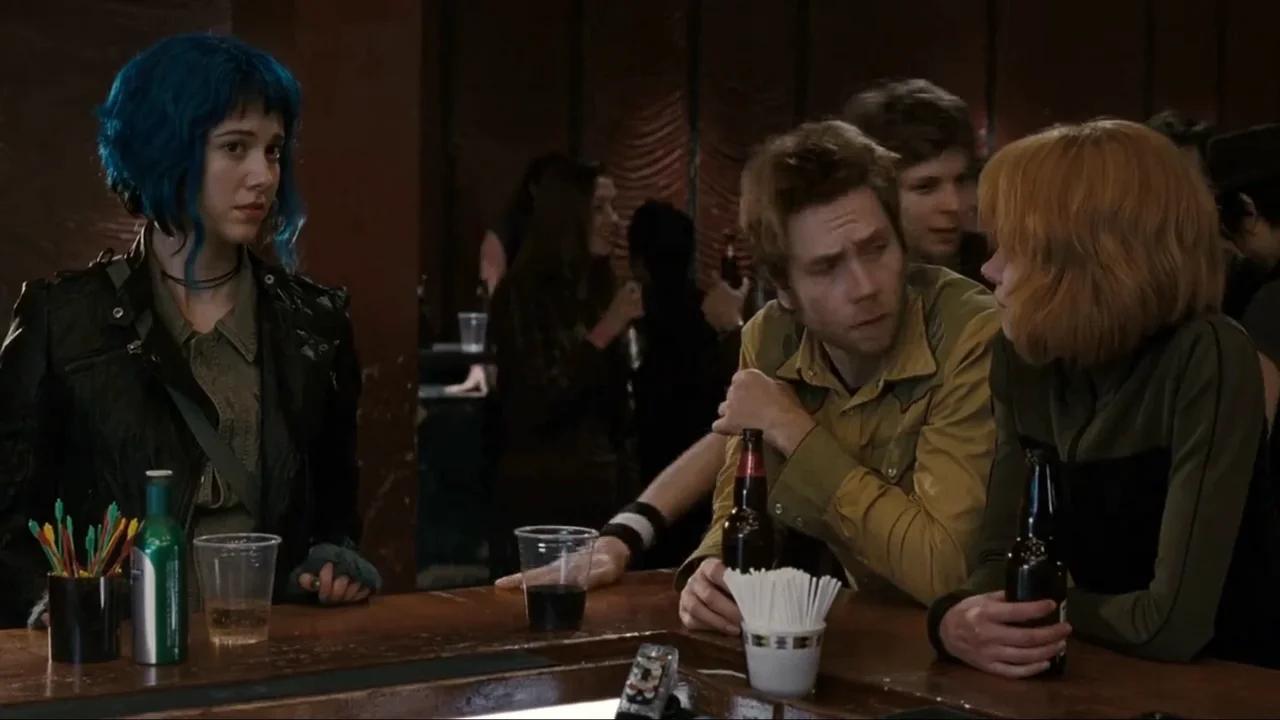
You remember the red heels.
Brie Larson, long before she was Captain Marvel or winning an Oscar for Room, stepped onto a stage in a blonde wig as Envy Adams. She grabbed the mic, the bass kicked in, and she delivered a vocal performance that launched a thousand "is this on Spotify?" searches. The song was "Black Sheep," originally by the Canadian indie-rock powerhouse Metric.
But there’s a weird glitch in the matrix here. For over a decade, if you bought the Scott Pilgrim vs. The World soundtrack, you didn't hear Brie. You heard Emily Haines, the lead singer of Metric. The black sheep metric brie larson connection became a sort of urban legend in the music world—a track everyone knew existed but no one could officially own.
The Mystery of the Missing Vocal
Honestly, it’s kinda wild how long it took for this to become official. Metric wrote the song in 2007. It was actually meant for their album Fantasies, but they cut it. They didn't feel like it fit. When Edgar Wright was casting for the movie, he realized the character of Envy Adams was basically a mirror of Emily Haines.
Naturally, he asked the band for a song. They gave him "Black Sheep."
Larson didn't just lip-sync. She went into the studio and recorded her own version. It’s crunchier than the original. There’s a specific growl in her voice when she hits the line "hello again, friend of a friend," that feels more like a threat than a greeting. Fans obsessed over it. For years, the only way to hear it was to rip the audio from a grainy YouTube clip of the movie scene.
- Metric's version: Polished, synth-heavy, very "indie-cool."
- Brie's version: Gritty, aggressive, perfectly "villainous."
Why the Black Sheep Metric Brie Larson Track Took 10 Years
People used to ask Edgar Wright about this constantly. Why wasn't it on the album?
The answer is basically "label politics" and a respect for the original artist. Metric wanted their version to be the definitive one on the soundtrack. It makes sense from a business perspective, but it ignored the sheer cult energy of the film performance.
It wasn’t until 2021—eleven years after the movie flopped and then became a massive cult hit—that the black sheep metric brie larson version finally hit streaming services. It was released as part of the expanded 10th-anniversary soundtrack.
The impact was immediate.
On YouTube alone, the "Brie Larson Vocal Version" has racked up over 60 million views. That’s more than some of the band's original music videos. It’s a rare case where a cover from a movie isn't just a gimmick; it’s actually seen by many as the "correct" version of the song.
Breaking Down the Performance
If you look at the technical side, Larson’s range is surprisingly suited for rock. Most people forget she actually had a brief career as a teen pop star in the early 2000s (check out "Finally Out of P.E." if you want a real trip).
In "Black Sheep," she uses a lower register than Emily Haines.
It changes the whole vibe. While Haines sounds like she’s watching the world end from a distance, Larson sounds like she’s the one who started the fire. That "mechanical bull" metaphor in the lyrics? It hits different when it’s sung by a character who is actively breaking the protagonist's heart.
The Cultural Longevity of a "Flop"
Scott Pilgrim vs. The World was a box office disaster. It made about $49 million against an $85 million budget. By Hollywood standards, that’s a nightmare.
Yet, here we are in 2026, and the music is still everywhere.
The black sheep metric brie larson phenomenon is proof that "Metric" isn't just a band name anymore; it’s a standard for how to integrate music into film. The song has become a staple of "villain era" playlists on TikTok. It’s the go-to track for anyone wanting to feel like they’ve got "balls of steel" and a "minimum wage" automobile.
What’s even more interesting is how Brie Larson herself embraced it. In 2020, while everyone was stuck inside, she posted a video of herself playing the song on an acoustic guitar. She was wearing a sweater with—you guessed it—a black sheep on it.
Actionable Insights for Fans and Creators
If you're looking to dive deeper into this specific corner of music history, here is how to actually find the best versions:
- Check the "Expanded Edition": Make sure you are listening to the 2021 digital release, not the original 2010 soundtrack, or you’ll get the (still great) Emily Haines version.
- Watch the Blu-ray Extras: There is a full-length music video of Brie Larson performing the song in character that includes footage not seen in the movie.
- Listen to the Demo: The expanded soundtrack also features the original Metric demo, which sounds even more lo-fi and raw.
The legacy of the black sheep metric brie larson collaboration is that it bridged the gap between "movie music" and "real music." It didn't matter that Envy Adams was a fictional character. The talent was real. The song was a banger. And sometimes, it just takes a decade for the rest of the world to catch up to what the fans already knew.
Whether you’re a Metric purist or an Envy Adams devotee, the track remains the high-water mark for what happens when a great actor meets a great song. It’s the number one ride. And honestly? We’d all take that ride again.