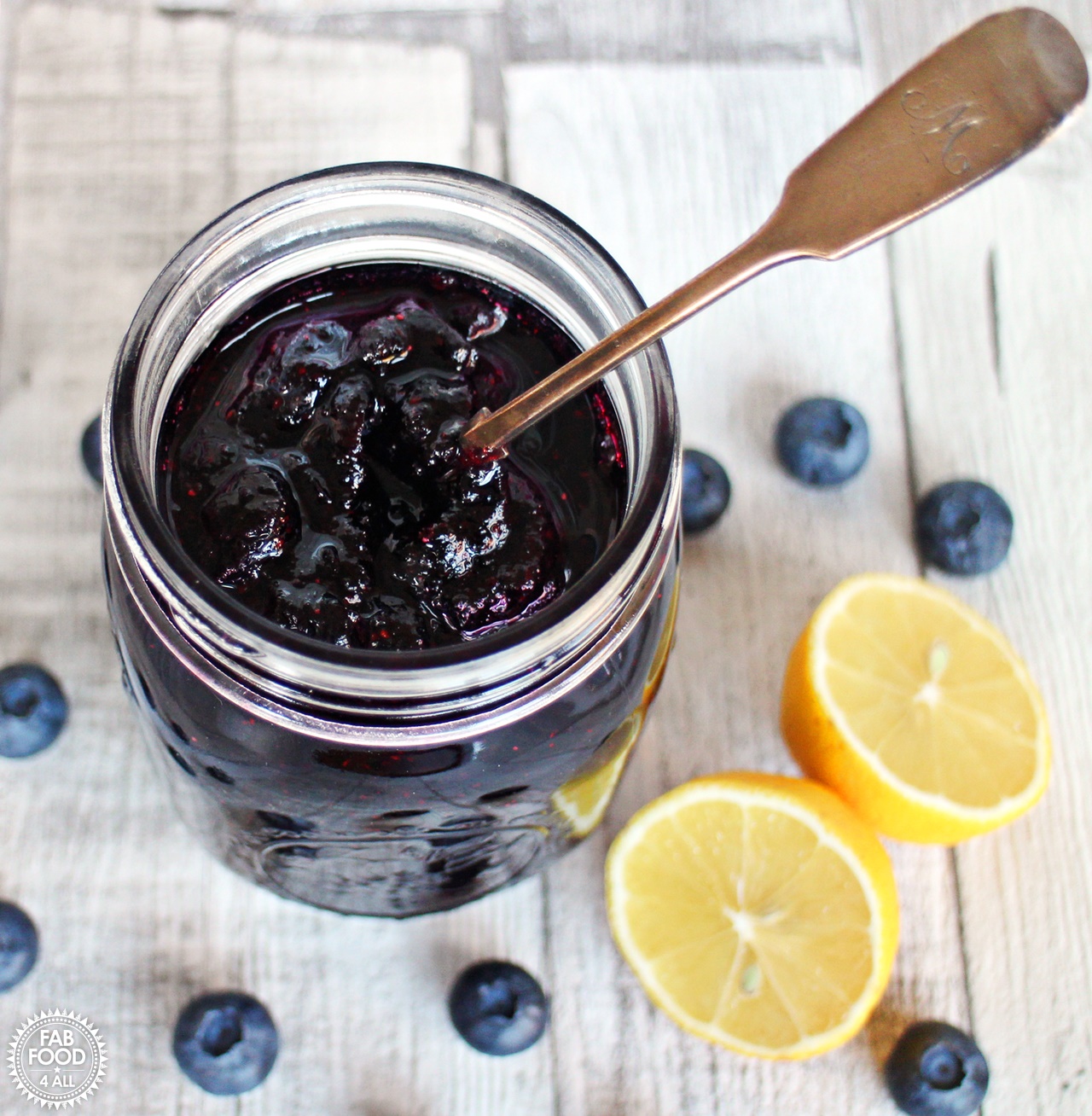
You’re standing in the grocery aisle staring at a yellow box of powdered pectin, wondering why on earth a fruit that literally grows on a bush needs a chemical stabilizer to turn into jam. It doesn’t. Honestly, the whole "must-use-pectin" narrative is a bit of a marketing masterpiece from the early 20th century. If you want a blueberry jam no pectin recipe that actually tastes like fruit instead of a gummy bear, you have to lean into the science of the berry itself.
Blueberries are fascinating. They naturally contain a decent amount of pectin, mostly tucked away in those deep purple skins. When you heat them with sugar and a splash of acid, a chemical reaction happens. The sugar draws the water out, the acid weakens the pectin's bond to the cell walls, and suddenly, everything starts to gel. It's chemistry. It's magic. It's also way more delicious than the rubbery stuff you buy at the store.
The Secret to a Thick Blueberry Jam No Pectin Recipe
Most people fail at pectin-free jam because they’re scared of the boil. You can't just simmer this like a pasta sauce. You need a hard, rolling boil—the kind that looks like it might jump out of the pot and attack your stove. This is where the water evaporates and the sugar concentration hits that sweet spot of about 65%.
If you don't hit that point, you just have blueberry soup. Tasty? Yes. Jam? Not quite.
Lemon juice is your best friend
You’ll see recipes calling for a tablespoon of lemon juice, but I’m telling you, use the zest too. The white pith and the zest of a lemon are packed with natural pectin. It’s like a booster shot for your jam. Plus, blueberries are naturally low in acid compared to something like a raspberry. Without that hit of lemon, the jam tastes flat and cloying. The acid is the "glue" that helps the natural fruit pectin molecules (which are negatively charged and repel each other) actually stick together and form a mesh.
The Freezer Test (Because Thermometers Lie)
I’ve used expensive candy thermometers that swore the jam was at 220°F (104°C), only to end up with a runny mess. Elevation, humidity, and even the pot material can mess with the reading.
Here is what you do: Put three small ceramic saucers in your freezer before you even start washing the berries. When you think the jam is getting thick—usually after 15 to 20 minutes of hard boiling—drop a teaspoon of the hot liquid onto a cold saucer. Let it sit for a minute. Push it with your finger. If it wrinkles up like a raisin, it’s done. If your finger just slides through it like water, keep boiling.
Why Fresh vs. Frozen Actually Matters
Look, I love a bargain, and frozen blueberries are great for smoothies. But for a blueberry jam no pectin recipe, fresh is king. Why? Because as fruit ripens, its natural pectin begins to break down into pectic acid, which doesn't gel.
If you use frozen berries, they’ve often been picked at peak ripeness or even slightly over. They’re sweet, but their structural integrity is shot. If you must use frozen, try to mix in a handful of slightly under-ripe fresh berries. Those tart, greenish-purple ones are pectin goldmines.
- Wash and Sort: Get rid of the stems. They taste like wood.
- The Mash: Don't blend them. Use a potato masher. You want some whole berries for texture, or it’ll look like purple ketchup.
- Sugar Ratio: Most "old school" recipes use a 1:1 ratio by weight. That’s a lot. I prefer about 3/4 cup of sugar for every 2 cups of berries. It's enough to preserve it but lets the fruit shine.
- The Pot: Use a wide, heavy-bottomed stainless steel pot. Wide is better because more surface area means faster evaporation. Faster evaporation means you don't have to cook it as long, which keeps the color bright purple instead of a muddy brown.
Common Mistakes That Ruin the Batch
One big mistake? Doubling the recipe. It sounds efficient, right? "I’ll just make 12 jars at once!" Don't. Pectin-free jam relies on rapid evaporation. When you double or triple the volume in a standard pot, the berries have to boil for twice as long to reach the setting point. This long cook time breaks down the natural pectin you're trying to save and destroys the fresh fruit flavor. Stick to small batches. Two pounds of fruit at a time is the sweet spot.
Also, stop skimming the foam too early. People get obsessed with that pinkish foam that rises to the top. If you stir in a tiny half-teaspoon of butter, most of that foam will just vanish back into the jam. If you skim it all off at the beginning, you’re throwing away a lot of the fruit's natural gelling agents.
Is it safe to store?
If you’re doing a water bath canning process, this jam will last a year on a shelf. If you’re just "refrigerator jamming" it, keep it in the back of the fridge. It’ll stay good for about three weeks. But honestly, once you taste it on a warm biscuit, it won't last three days.
The beauty of a blueberry jam no pectin recipe is the nuance. Every batch is slightly different because every bush of berries is different. One year it might be a bit softer, the next it might be thick enough to stand a spoon in. That’s the hallmark of real food.
Taking Action: Your Next Steps
Stop overthinking the science and just get some berries. If you’re nervous about the set, follow these specific steps for your first try:
- Buy 2 lbs of fresh blueberries and 1 large lemon.
- Macerate the berries in the sugar for at least an hour before cooking; this helps the sugar dissolve and prevents it from scorching on the bottom of the pot.
- Don't walk away. Once that jam starts boiling, it can go from "perfectly set" to "burnt sugar" in about 90 seconds.
- Label your jars. You think you'll remember when you made it, but six months from now, every purple jar in the pantry looks the same.
The transition from store-bought to homemade jam is a one-way street. Once you experience the concentrated, tart-sweet pop of a pectin-free blueberry preserve, those gelatinous grocery store jars will never satisfy you again. Get your saucers in the freezer now.