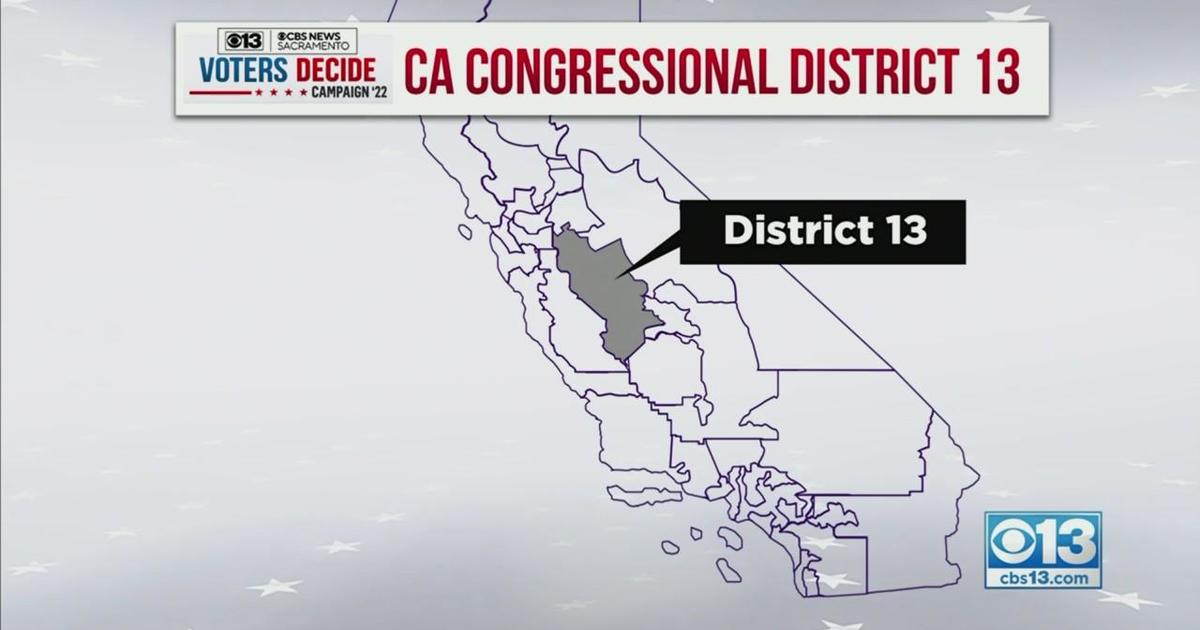
You’ve probably heard people say that every single vote counts, but in the San Joaquin Valley, that isn't just a cliché. It's a literal, mathematical reality. The california 13th congressional district race was officially the last House seat in the entire country to be called in the 2024 cycle. It took nearly a month of counting, nail-biting, and legal scrutiny before we knew who was actually going to Washington.
Adam Gray, a Democrat and former State Assemblyman, managed to unseat the Republican incumbent John Duarte. The margin? A staggering 187 votes. To put that in perspective, that’s about the number of people in a single high school gym class or a moderately busy Starbucks on a Tuesday morning. This wasn't just a local skirmish. It was a heavyweight battle for the soul of the "farm belt," and honestly, it tells us a lot about where California—and the rest of the country—is headed in 2026.
Why the California 13th Congressional District Race Stayed Too Close to Call
The 13th District is a weird, beautiful, and incredibly complex slice of California. It covers Merced County and parts of Madera, Stanislaus, Fresno, and San Joaquin. We’re talking about a place where 65.9% of the population is Hispanic and the median household income sits around $68,434. It's an area defined by agriculture, water rights, and a fiercely independent streak that makes life miserable for political pollsters.
In 2022, John Duarte beat Adam Gray by 564 votes. That was the second-closest race in the nation that year. When they lined up for a rematch in 2024, everyone knew it was going to be a bloodbath. Duarte, a fourth-generation farmer who owns Duarte Nursery, ran on a platform of "Valley values." He talked a lot about the price of gas, groceries, and the "water grab" by Sacramento liberals.
Gray, on the other hand, leaned into his reputation as a moderate. He’s the kind of Democrat who actually talks about the doctor shortage and ACE train expansions. He didn't run as a San Francisco progressive. He ran as a Valley guy.
The Numbers That Decided the Flip
Looking at the certified results, the final tally was 105,554 for Gray and 105,367 for Duarte. That is a 50.0% to 50.0% split if you’re rounding to the nearest tenth.
Basically, the district did something fascinating. While it helped Donald Trump win the presidency—Trump actually carried the 13th District in 2024—the voters simultaneously chose a Democrat for Congress. This "split-ticket" voting is becoming rarer than a rainy day in Coalinga, but it happened here. It shows that voters in the San Joaquin Valley aren't just voting for a "team" anymore. They're voting for whoever they think will actually turn the taps on and keep the lights at the local health clinic.
The Issues Nobody Talks About Enough
Water. If you don't live in the Valley, you probably think water is something that just comes out of a faucet. If you live in District 13, water is life, death, and your entire retirement account.
Duarte hammered Gray on his time in the State Assembly, accusing him of being part of the Sacramento establishment that "sent our water to the ocean." Gray shot back by pointing to his record of fighting for water rights even when it meant bucking his own party. This isn't a "left vs. right" issue in the 13th. It's a "Valley vs. Everywhere Else" issue.
Then there’s the healthcare crisis. The 13th District has one of the worst doctor-to-patient ratios in the state. Gray made this a centerpiece of his campaign, focusing on the need for a medical school at UC Merced. When people can't get a doctor’s appointment for three months, they don't care about national talking points. They care about who is going to fix the clinic in Los Banos or Madera.
2026: The Rematch No One Is Ready For
So, what happens now?
Adam Gray is currently serving in the 119th Congress, but the ink on his nameplate is barely dry before the 2026 cycle begins. Because the margin was so razor-thin, the GOP is already licking its chops. Names like Vin Kruttiventi, Kevin Lincoln II (the former Mayor of Stockton), and Javier Lopez (the Mayor of Ceres) are already in the mix or being discussed for the 2026 california 13th congressional district race.
National groups like the House Majority PAC and the NRCC are going to dump millions into this district again. In 2024, Gray raised about $5.4 million compared to Duarte’s $4.1 million. Expect those numbers to look like pocket change by the time we hit the 2026 primary.
What Most People Get Wrong About This District
The biggest misconception is that because the district is majority-Hispanic, it’s a "safe blue" seat. That’s just not true. The Hispanic vote in the Central Valley is far more conservative on social and economic issues than in Los Angeles or the Bay Area.
Many of these voters are small business owners or farmworkers who are deeply concerned about border security and the cost of living. Javier Lopez, the Mayor of Ceres, has already been vocal about supporting strong border enforcement alongside H-2A visa reform. This nuance is why the california 13th congressional district race is never a slam dunk for either party. It's a grind. Every. Single. Time.
What You Should Do Next
If you live in the 13th or just care about the balance of power in D.C., you need to keep your eyes on the 2026 primary.
- Check your registration: California's primary is in June 2026. If you moved to a new development in Lathrop or North Merced, update your address now.
- Watch the water bills: Watch how Adam Gray votes on upcoming federal infrastructure and water storage projects. This will be the #1 weapon used against him—or for him—in eighteen months.
- Follow local mayors: Leaders in cities like Madera, Ceres, and Turlock are the ones who usually make the jump to the national stage. Their local performance is the best predictor of how this district will swing.
The 2024 california 13th congressional district race proved that a couple of neighborhoods can change the entire direction of the U.S. House of Representatives. Whether Gray can hold on or a new Republican challenger takes it back remains the biggest political question in the Golden State.
Actionable Insight: The best way to track this race isn't through national news outlets. Follow the local reporting from the Merced Sun-Star or the Modesto Bee. They catch the nuances of the water and labor debates that the big networks usually miss. If you want to see how the 2026 field is shaping up, keep a close eye on the FEC filing deadlines in early 2026; that's when we'll see exactly how much "dark money" is preparing to flood the Valley.