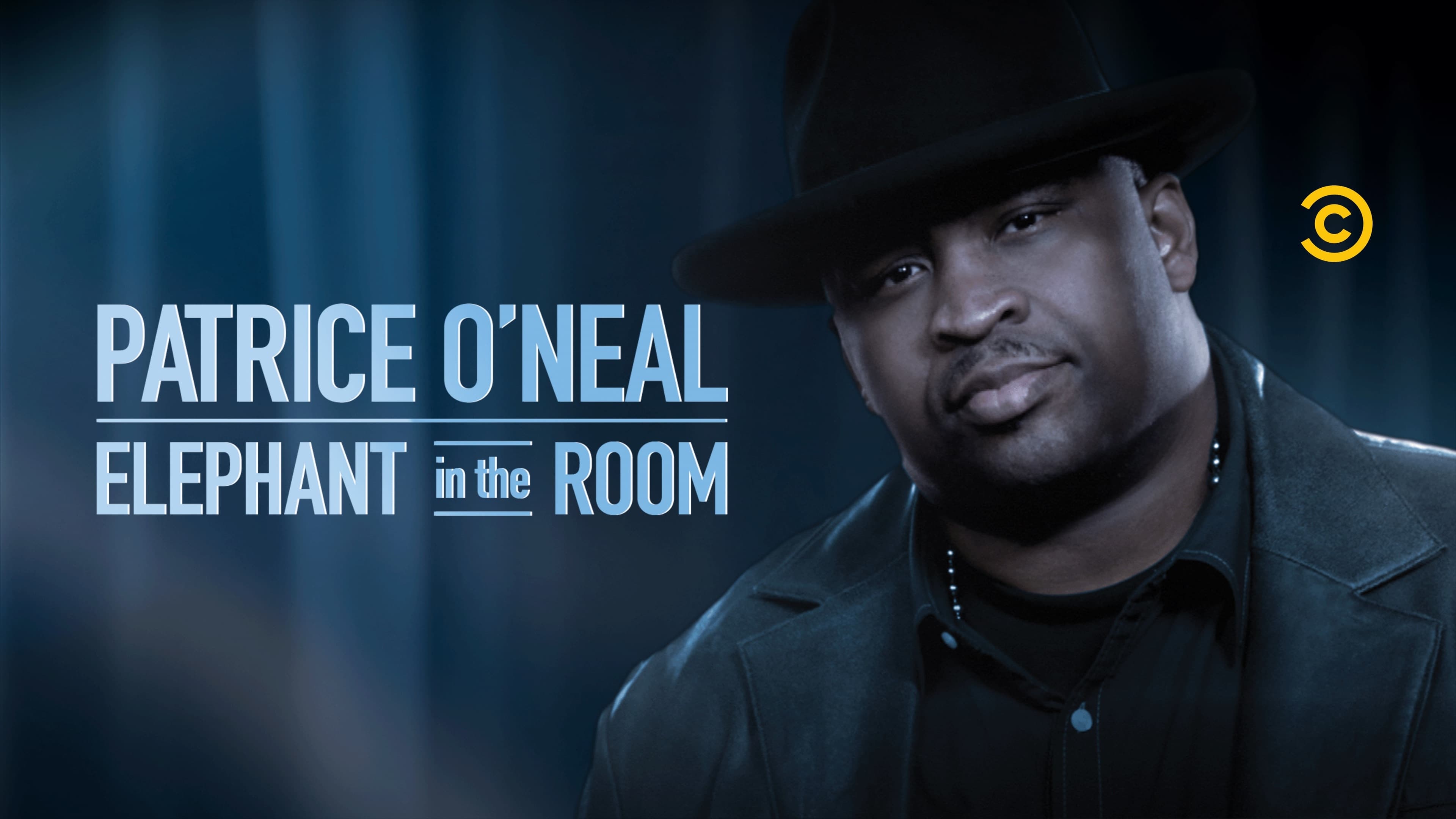
It is 2026, and we are still talking about a comedy special that dropped fifteen years ago. Think about that. Most stand-up acts have the shelf life of an open carton of milk, but Elephant in the Room Patrice O'Neal is something different. It’s a monolith. It’s the kind of performance that makes modern viewers wince, laugh, and then immediately check to see if anyone is looking over their shoulder.
Patrice wasn't just a comedian. Honestly, he was more like a philosopher who happened to be obsessed with the brutal, unvarnished truth of how men and women actually interact when the lights are off and the "polite society" masks are put away.
The Night Everything Changed at the New York Comedy Festival
In November 2010, Patrice walked onto the stage at the Skirball Center for the Performing Arts. He was wearing a simple t-shirt and jeans, looking like he just finished a shift at a job he didn't particularly like. But the moment he opened his mouth, the room shifted.
He didn't start with a "knock-knock" joke or some observational fluff about airline food. He went straight for the jugular of social hierarchy and the "valuation" of human life. Specifically, he talked about the disproportionate media attention given to missing white women compared to literally anyone else.
"If I go sailing, I'm taking a white baby on a keychain with me," he joked.
It sounds horrific on paper. In the room? It was a surgical strike on hypocrisy. That's the magic of this special. He wasn't being mean for the sake of being mean; he was highlighting a "glitch in the matrix" of our collective empathy.
Why the "Uncut" Version is the Only Way to Watch
If you originally saw this on Comedy Central back in February 2011, you only saw about 42 minutes of the set. That’s a crime. The full 78-minute uncut version, which you can find on Paramount+ or various rental platforms today, is where the real meat is.
- The Crowd Work: Most comics use crowd work to fill time. Patrice used it to put the audience on trial. He’d pick a couple and dismantle their entire relationship dynamic in three minutes.
- The Philosophy of Being a "Fish": He famously compared women in relationships to fish that jump back onto the boat because they don't know what to do with their freedom.
- The Harassment Bit: This is probably the most controversial part of the special today. He argued for the "right" to at least try and fail at flirting in the workplace, framing it as a desperate human need for connection rather than something predatory.
It’s messy. It’s complicated. It’s Patrice.
Dealing with the Legacy of a "Bridge Burner"
Patrice had a reputation. Bill Burr, his close friend, often tells the story of how Patrice would walk into a pitch meeting at a major network and spend the entire time telling the executives why their current programming was garbage. He was a "bridge burner" by trade.
This is why Elephant in the Room was his only hour-long special. He died just nine months after it premiered, at the age of 41, from complications related to a stroke.
Because he was so uncompromising, he never got the sitcom or the blockbuster movie deals that his peers did. But ironically, that lack of "selling out" is exactly why his work feels so fresh in 2026. He didn't have a brand to protect. He didn't have a corporate sponsor breathing down his neck. He just had the truth as he saw it.
The Technical Genius Behind the Jokes
People focus so much on his "offensive" material that they forget how good he was at the craft of comedy.
- Rhythm: He had the timing of a jazz drummer. He knew exactly when to let a silence hang until the audience became physically uncomfortable.
- Logic: Every joke was built on a foundation of "if A, then B." Even if you hated his conclusion, you could usually see the path he took to get there.
- Vulnerability: Underneath the bravado, he was often admitting his own flaws. He spoke openly about his diabetes, his weight, and his struggles with being a "terrible misogynist" (his own words during a Marc Maron interview).
How to Approach Elephant in the Room Today
If you're watching this for the first time, you've gotta understand the context. This wasn't "punching down." In Patrice's mind, he was punching everyone. He was an equal-opportunity offender who believed that if we could all just admit how awful and selfish we are, we might actually get along better.
He called himself "Black Phillip," a reference to the radio persona he developed on Opie and Anthony. It was a mentor figure for men who felt lost in the changing landscape of gender politics. Some find it empowering; others find it incredibly toxic.
The reality is probably somewhere in the middle.
He challenged the idea that you have to agree with a comedian to find them funny. As Phil Wang noted in a 2015 piece for The Guardian, Patrice was "indefensible" yet "undeniably funny." That is the hallmark of a master. He makes you laugh at things you spent your whole life being told were off-limits.
What You Should Do Next
If you want to actually understand why this special is the "Gospel" for modern comedians like Dave Chappelle, Bill Burr, and Kevin Hart, don't just watch the clips on social media. They lack the build-up.
- Watch the full 78-minute special. Pay attention to the way he interacts with the people in the front row. It’s not a monologue; it’s a conversation.
- Listen to his appearances on the Opie and Anthony show. This is where the "theories" in the special were road-tested for years.
- Check out the documentary Better Than You. It provides the backstory of his struggle with the industry and why Elephant in the Room was such a hard-fought victory for him.
Don't look for a moral to the story. Patrice wasn't a preacher. He was just a guy who noticed the elephant in the room and decided to describe it in graphic, hilarious, and often painful detail.