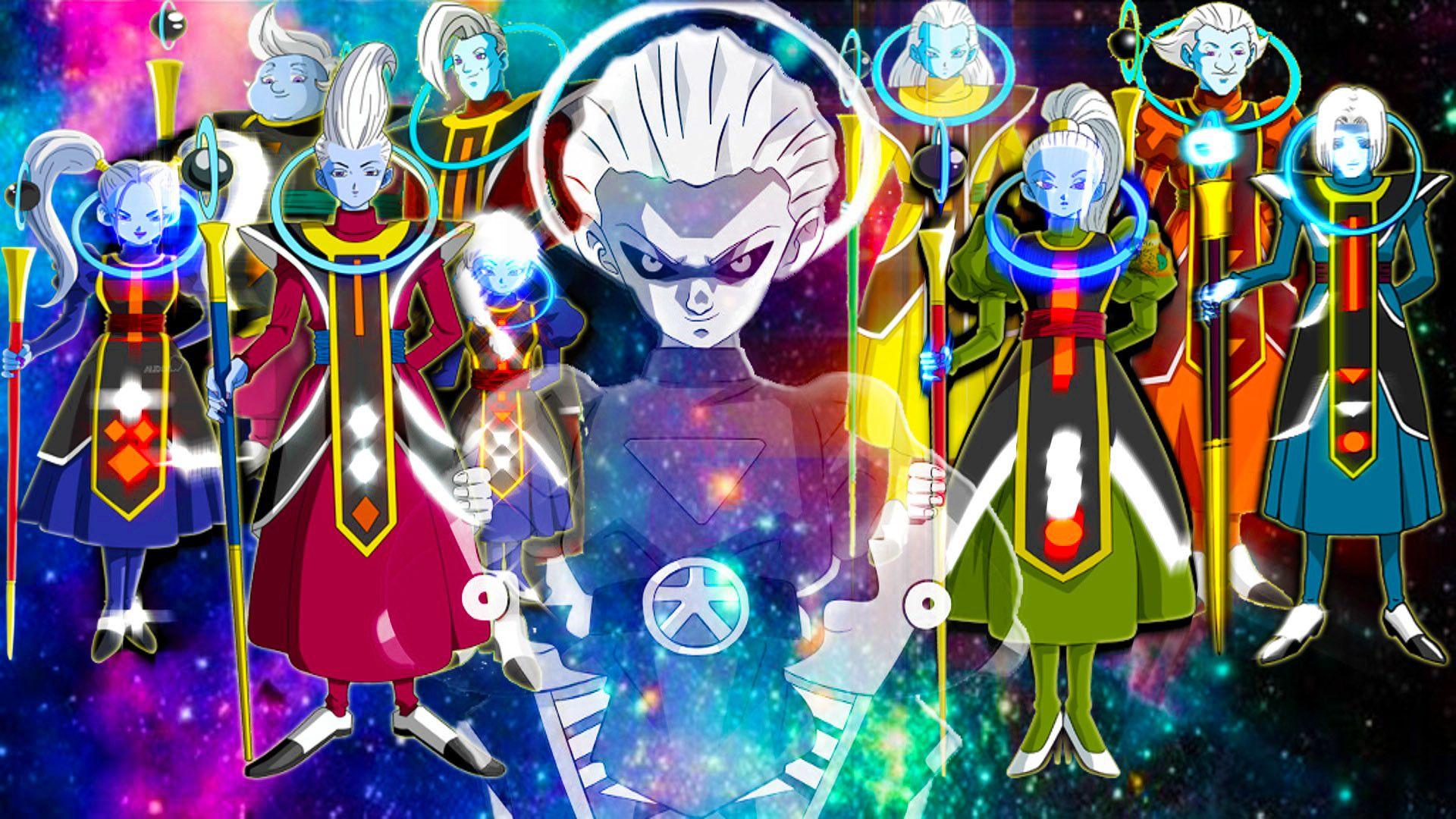
He looks like a squeaky toy. He sounds like a child. He literally plays hide-and-seek with himself across the cosmos. But if you’ve watched even five minutes of the Universe Survival arc, you know that Grand Zeno is the single most unnerving presence in the entire Dragon Ball franchise. It’s not because he has a high power level or a cool transformation. It's because, in his world, "power levels" don't even exist. He just... ends things.
Honestly, the introduction of Zeno changed the stakes of Dragon Ball Super in a way that most fans still haven't fully processed. We spent decades watching Goku and Vegeta train to overcome physical limits. Then Zeno shows up and reminds everyone that you can’t punch your way out of existence.
The Reality of Zeno’s Power (It’s Not Combat)
We need to get one thing straight: Zeno is not a fighter. Beerus and Whis make this incredibly clear early on. He doesn't have "techniques" or a signature ki blast. He has the ability to "Erase." That’s it. That’s the whole trick.
Think about the Future Trunks saga. Zamasu had become the literal universe. He was an abstract concept of malice infecting the timeline, and Goku and Vegeta were completely helpless. They had nothing left. Goku presses the Zeno button, and what happens? Zeno doesn't engage in a beam struggle. He doesn't give a speech about justice. He looks around, decides the environment is "gross," and deletes the entire multiverse of that timeline. Just like that. Everything—the stars, the planets, the souls, and the villain—gone in a blink.
It's a complete shift in the narrative. In Dragon Ball Z, the threat was always someone stronger than you. In Dragon Ball Super, Zeno represents a threat that is purely existential. You don't fight him; you survive him.
Why the Omni-King's Personality is the Real Nightmare
The scariest part of Zeno isn't his Erase ability. It's his whims. He is essentially a toddler with the power of God.
Most villains in the series have a motive. Frieza wants real estate and immortality. Cell wants perfection. Buu wants chocolate and destruction. You can negotiate with a motive. You can predict it. But Zeno? He’s bored. That’s his only driving force. He decided to hold the Tournament of Power because he thought watching eight universes fight for their lives would be "neat."
Before the series even began, there were eighteen universes. Now there are twelve. Why? Because Zeno got annoyed and wiped out six of them. He didn't do it because they were evil. He did it because he felt like there were too many. That level of casual genocide is darker than anything Frieza ever attempted.
He’s innocent. Truly. When he erases a universe, he isn't being mean. He doesn't feel malice. He's just clearing the board of pieces he doesn't want to play with anymore. That lack of empathy is what makes the Gods of Destruction, like Beerus and Champa, absolutely sweat bullets when he's around. They know their entire existence depends on whether or not they can keep a child entertained.
The Great Mystery: Can Zeno Be Killed?
This is a huge point of debate in the Dragon Ball community. Some fans point to the fact that there are two Zenos now (the present one and the one from Future Trunks' timeline). If Zeno is the "all-encompassing" god, how can there be two?
It suggests that Zeno is tied to time, but not necessarily to the physical laws of the universes he rules. While he can't be "beaten" in a fight—because no one can get close enough to strike him without being blinked out of reality—the existence of a second Zeno proves he isn't a singular, multiversal constant like some fans originally thought. He is a high-ranking deity within a specific timeline's structure.
However, don't mistake that for weakness. Even the Angels, who are vastly more powerful than the Destroyers, bow to him. The Grand Priest, who is arguably the most capable fighter in the series, serves him without question.
The Tournament of Power: A Test of Morality?
Many viewers missed the subtle nuance at the end of the Tournament of Power. Android 17 used his wish on the Super Dragon Balls to restore the erased universes. The Grand Priest later revealed that Zeno had actually "foreseen" this.
Basically, Zeno expected the winner to be selfless. If the winner had made a selfish wish—like wishing for money or power—Zeno would have erased everything. Every single universe. Including the one that won.
This tells us something new about Zeno. He isn't just a chaotic child. There is a programmed sense of "properness" or a cosmic test at play. He wants the multiverse to be "good," but his definition of good is based on whether or not the inhabitants are interesting and virtuous enough to merit existence.
Moving Forward: The Zeno Problem
Where does the story go with a character this powerful?
For Goku, Zeno is a friend. He calls him "Zen-chan." He treats him like a buddy. This is Goku's greatest "power"—his complete lack of fear or ego allows him to bridge the gap with a being that everyone else fears. But this friendship is a double-edged sword. If Goku ever stops being "fun," the friendship ends. And if the friendship ends, Universe 7 ends.
As Dragon Ball Super continues to evolve through the manga and future animations, Zeno remains the ultimate ceiling. He is the reminder that no matter how many "Ultra Ego" or "Beast" forms our heroes achieve, they are still just toys in a very large, very fragile sandbox.
Actionable Insights for Fans and Theorists
If you're following the lore, keep these specific points in mind for future arcs:
- Watch the Grand Priest: Zeno is the power, but the Grand Priest is the intellect. Most of Zeno’s "tests" seem to be curated by his attendant. If a true "Zeno-level" conflict ever happens, it will likely start with the Angels.
- The Power of the Super Dragon Balls: They are the only things in existence that can undo Zeno’s actions. This makes Zalama (the creator of the balls) the only figure in history who might be on a comparable level of cosmic importance.
- The Mortality of Gods: Dragon Ball has a habit of replacing gods. We went from Kami to King Kai to Supreme Kai to Beerus to Zeno. There is always someone higher. The existence of "Timeline Zenos" suggests a layer above even him—perhaps a creator of the timelines themselves.
The best way to understand Zeno is to stop looking at him as a character and start looking at him as a force of nature. You don't get mad at a hurricane, and you don't fight a black hole. You just hope it doesn't come your way. That is the true weight of the Omni-King.