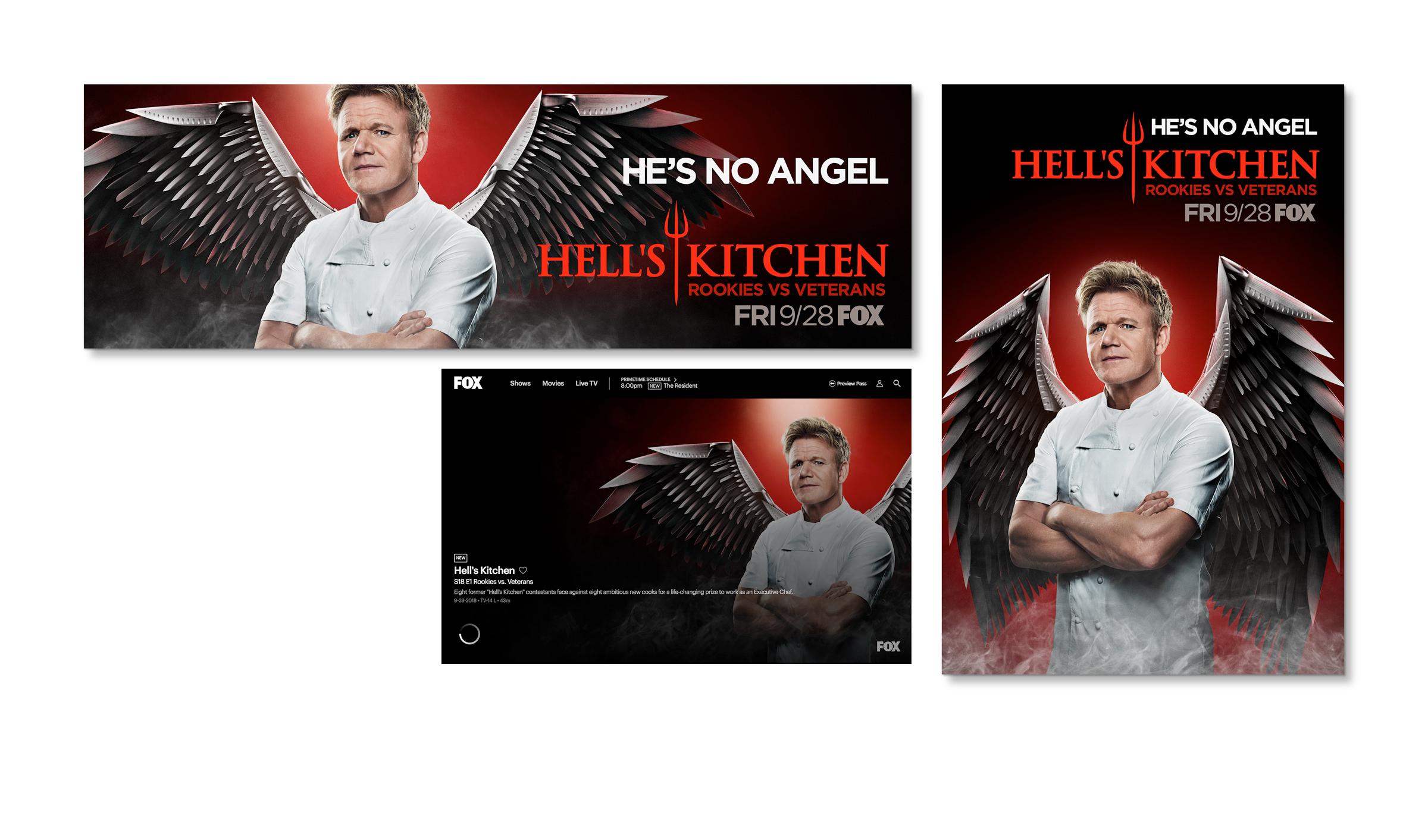
Gordon Ramsay has a type. Usually, it’s a talented but slightly green sous chef from a mid-tier steakhouse who just needs a massive kick in the pants to become a head chef. But in 2018, the producers decided to break the machine. They brought back the ghosts of seasons past. Hell's Kitchen Rookies vs Veterans wasn't just a clever subtitle; it was a psychological experiment that tested whether "experience" is actually an advantage when you're being screamed at in a 120-degree kitchen.
It was Season 18. Eight newcomers. Eight returning players who had lost in previous years but came back with chips on their shoulders the size of a beef Wellington.
Honestly, it was a bloodbath.
Most people expected the veterans to steamroll the amateurs. I mean, on paper, it’s a no-brainer. You have people like Kevin Cottle—the runner-up from Season 6 who was widely considered one of the best to never win—going up against guys who had never seen a garnish station in Las Vegas. But the show proved that past success in the Hell’s Kitchen pressure cooker doesn't guarantee a damn thing. In fact, for some, that previous experience was a massive anchor.
The Massive Ego Trap of the Blue Team
When the veterans showed up, they were arrogant. They had every right to be, technically. They knew the menu. They knew the rhythms of the pantry. They knew exactly how many seconds it took for Gordon to lose his mind over raw scallops. But that familiarity bred a weird kind of complacency that the rookies didn't have.
Take Kevin Cottle. In Season 6, he was a titan. He was sharp, fast, and disciplined. When he returned for the Hell's Kitchen Rookies vs Veterans showdown, he looked... bored? It was strange to watch. He had a successful career outside the show, and you could almost see him calculating whether the stress was still worth it. Ramsay noticed too. Kevin, the "legend," was sent packing way earlier than anyone predicted. He wasn't the only one. T Gregoire, another powerhouse runner-up from Season 14, struggled to find her footing.
The problem with being a veteran is that you think you've already "graduated." You've already done the punishments. You've already prepped the squid. Coming back to do it again feels like a demotion, and if your head isn't 100% in the game, Ramsay will smell that lack of hunger from across the pass.
Why the Rookies Actually Had the Edge
The rookies were terrified. Fear is a great motivator.
While the veterans were busy reminiscing about their old seasons, the rookies were treated like "fresh meat," which forced them to bond quickly. You had chefs like Mia Castro and Ariel Contreras-Fox (who was technically a veteran but played with the intensity of a rookie) showing that the game had evolved.
Wait, let's talk about Ariel.
Technically, Ariel was a veteran from Season 6, the same season as Kevin. But her trajectory was different. She didn't come back to reclaim old glory; she came back as a completely different chef. She had spent years in the industry refining her palate and her leadership. She was the bridge between the two worlds. She had the veteran's knowledge but the rookie's "I have something to prove" energy.
The "rookie" side of the bracket featured some serious talent, even if they were inconsistent. Mia Castro was a challenge beast. She was winning individual rewards left and right, proving that the veterans' supposed "wisdom" didn't mean much when it came to modern plating and flavor profiles. The rookies didn't have the baggage of knowing what "Hell's Kitchen" used to be. They only knew what it was right now.
The Mid-Season Twist No One Liked
About halfway through the season, the theme basically evaporated. Ramsay did what he always does when a gimmick starts to get stale: he shuffled the teams. He moved some veterans to the Red Team and some rookies to the Blue Team.
This was the turning point for the Hell's Kitchen Rookies vs Veterans narrative.
The "us vs. them" mentality shifted into a "who is actually a leader" mentality. It became clear that the veterans weren't failing because they lacked skill; they were failing because the rookies were more adaptable. The rookies were like sponges. The veterans were like bricks—solid, sure, but they couldn't soak up new ways of working as easily.
Bret Hauser is a perfect example of the veteran struggle. He was pure passion. Maybe too much passion. He wore his heart on his sleeve and his Italian heritage on his pasta station. He survived deep into the season because he possessed the one thing many other veterans lost: the desperate, clawing need to win. He treated every service like it was his last, which is exactly the kind of "rookie energy" Ramsay demands.
Breaking Down the Performance Gap
If you look at the stats, the veterans actually struggled more with the basics than the newcomers did in the early stages.
- Communication: The veterans often talked at each other rather than with each other. They all wanted to be the alpha.
- Adaptability: The rookies were faster to pivot when Ramsay changed a recipe or a procedure.
- Consistency: This is where the veterans theoretically should have won, but the high-pressure environment caused several "pro" collapses, most notably with Jen Gavin, whose exit was one of the most explosive in show history.
Jen's departure was a dark cloud over the veteran camp. Accusing Gordon Ramsay of "sabotaging" your garnish is a bold move. It’s also a career-ending move in that kitchen. It highlighted a specific veteran pathology: the idea that if something goes wrong, it must be the "system" and not the chef. The rookies didn't have that ego. If they messed up, they just assumed they were bad and tried harder.
What This Taught Us About Professional Cooking
This season killed the myth that "time served" equals "automatic superiority." In a high-intensity environment like a Michelin-starred kitchen (or a TV set designed to simulate one), your performance from five years ago doesn't cook the sea bass sitting on the stove right now.
It's about the "Line Cook Mentality."
The most successful chefs on Hell's Kitchen Rookies vs Veterans were the ones who could shut off their "Executive Chef" brain and turn on their "Grind" brain. You have to be willing to be a student. If you think you're too good to peel potatoes or get screamed at for a cold risotto, you're going home.
Ariel Contreras-Fox eventually won the season, and it wasn't even close. She was the most consistent, the most poised, and the most professional. She proved that the "Veteran" label only works if you've actually spent the intervening years getting better, not just getting older. She didn't win because she was a veteran; she won because she was the best chef there, period.
The Legacy of the Rookie/Veteran Split
Hell's Kitchen eventually moved on to other themes like "Young Guns" and "American Dream," but the lessons from the 18th season still resonate. It changed how Ramsay scouts talent. He started looking for people who had a mix of formal training and raw, unpolished grit.
The show also stopped relying so heavily on the "returnee" trope for a while. It realized that watching a former finalist fail is actually kind of depressing for the fans. We want to see the underdog rise, not the former hero fall from grace because they forgot how to cook salmon.
For anyone who wants to apply the lessons of this season to their own career, whether you're in a kitchen or an office, the takeaway is pretty simple. Never let your resume convince you that you've stopped needing to prove yourself. The second you think you've "arrived," someone younger and hungrier is going to take your station.
How to Apply the Hell's Kitchen Mindset
If you're looking to level up your own professional game based on what we saw in the Hell's Kitchen Rookies vs Veterans showdown, here is how you stay ahead:
- Audit your own ego. Are you failing to learn new tools because you "already know how to do it"? That's the Kevin Cottle trap. Stay curious.
- Focus on the "Pass." In the show, the Pass is where leaders are born. It's about communication, not just cooking. In your job, find the "bottleneck" and see if you can manage it.
- Recover fast. The rookies who stayed long were the ones who didn't pout after getting kicked out of the kitchen. They prepped for the next day immediately.
- Watch the tape. If you're a veteran in your field, look at how the "rookies" are doing things. They might have a more efficient way of using technology or managing workflows that you're ignoring out of habit.
The reality is that experience is only a superpower if it’s paired with humility. Without it, you're just a chef with an old jacket and a cold pan. Season 18 was a masterclass in that harsh truth. It’s not about who you were in Season 6; it’s about who you are when the tickets start printing and Gordon Ramsay is two inches from your face.
Next Steps for Fans and Aspiring Chefs
To truly understand the dynamics of high-level kitchen management, your next move should be studying the Brigade de Cuisine system. It’s the rigid hierarchy Ramsay uses to maintain order. If you can master the roles of the Saucier and the Poissonnier under pressure, you're halfway to surviving a real-world Hell's Kitchen.
Also, go back and re-watch the Season 18 finale. Pay close attention to how Ariel manages her team compared to Mia. One led with collaborative authority; the other led with frantic talent. There is a world of difference between being a "great cook" and a "great chef." Choose to be the latter.