You’re staring at the booking screen. The price looks decent, but then you see the duration. It’s long. Like, "finish three seasons of a TV show and still have time for a mid-life crisis" long. If you’re wondering how long flight to australia from us actually takes, the short answer is roughly 14 to 22 hours depending on where you start. But the "how long" part isn't just about the minutes on a clock. It’s about the mental tax of crossing the International Date Line and whether you’re sitting in a cramped middle seat or a lay-flat pod.
Most people think of Australia as just one destination. It's a continent. Flying to Perth on the west coast is a completely different beast than touching down in Sydney.
The geography of the grind
Geography dictates everything here. If you are departing from the West Coast—think Los Angeles (LAX), San Francisco (SFO), or even Vancouver if you’re sneaking across the border—you’re looking at the most direct routes. A non-stop flight from LAX to Sydney (SYD) usually clocks in at around 15 hours. Going the other way? Coming back is often faster because of the tailwinds, sometimes shaving an hour off the trip.
But what if you're in New York? Or Dallas?
Qantas operates one of the longest flights in the world from New York (JFK) to Auckland, then on to Sydney, or more recently, their "Project Sunrise" research flights which aim for non-stop service. Currently, the JFK to Sydney route with a stopover or the direct flight from Dallas (DFW) can keep you in the air for 17 hours and 30 minutes. That is a massive amount of time to be breathing recycled air.
Honestly, the distance is roughly 7,500 to 9,000 miles. To put that in perspective, you could fly from New York to London and back, then fly to London again, and you’d still barely match the mileage of a Texas-to-Sydney haul.
Why the "estimated time" is usually wrong
Airlines pad their schedules. You might see a flight listed as 15 hours and 50 minutes, but you land in 14 hours and 40. Why? The jet stream. These high-altitude air currents act like a treadmill. If you're running with the treadmill, you're flying. If you're fighting a headwind, the pilot might have to throttle up, consuming more fuel, or just accept that everyone is going to be an hour late for their airport pickup in Brisbane.
Then there is the taxi time. LAX is notorious for "gate holds." You might be on the plane, the doors are locked, and you're technically "traveling," but you’re just sitting on the tarmac behind twelve other heavy jets. That counts toward your total travel time in your head, even if the flight log says otherwise.
Breaking down the routes by city
Let's get specific. If you’re flying from the West Coast, you have choices. United, Delta, American, and Qantas all fight for these routes.
- Los Angeles to Sydney: Roughly 15 hours.
- San Francisco to Brisbane: Around 14 hours and 30 minutes.
- Honolulu to Sydney: This is the "cheat code." It’s only about 10 hours. If you can swing a multi-day layover in Hawaii, your body will thank you for breaking up the journey.
From the interior or East Coast, things get spicy.
- Dallas (DFW) to Sydney: This is a beast. 17 hours plus. It’s one of the longest scheduled commercial flights on the planet.
- Houston (IAH) to Sydney: Similar to Dallas, expect to be in that metal tube for nearly 18 hours.
- New York to Sydney (with stops): You’re looking at 22 to 26 hours of total travel time. You’ll leave on a Monday and arrive on a Wednesday. You basically lose Tuesday. It just evaporates.
The stopover vs. non-stop debate
Is it better to just rip the Band-Aid off? Some travelers swear by the non-stop. Get in, take a Melatonin, wake up in the Southern Hemisphere. Others prefer the "hub" approach. Flying via Fiji (Nadi), Tahiti, or even New Zealand can break the trip into two manageable 8-10 hour chunks.
Fiji Airways is a popular choice for this. You stop in Nadi, maybe grab a shower or a quick nap on a real bed, and then finish the last 4 hours into Australia. It adds 5 hours to your total trip, but it might save your sanity.
What actually happens to your body
The physics of being in a pressurized cabin for 15+ hours is weird. The humidity is usually lower than a desert. You dehydrate. Your feet swell—sometimes enough that you can't get your shoes back on. This isn't a joke; it’s called "economy class syndrome" or Deep Vein Thrombosis (DVT).
Expert travelers know to wear compression socks. They look nerdy, but they work. You also need to move. Walking to the galley to ask for water isn't just about thirst; it's about keeping your blood moving so you don't arrive with ankles the size of grapefruits.
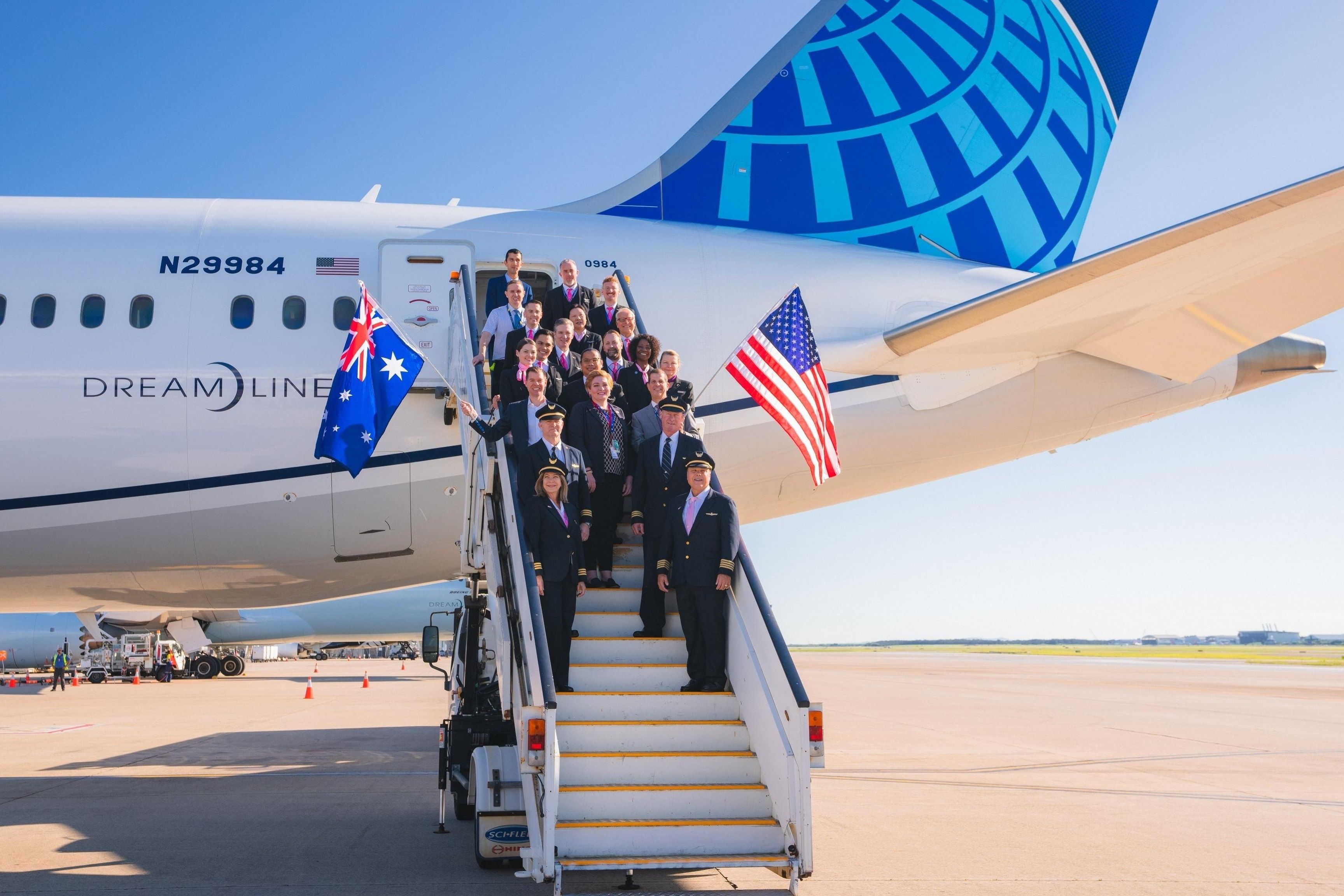
Then there's the light. The Dreamliner (Boeing 787) and the Airbus A350 are the preferred planes for these routes because they have better cabin pressure and "mood lighting" that mimics the destination's sun cycle. It helps, but it’s not magic. You will still feel like a zombie for the first 48 hours in Melbourne.
The International Date Line factor
When you ask how long flight to australia from us, you have to account for the "time jump." Because you're crossing the International Date Line heading west, you "lose" a day. If you depart on Friday night, you arrive Sunday morning.
You didn't actually spend 36 hours in the air. You spent 15. But the calendar doesn't care. On the way back, the opposite happens. You can leave Sydney at 10:00 AM on a Monday and land in Los Angeles at 6:00 AM on the same Monday. You've essentially traveled back in time. It’s the closest thing to a TARDIS we have, and it results in the most spectacular jet lag known to man.
How to survive the 15-hour haul
If you’re stuck in the back of the plane, preparation is your only weapon. Most people wait until they’re on the plane to figure out their "strategy." That's too late.
- Seat Selection: Avoid the back of the plane. It’s noisier and you feel the turbulence more. Use a site like SeatGuru to find seats that don't have limited recline.
- Hydration: Don't just drink the little cups they give you. Bring a massive 1-liter bottle and refill it after security. Aim to drink the whole thing twice.
- Noise Control: Noise-canceling headphones are a necessity, not a luxury. The constant 80-decibel hum of the engines causes fatigue. Silence is restorative.
- The "Two-Meal" Rule: Don't eat every tray they put in front of you. Airplane food is loaded with sodium to make it taste like something at high altitude, which contributes to bloating. Eat a big meal before you board and skip the mid-flight "snack" unless you’re actually hungry.
Why Perth is a different story
If your destination is Western Australia, the "how long" question gets even more complicated. Most flights from the US land on the East Coast (Sydney, Brisbane, Melbourne). To get to Perth, you then have to hop on a domestic flight across the Australian outback. That’s another 5 hours.
Total travel time from NYC to Perth? You’re looking at nearly 30 hours of transit. At that point, it’s actually faster for some people to fly East across the Atlantic, stop in Dubai or Doha, and then head down to Perth.
The Project Sunrise future
Qantas is currently working on "Project Sunrise," which involves modified Airbus A350-1000s designed to fly from New York and London directly to Sydney and Melbourne without stopping. We’re talking 20 to 22 hours non-stop.
To make this feasible, they are looking at "wellbeing zones" in the plane where people can stretch and stand up. It sounds grueling, but for business travelers, skipping the layover in LAX or Singapore is worth the endurance test. These flights are expected to become the gold standard for the "how long" question by 2026.
Actionable Next Steps for your trip
If you are ready to book, don't just look at the price. A $900 flight with two 6-hour layovers in different cities might seem like a steal, but it adds 12 hours of exhaustion to your trip.
- Check the aircraft type. Look for the Boeing 787 Dreamliner or the Airbus A350. These planes are made of carbon fiber composites, allowing for higher cabin humidity and lower "effective altitude" pressure. You will feel significantly less "trashed" upon arrival.
- Book the "overnight" leg. Try to find a flight that leaves the US late at night. You’ll be naturally tired, making it easier to sleep for the first 6-8 hours.
- Download your entertainment. Don't rely on the seatback screen. They break. Sometimes the touchscreens are unresponsive. Have a tablet loaded with movies and a backup power bank just in case the seat's USB port is dead.
- Mind your arrival time. Try to land in Australia in the morning (around 7:00 AM or 9:00 AM). Force yourself to stay awake until 8:00 PM local time. If you nap at noon, you’re doomed.
Flying to Australia is a rite of passage for any serious traveler. It is a long way—there’s no way to sugarcoat it. But if you know the real timeframes and prepare for the physical toll, the moment you see the Sydney Opera House or the red dirt of the outback, you’ll realize the 15 hours was just a small price to pay for the experience.