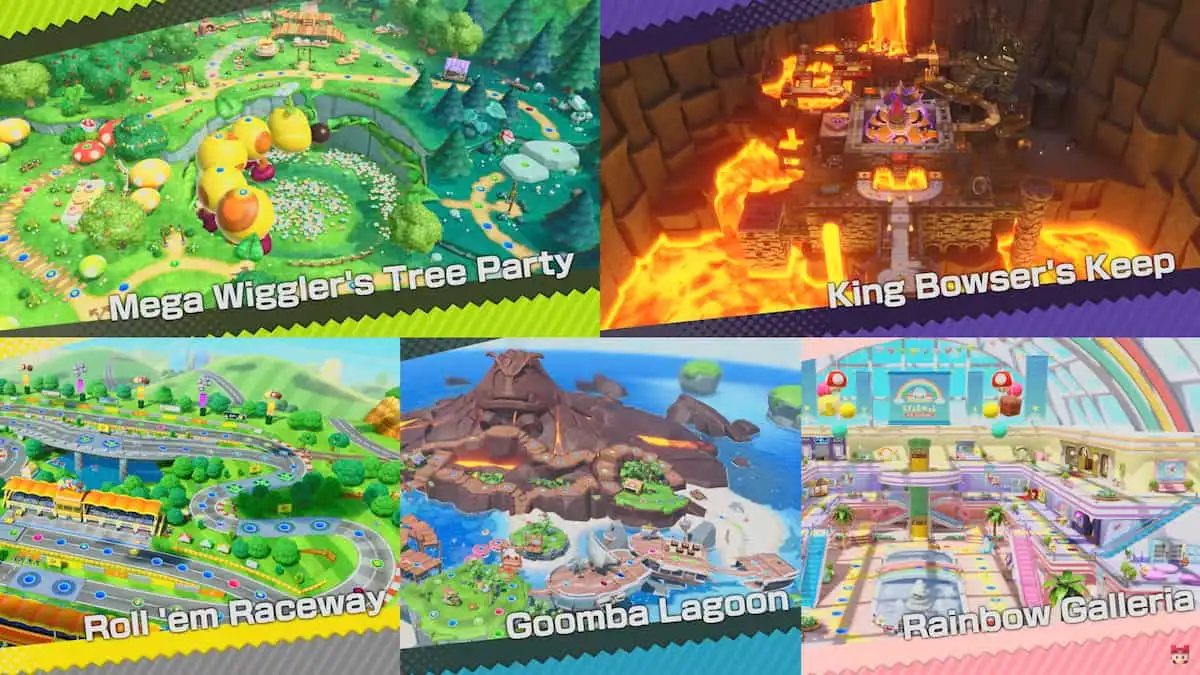
Super Mario Party Jamboree is huge. Like, weirdly huge. Nintendo decided to cram over 110 minigames into this thing, which is the most we've ever seen in a single entry. But if you’re looking into mario party jamboree multiplayer, you probably aren't just wondering about the number of games. You want to know if the online lag still ruins everything, if the "Pro Rules" actually fix the RNG nonsense, and how the heck 20 people are supposed to play together without the whole thing turning into a slideshow.
Honestly, it’s a bit of a mixed bag, but mostly in a good way.
The game isn't just one thing. It's several different multiplayer ecosystems living inside one cartridge. You have the classic board game mode we’ve known since the N90s, the new massive online competitions, and then a bunch of motion-control side stuff that’s... well, it's there. The real question is whether you should bother with the online modes or just stick to the couch.
The Reality of Local vs Online Play
Local play is still the king. Obviously. There is nothing quite like sitting next to someone and watching their soul leave their body as you steal their star with a Boo. In Super Mario Party Jamboree, local multiplayer supports up to four players on a single console. If you have more friends over, you’re basically rotating out or moving to the specific modes designed for higher counts, though those usually require multiple Switches.
Online is where things get interesting. Nintendo finally seems to have realized that people have internet connections faster than a dial-up modem.
When you hop into a standard Mario Party board game online with friends or randoms, the stability is surprisingly decent. It uses the same engine logic as Mario Party Superstars, which was already a massive step up from the stutter-fest of the 2018 Super Mario Party. However, the "Jamboree" part of the title introduces something called the Koopa Chase and the Bowserathlon.
What’s the Deal With the 20-Player Bowserathlon?
This is the big marketing hook. 20 players. One race.
In the Bowserathlon, you aren't waiting for people to take turns. That would be a nightmare. Imagine waiting for 19 other people to decide which way to go at a junction. You’d die of old age before turn five. Instead, it’s a real-time collection race. You play minigames simultaneously, and your performance dictates how fast your character moves around a track.
It feels more like a "Battle Royale" lite. You see the ghosts of other players, but you aren't directly bumping into them. It’s a smart way to handle mario party jamboree multiplayer at scale. You get that frantic energy of a massive crowd without the technical bottleneck of synchronized turn-based movement.
The Koopa Sky Tycoon is another one. It’s an 8-player mode where you work together to take down a giant Bowser. It’s less about "I win, you lose" and more about "Let's not all fail together." It’s a nice change of pace, though the depth is a bit shallow compared to the main boards.
The "Pro Rules" Are a Literal Lifesaver
If you’ve ever lost a game because a "Bonus Star" was handed out to the person who moved the fewest spaces, you know the pain of Mario Party. It's chaotic. It's often unfair.
Jamboree introduces Pro Rules for multiplayer. This is a massive shift.
- The number of turns is fixed.
- Bonus Stars are announced at the start of the game, so you can actually strategize for them.
- The shops have limited stock.
- Hidden Blocks are removed entirely.
This makes the mario party jamboree multiplayer experience feel more like a competitive board game and less like a slot machine. Most veterans are gravitating toward this because it rewards actual skill in minigames. If you win the minigame, you get the coins, you buy the star, you win. No last-minute "pity gifts" from Bowser to the person in 4th place.
Of course, if you like the chaos, the "Party Rules" are still there. My advice? Stick to Party Rules for kids or casual nights, but use Pro Rules if you’re playing with friends who take their gaming way too seriously.
The Jamboree Buddy System
This is the newest mechanic that changes the multiplayer dynamic. During a match, a "Jamboree Buddy" (like Yoshi, Daisy, or Waluigi) appears on the board. You have to beat a specific character-themed minigame to win them over.
Once you have a buddy, everything is doubled.
You buy two stars instead of one. You pay double for items. You trigger board events twice. It is incredibly overpowered. In a multiplayer setting, the fight for the Buddy becomes the most important part of the mid-game. It creates these high-intensity "king of the hill" moments where everyone is trying to land on the same space to steal the ally. It adds a layer of aggression that was missing from the last few games.
Performance and Connection Hurdles
Let's be real: it's a Nintendo Switch.
While the game looks great—bright colors, crisp animations—the framerate can dip in the 20-player modes if the connection is spotty. It’s not using dedicated servers; it’s peer-to-peer. If one person in your 8-player Koopa Kaboom match is playing at a Starbucks on their phone's hotspot, everyone is going to feel it.
Also, be aware of the "Joy-Con requirement." Some modes in mario party jamboree multiplayer require motion controls. This means if you are playing on a Switch Lite, or if you only have Pro Controllers, you are literally locked out of certain minigames and modes. You need those Joy-Cons detached to do the "rhythm" or "motion" based sections. Always check the icon in the menu before you start a session, or you'll end up with a "Controller Not Supported" screen while your friends are waiting.
Joy-Con vs Pro Controller: The Great Divide
If you're playing the "Motion Aimed" modes, you need the Joy-Cons. No way around it. But for the core board game, most people prefer the Pro Controller for better analog stick precision.
In a 4-player local setup, mixing and matching is fine. The game detects what everyone is using and filters the minigames accordingly. If someone is on a Pro Controller, the game won't pick a motion-only minigame. It’s a smart bit of programming that prevents the "wait, I can't do this" awkwardness mid-match.
Is It Worth It for Solo Players?
Short answer: No.
Longer answer: The "Party-Planner Trek" is a decent single-player mode where you walk around boards and complete tasks, but the AI is either brain-dead or a literal psychic. There is no middle ground. The magic of mario party jamboree multiplayer is the human element. The betrayal. The bad deals. The screaming at the screen. Without that, you're just playing a very long, very colorful math simulator.
Making the Most of Your Session
To get the best experience, there are a few things you should set up before the first die is cast.
First, check your NAT type in the Switch settings. If you’re at Type C or D, online play is going to be a nightmare of "Communication Errors." You really want Type A or B.
Second, decide on the "Buddy" settings. If you find the Jamboree Buddies too chaotic, you can actually toggle certain board elements in custom games.
Third, and this is the most important one: communication. If you're playing online with friends, use Discord or the Nintendo Switch Online app. The in-game stickers are cute—crying Luigi is a personal favorite—but they don't replace the actual trash-talking that makes Mario Party what it is.
Next Steps for Your First Session
- Calibration Check: Before starting a multiplayer session with motion controls, recalibrate your Joy-Cons in the system settings to avoid "drift" during precision minigames.
- Start with "Pro Rules": If you want a fair game, select the Pro Ruleset on the Mario Party board selection screen to eliminate random Bonus Stars.
- Unlock the Boards: You start with a few boards, but others like "Western Land" and "Mario's Rainbow Castle" need to be unlocked by leveling up your player rank. Play a few rounds of Bowserathlon to grind experience quickly.
- Check Controller Compatibility: Ensure every player has a set of Joy-Cons if you plan on playing the "Toad's Factory" or motion-heavy modes, as Pro Controllers will disable these.