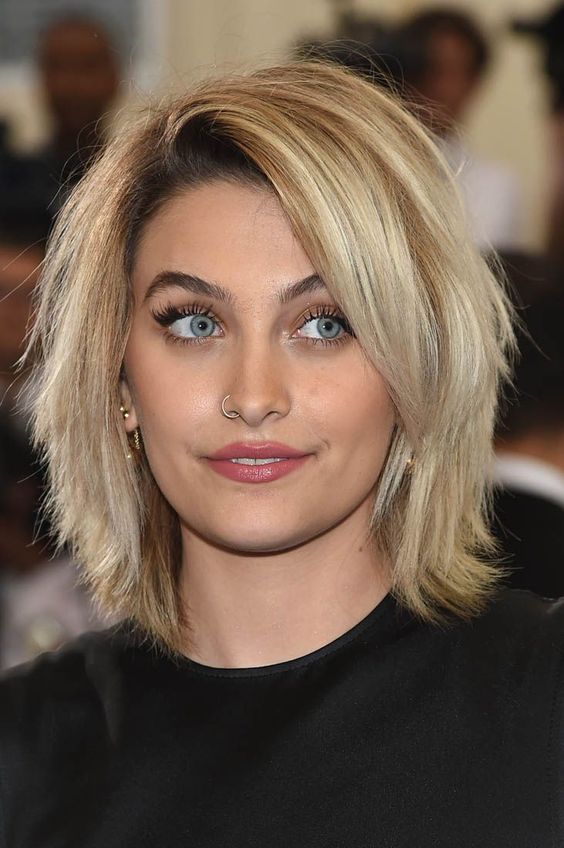
You’ve seen the photos. Those effortless, rock-n-roll manes that look like the wearer just rolled out of a vintage Jaguar in 1970s London. It’s the vibe of Brigitte Bardot meets modern-day Pinterest. But when you walk into a salon and ask for long hair short layers with bangs, things often get... complicated.
Stylists get nervous. They start talking about "shelfing" or "thinning out the ends." They worry you’ll look like you’re wearing a mullet. Honestly? They aren't entirely wrong to be cautious. This specific haircut is a high-wire act of geometry and texture. If the "short" layers are too blunt and the "long" hair is too sparse, you end up with two different haircuts living on one head. It's a disaster. But when it's done right? It is arguably the most transformative non-color change you can make to your face.
The Geometry of the "Internal" Layer
Most people think layers are just about the hair they can see on the surface. That's a mistake. The secret to making long hair short layers with bangs work is what pros like Chris Appleton or Jen Atkin call "internal weight removal."
Short layers on long hair create lift. Physics is a real jerk to long hair; weight pulls everything flat to the scalp. By carving out shorter pieces around the crown—sometimes as short as the cheekbone—you’re essentially creating a kick-stand for the rest of your hair. It pushes the longer lengths out and up.
If you have fine hair, you have to be careful. Too many short layers and you lose the "hemline" of your hair. You want the bottom to look thick, not like a few lonely stragglers. For thick-haired humans, this cut is a godsend. It removes the "triangle head" effect that happens when hair just hangs there. It gives the hair somewhere to go.
Bangs: The Anchor of the Look
You can't talk about this cut without talking about the fringe. The bangs aren't just an accessory here; they are the starting point for the entire architecture of the style. Usually, we're talking about a curtain bang or a heavy, "bottleneck" fringe.
- The "Starting Point": Your shortest layer should usually connect to the corner of your bangs.
- The "Swing": This creates a diagonal line that draws the eye toward your cheekbones.
- The "Blend": If the bangs are isolated, the look feels dated. They need to "melt" into those short layers.
Why Everyone Is Obsessed With the Butterfly Cut Right Now
Social media has rebranded this look a dozen times. Last year it was the "Wolf Cut." This year, it’s the "Butterfly Cut." Whatever you call it, it’s basically long hair short layers with bangs with a fancy marketing name.
The Butterfly Cut specifically relies on those short layers being concentrated at the top and front. It’s designed so that if you pin up the back, it looks like you have a short bob. It’s hair catfishing. It’s brilliant. The reason it’s trending in 2026 isn't just aesthetics—it’s functionality. We’re all busy. We want hair that looks like we did something when we actually just let it air dry with a bit of sea salt spray.
Reality Check: The Maintenance Trap
Let’s get real for a second. This isn't a "zero-maintenance" look. If you have stick-straight, fine hair, those short layers are going to lay flat unless you give them some help. You’re going to need a round brush. Or at least one of those fancy blowout tools.
And the bangs? They grow. Fast. You’ll be back in the chair every 3 to 4 weeks for a trim unless you’ve mastered the art of the bathroom-mirror-trim (which I generally advise against, but hey, we’ve all been there). If you aren't prepared to style the top section of your hair daily, this might not be the path for you.
The Face Shape Conversation
We’ve been told for decades that certain faces "can’t" wear certain cuts. That’s mostly nonsense. It’s about where the layers hit, not if they exist.
- Round Faces: Keep the short layers starting below the chin to elongate.
- Square Faces: Use those short layers to soften the jawline with wispy ends.
- Long Faces: This is your holy grail. Short layers and bangs break up the vertical line and add necessary width at the cheeks.
It's all about balance. A skilled stylist will look at your bone structure before they even pick up the shears. They aren't just cutting hair; they're contouring your face with protein fibers.
Styling: Don't Overthink It
You don’t want it to look "done." That’s the quickest way to make long hair short layers with bangs look like a pageant hairstyle from 1994.
- Use a volumizing mousse on damp hair. Focus on the roots of the short layers.
- Dry the bangs first. Always. If they air dry, they have a mind of their own.
- Use a large barrel curling iron or a flat iron to flip the short layers away from the face.
- Finish with a texture spray. Not hairspray. You want movement, not a helmet.
There’s a specific technique called "over-direction" that stylists use for this. They pull the hair forward toward your nose and cut it there. When it falls back, it creates a gorgeous, cascading effect where the layers get progressively longer. If your stylist isn't moving your hair around and checking the "swing," they might be missing the point of the movement.
The "Shag" Influence
We owe a lot to the 70s shag. The modern version of long hair short layers with bangs is essentially a polished shag. It’s less about the choppy, "mullet" feel of the original and more about a seamless transition. Think Matilda Djerf. Her hair is the gold standard for this. It looks heavy and light at the same time. That’s the paradox of great layering.
Common Mistakes to Avoid
Don't let them use a razor if your hair is prone to frizz. Razors are great for creating lived-in texture, but on the wrong hair type, they shred the cuticle. This leads to split ends faster than you can say "shampoo."
Also, watch out for the "step." This happens when the jump between the short layers and the long base is too aggressive. You want a slope, not a cliff. If you see a visible horizontal line in your hair, the layers weren't blended properly.
What to Ask For at the Salon
Bring photos. I cannot stress this enough. Your "short" might be your stylist's "medium."
Specifically ask for:
- "Face-framing layers that start at the [cheekbone/chin]."
- "Long layers throughout the back to maintain density."
- "Curtain bangs that blend into the sides."
- "Point-cutting on the ends for a diffused look."
Actionable Next Steps
If you're ready to take the plunge into the world of long hair short layers with bangs, start by assessing your hair health. Layers show off damage more than a blunt cut does because the ends of the hair are distributed throughout the length.
- Conduct a Strand Test: If your hair is severely bleached or breaking, wait. Get it healthy first with a bond-builder like Olaplex or K18.
- Buy the Right Tools: Invest in a high-quality 1.25-inch curling iron and a texture spray (like Oribe Dry Texturizing Spray or a budget-friendly version like Kristin Ess).
- Consultation First: Don't book a "cut" right away. Book a 15-minute consultation. See if the stylist understands the movement you’re looking for.
- Style Your Bangs Daily: Accept that your bangs will need 2 minutes of attention every morning, even on non-wash days. A little dry shampoo and a quick blast with a blow dryer goes a long way.
This haircut is a statement. It’s confident, it’s a little bit messy, and it’s incredibly flattering when tailored to your specific features. Don't be afraid of the "short" in the description. Embrace the lift, the volume, and the fact that you’ll finally have hair that actually moves when you walk.