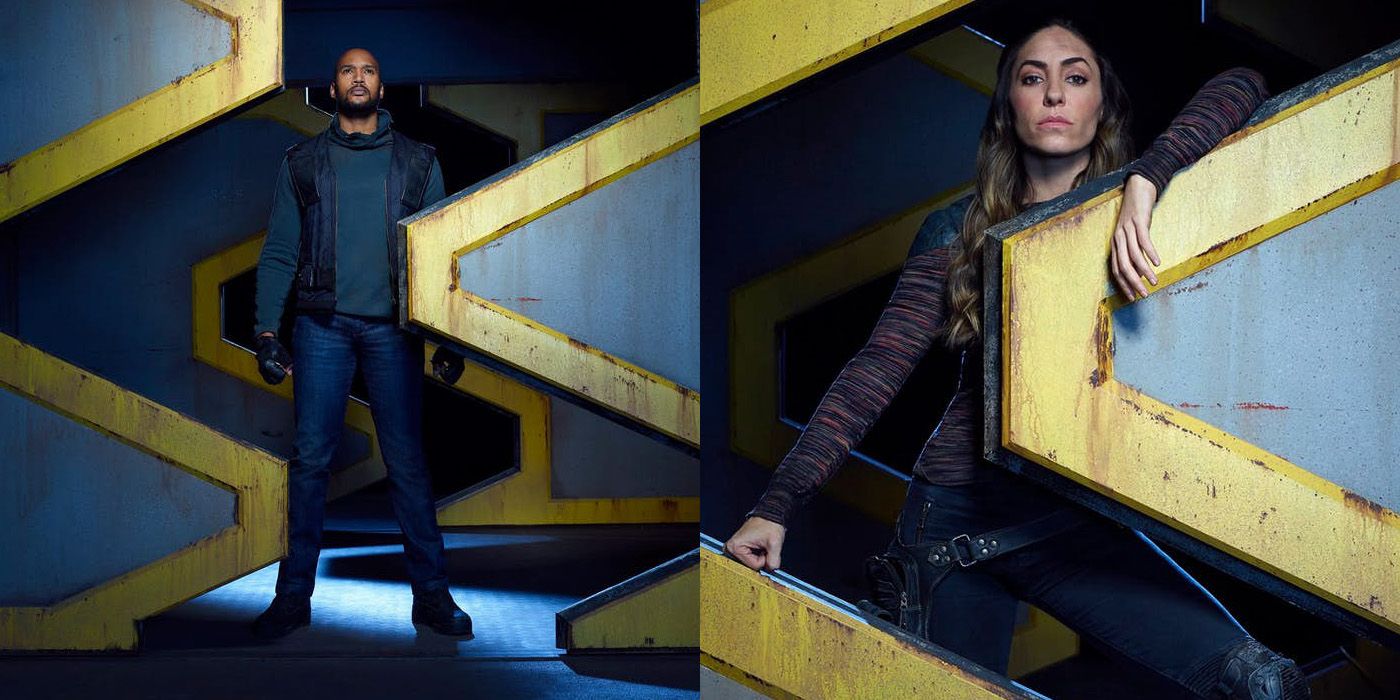
Honestly, when Alphonso "Mack" Mackenzie first walked onto the Bus in Season 2, most of us figured he was just muscle. A big guy to fill the void left by Ward's betrayal. Maybe a mechanic to fix the planes and trade quips with Fitz. We were wrong. Mack Agents of Shield became so much more than a guy with an axe; he became the moral compass of a show that constantly flirted with the dark side of espionage.
He didn't have super soldier serum. No high-tech suit of armor. Just a huge heart, a shotgun-axe, and a stubborn refusal to let the ends justify the means.
The Mechanic Who Became a King
Mack’s journey is wild if you look at the starting line. He was part of the "Real S.H.I.E.L.D." faction, essentially a mole meant to keep an eye on Coulson. But loyalty is a tricky thing in the MCU. He stayed because he cared about the people, specifically Leo Fitz. Their "bromance" wasn't just for comic relief—it was the emotional glue of the middle seasons.
Remember when Fitz was struggling with his brain injury? Mack was the one who didn't look at him with pity. He just sat there and played video games with him. That's Mack. He meets people where they are.
By the time we hit the series finale, Mack isn't just a field agent. He's the Director. He's literally the new Nick Fury, standing on the deck of a Helicarrier in a badass leather trench coat. It’s a massive leap from "chief mechanic," but it feels earned because he was the only one who never lost his humanity.
That Shotgun-Axe Though
You can't talk about Mack Agents of Shield without talking about the "Shotgun-Axe." It’s arguably the coolest low-tech weapon in the entire Marvel Cinematic Universe.
"Axe... plus shotgun. I've been saying it for years." — Alphonso Mackenzie
It started as a joke, then a desperate improvisation in the Iliad hallways against Inhumans. Eventually, it became a custom-built masterpiece. Fun fact: Henry Simmons, the actor who played Mack, actually kept one of the prototypes. He mentioned in interviews that it was the one thing he truly wanted from the set. It’s heavy, it’s impractical for a normal human, and it’s perfectly Mack.
The Framework and the "Hope" of It All
If you want to see why Mack is the emotional heavyweight of the series, look at the Framework arc in Season 4. This is where the show got dark. In this digital prison, Mack has his daughter, Hope, back. In the real world, she died as an infant.
Watching Mack choose to stay in a collapsing digital world because he couldn't bear to lose his daughter a second time? It’s gut-wrenching. It wasn't about "saving the world" for him. It was about being a dad.
When Hope finally flickered out of existence as the code deleted itself, Mack's scream was the most haunting moment in seven seasons. It changed him. It made him more protective, more religious, and sometimes a bit more judgmental of Coulson’s "big picture" moves. But that’s what made him real. He wasn't a soldier; he was a man who had lost everything and still chose to stand up.
Why Mack Still Matters in 2026
Looking back from 2026, the MCU has gotten massive, multiversal, and sometimes a bit detached. Mack reminds us that the best stories are about people who are just trying to do the right thing without losing their souls.
His relationship with Elena "Yo-Yo" Rodriguez is another highlight. It wasn't a perfect TV romance. They fought. They had different philosophies on fate and violence. But they respected each other. Mack didn't need her to be a "damsel," and she didn't need him to be a "hero." They were partners.
Key Takeaways for Fans
If you're revisiting the show or just discovering Mack for the first time, keep an eye on these specific things:
- The moral friction: Watch how often Mack challenges Coulson. He’s the only one who calls out the "spy" logic that gets people killed.
- The physical presence: Henry Simmons is a big dude, but notice how he uses his size to protect rather than intimidate his team.
- The legacy: By the end, Mack isn't just leading S.H.I.E.L.D.; he's rebuilding it with a soul.
The series finale, "What We're Fighting For," gives him the perfect send-off. He’s in command, he’s got the girl, and he’s still got the axe. He proved that you don't need a cape to lead the world's most dangerous spy agency.
To really appreciate the depth of the character, go back and watch Season 3, Episode 14, "Watchdogs." It introduces his brother, Ruben, and shows exactly where Mack’s protective streak comes from. It’s a grounded, gritty look at a hero who just wants to go home and work on his bike but knows he can't walk away while people are in danger.
Mack didn't just survive the events of Agents of S.H.I.E.L.D.—he defined them. He was the heart of the team, the muscle in the field, and ultimately, the leader the world actually deserved.
For those looking to dive deeper into the lore, start by cataloging Mack's most pivotal "Director" decisions in Seasons 6 and 7. Analyze how his leadership style differs from Phil Coulson’s more secretive approach, specifically regarding transparency with his team. You can also research the behind-the-scenes prop design of the shotgun-axe to see how the production team balanced the "comic book" feel with a functional, cinematic look.