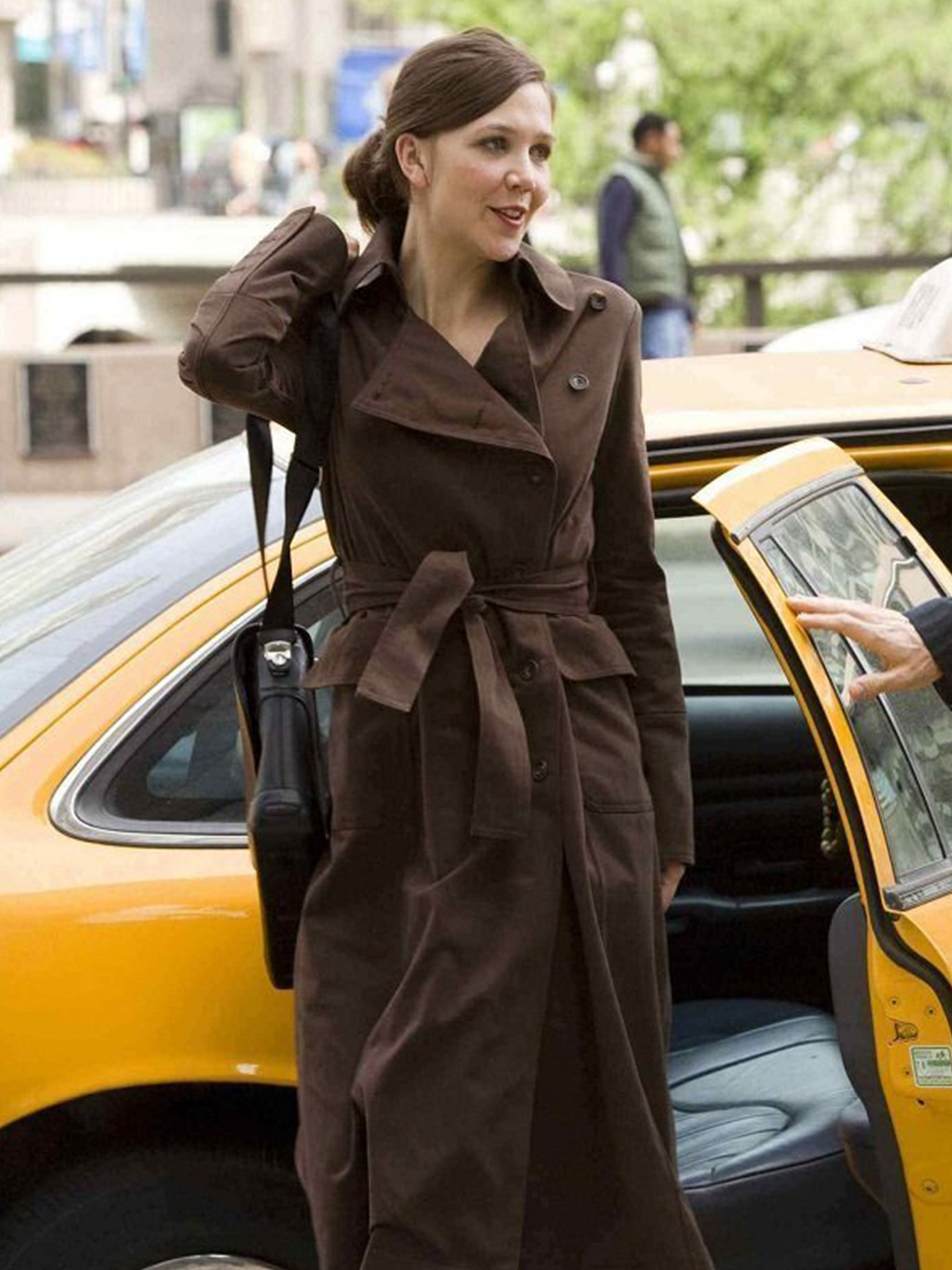
Recasting is usually a death sentence for a franchise’s momentum. Think about it. When you’re mid-trilogy and suddenly a main character has a brand-new face, it pulls you right out of the story. You spend the first twenty minutes staring at the screen thinking, "Wait, that’s not her." But with Maggie Gyllenhaal in The Dark Knight, something weird happened. The movie didn’t just survive the swap; it actually thrived because of it.
Most people remember the 2008 blockbuster for Heath Ledger’s haunting Joker or Christian Bale’s gravelly "I’m Batman" growl. But the backbone of the emotional stakes was Rachel Dawes. Specifically, the version of Rachel played by Maggie Gyllenhaal. Taking over for Katie Holmes, who had originated the role in Batman Begins, Gyllenhaal stepped into a role that was essentially a ticking time bomb.
The Real Reason Katie Holmes Left
The internet loves a good conspiracy. Back in the day, rumors flew that Christopher Nolan fired Holmes or that the studio wanted someone "grittier." Honestly? It was way more mundane.
Katie Holmes simply chose not to come back. She had a scheduling conflict with a movie called Mad Money—a heist comedy with Diane Keaton and Queen Latifah. Look, hindsight is 20/20, but choosing a forgotten caper flick over the greatest superhero movie ever made sounds like a rough call today. At the time, she just wanted to try something different. Nolan later admitted he wasn't happy about the situation, but he didn't hold a grudge. He just needed a new Rachel.
Enter Gyllenhaal.
She didn't just jump at the chance. She actually reached out to Holmes first. Seriously. Gyllenhaal wanted her predecessor’s blessing before signing on. That’s a level of professional class you don't always see in Hollywood. Once she got the green light, she made it clear she wasn't going to do a Katie Holmes impression. She was going to build a "whole new woman."
Maggie Gyllenhaal in The Dark Knight: A Different Kind of Rachel
If Holmes played Rachel as the "girl next door" who grew up to be a lawyer, Gyllenhaal played her as the smartest person in the room who happened to be dating a district attorney.
There’s a world of difference in the energy.
In Batman Begins, Rachel is often the person Bruce needs to save. She’s the moral compass, sure, but she feels like a tether to his childhood. By the time we get to Maggie Gyllenhaal in The Dark Knight, Rachel has evolved. She’s weary. She’s dealing with the reality of Gotham’s mob trials and Harvey Dent’s chaotic ambition.
Gyllenhaal brought a world-weariness that made the character feel like she actually lived in a city as depressing as Gotham. When she’s at that swanky fundraiser and the Joker shows up, she doesn't just scream. She stands her ground. She talks back to him. There’s a certain "I don’t have time for this" vibe that Gyllenhaal nails.
The Chemistry Factor
Let’s talk about the love triangle. It’s a core part of why the movie works. You have Bruce Wayne (the billionaire vigilante) and Harvey Dent (the "White Knight" of Gotham) both obsessed with the same woman.
For that to feel real, Rachel needs to be more than just a "damsel." She needs to be someone worth losing your mind over. Gyllenhaal’s chemistry with Aaron Eckhart felt adult and grounded. You could believe they were two lawyers who spent their nights talking about subpoenas and justice. At the same time, her scenes with Bale felt heavy with history.
Critics at the time, like those at Variety and The Guardian, noted that Gyllenhaal made Rachel feel like a peer to the men, rather than a prize. That’s a subtle but massive shift in how the character functioned in the plot.
The Tragedy That Changed Everything
You can't discuss Maggie Gyllenhaal in The Dark Knight without talking about the warehouse.
The Joker’s "social experiment" forced Batman to choose between saving Harvey or saving Rachel. It’s one of the most brutal sequences in modern cinema. Gyllenhaal’s performance in those final moments—trapped, talking to Harvey through a speaker, realizing she isn't going to make it—is gut-wrenching.
She doesn't play it with melodrama. She plays it with a terrifyingly calm acceptance.
When she dies, it isn't just a plot point. It breaks the movie’s world. Bruce retreats into his grief, eventually leading to his retirement at the start of The Dark Knight Rises. Harvey, of course, becomes Two-Face. If Gyllenhaal hadn't made us care about Rachel in those first two acts, the second half of the movie would have fallen flat.
Why Some Fans Still Debate the Switch
Of course, not everyone was a fan.
If you spend five minutes on Reddit, you'll find threads from people who preferred the "innocence" Holmes brought to the role. Some felt the transition was too jarring. And yeah, it is weird when a character’s eye color and facial structure change overnight. But most film historians and fans now agree that the darker tone of the sequel demanded an actress with Gyllenhaal’s specific gravitas.
She was an Oscar nominee for a reason. She brought an indie-film sensibility to a massive summer tentpole.
Lessons From Gotham’s Leading Lady
Looking back, the casting of Maggie Gyllenhaal in The Dark Knight is a masterclass in how to handle a mid-series replacement.
- Don’t imitate. Gyllenhaal didn't try to match Holmes's speech patterns or mannerisms. She focused on the core of the character—her ethics—and built outward.
- Raise the stakes. The sequel was higher-pressure, so the performance was higher-intensity.
- Respect the predecessor. By getting Holmes's blessing, Gyllenhaal avoided any "drama" that could have overshadowed the film’s release.
If you’re rewatching the trilogy this weekend, pay attention to the Penthouse scene where she first meets the Joker. Watch her eyes. She’s terrified, but she’s also observing him. That’s the Gyllenhaal touch. She wasn't just a love interest; she was a participant in the tragedy of Gotham.
For your next steps in exploring the Nolan-verse, compare the courtroom scenes in Batman Begins with the dialogue-heavy office scenes in The Dark Knight. You’ll notice how the writing for Rachel shifted to accommodate Gyllenhaal’s more assertive acting style, moving her from a supportive childhood friend to a weary, high-functioning professional caught in a crossfire.