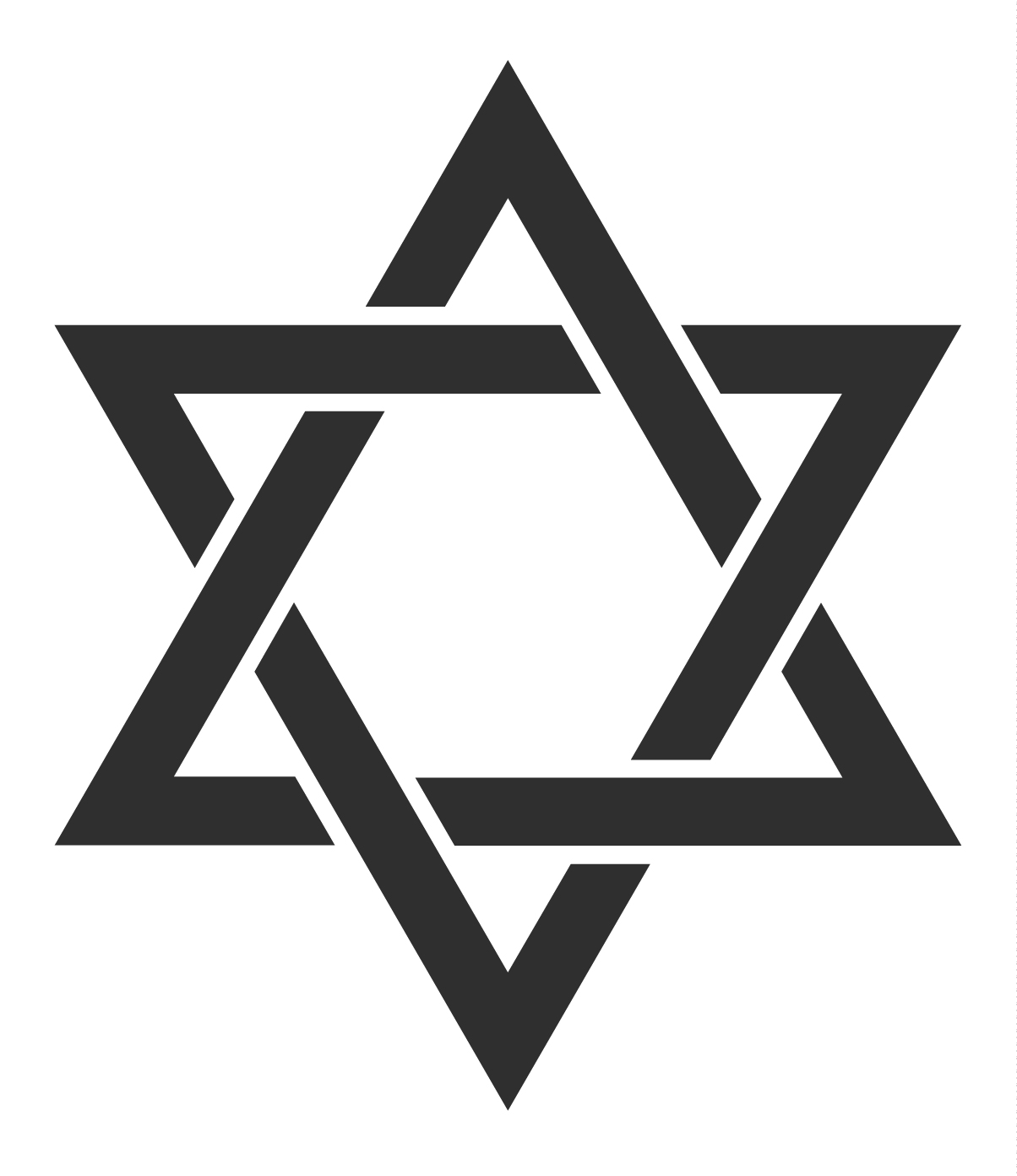
You see it everywhere. It’s on the flag of Israel, dangling from necklaces in gold and silver, and etched into the stained glass of synagogues from New York to Tel Aviv. But if you think the meaning of the Star of David has always been purely religious or even uniquely Jewish, you're in for a bit of a shock.
History is messy.
Most people assume this six-pointed star—the hexagram—is as old as the Torah itself. It isn't. Honestly, for a huge chunk of human history, it was just a geometric pattern used by everyone from alchemists to architects. It didn't start out as a "Jewish" symbol in the way the Menorah did. The Menorah is ancient, dating back to the Tabernacle in the desert. The Star of David? That took a much more winding path to become what it is today.
The Hexagram’s Secret Life Before it Was Jewish
The six-pointed star is basically two equilateral triangles interlaced. It’s mathematically perfect, which is why ancient cultures loved it. Long before it was the Magen David (Shield of David), it appeared in Hindu temples as the Shatkona, representing the union of male and female forms. It showed up in early Christian decorative art. It was all over Islamic architecture, known often as the Seal of Solomon.
Medieval magicians were obsessed with it.
They thought the hexagram had power. In various grimoires and occult texts, the star was a protective talisman meant to ward off demons. It’s funny because we think of symbols as having one fixed "vibe," but symbols are actually like empty vessels. We pour meaning into them over centuries. By the time we get to the Middle Ages, the meaning of the Star of David started shifting toward Jewish identity, but even then, it was mostly used on tombstones or as a printer's mark. It wasn't "the" symbol yet.
Why "Shield of David" and Not "Star of David"?
The Hebrew term is Magen David. That literally translates to "Shield of David."
There's a cool legend about this. The story goes that when King David was fleeing his enemies (specifically King Saul or perhaps during his battles with the Philistines), he hid in a cave. A spider spun a web across the opening in the shape of a six-pointed star, protecting him. Another version says David’s actual physical shield was embossed with this design for divine protection.
Is there any archaeological evidence David carried a star-shaped shield? None. Not a shred.
But the meaning matters more than the metal. The idea of God as a "shield" is baked into Jewish liturgy. Every morning and evening, Jewish people recite prayers that refer to God as the Magen Avraham (Shield of Abraham). Somewhere along the line, the visual of the hexagram became the shorthand for that divine protection. It’s a bit like how a brand logo works—eventually, the image becomes synonymous with the feeling of the brand.
The Kabbalistic Deep Dive
If you ask a mystic about the meaning of the Star of David, they’ll give you a much more complex answer than "it's just a shield."
Kabbalah—Jewish mysticism—is big on the number seven. If you look at the star, you have six points and one central core. That makes seven. The points represent the six Sefirot (attributes of God) like Kindness, Strength, and Beauty, all centering around the seventh attribute, Malchut (Kingship or Sovereignty). It’s a map of the universe, basically.
Think about the directions.
North. South. East. West. Up. Down.
That’s six directions. The star covers all of them, suggesting that God’s presence is everywhere, layering over our reality like a protective blanket.
Another interpretation? The two triangles represent the relationship between God and humanity. One triangle points up—that’s our effort to reach the divine through good deeds and prayer. The other points down—that’s God’s grace or energy flowing back into the world. It’s a cosmic high-five. A connection. It says that you can't have one without the other. It's about balance.
The Darkest Turn and the Yellow Badge
We can’t talk about the meaning of the Star of David without talking about the 20th century. It’s impossible.
For centuries, the star was a point of pride or a simple decoration. But in Nazi-occupied Europe, the symbol was weaponized. The "Yellow Star" that Jews were forced to wear was intended to be a mark of shame and a target for violence. It turned a symbol of divine protection into a tool for dehumanization.
This is where the psychology of symbols gets really interesting.
After the Holocaust, there was a massive movement to "reclaim" the star. Instead of hiding it, the founders of the State of Israel put it front and center on the national flag in 1948. They took a symbol that had been used to mark people for death and turned it into a symbol of sovereignty and life. When you see it on the flag today, it’s flanked by two blue stripes, which are meant to mimic the Tallit (Jewish prayer shawl).
It went from a mystical talisman to a badge of shame to a national icon in the span of a few hundred years.
Modern Day: Beyond the Synagogue
Today, the star has sort of "arrived" in mainstream pop culture. You see celebrities wearing it—sometimes because they are Jewish, sometimes just because they like the aesthetic. It’s a fashion statement. It’s a political statement. It’s a tattoo choice.
But for many, the core meaning of the Star of David remains a sense of belonging. It’s a way of saying "I am part of this story." Whether that story is religious, cultural, or ancestral doesn't really matter. It’s a visual anchor in a very fast-moving world.
Common Misconceptions You Should Know
- It’s not in the Bible. You can search Genesis through Malachi, and you won't find a description of a six-pointed star. It’s a post-biblical development.
- It wasn't always the primary Jewish symbol. For most of history, the Menorah (the seven-branched lampstand) was the main way people identified Jewish spaces.
- It’s not "evil" or "satanic." Some fringe conspiracy theories try to link the hexagram to the "number of the beast" because it has six points, six triangles, and a six-sided hexagon in the middle. This is a modern invention with no basis in the symbol's actual history or Jewish theology.
Actionable Takeaways for Understanding Symbols
If you’re researching the meaning of the Star of David for a project, or perhaps because you're considering wearing one, here is how to approach it with respect and accuracy:
- Acknowledge the Duality: Recognize that the star holds two simultaneous meanings: one of ancient spiritual protection and one of modern national identity. They aren't mutually exclusive.
- Context is King: When you see the star in an Islamic or Hindu context, don't assume it's "the Star of David." Use the correct terminology for those cultures (Seal of Solomon or Shatkona) to show you understand the cross-cultural history.
- Respect the Weight: For many, the star is a reminder of survival. If you're using the symbol in art or design, be aware of the gravity it carries due to its history in the 1930s and 40s.
- Look Closer at the Geometry: Next time you see one, notice if the triangles are interlaced (going over and under each other) or just superimposed. The interlaced version is traditionally more common in Jewish art, symbolizing the inseparable bond between God and the people.
The star is more than just two triangles. It's a survivor. It has been repurposed, stolen, reclaimed, and reimagined. Understanding its history isn't just about learning a definition; it's about seeing how a simple shape can carry the weight of an entire civilization's endurance.
To explore this further, look into the archaeological findings at the Capernaum synagogue, where one of the earliest known Jewish uses of the hexagram was found alongside other symbols. Or, read Gershom Scholem’s definitive essay, "The Star of David: History of a Symbol," which remains the gold standard for understanding how this geometric shape became a global icon.