You’re sitting in a coffee shop in Toronto or maybe a high-rise in New York, and you’ve got a 9:00 AM call with a client in Halifax. You hop on the Zoom link at 8:55 AM, sip your latte, and wait. And wait. Ten minutes later, you realize your client is annoyed because you’re actually an hour late. Welcome to the Nova Scotia Canada time zone—the quirk of geography that has been messing with schedules for over a century.
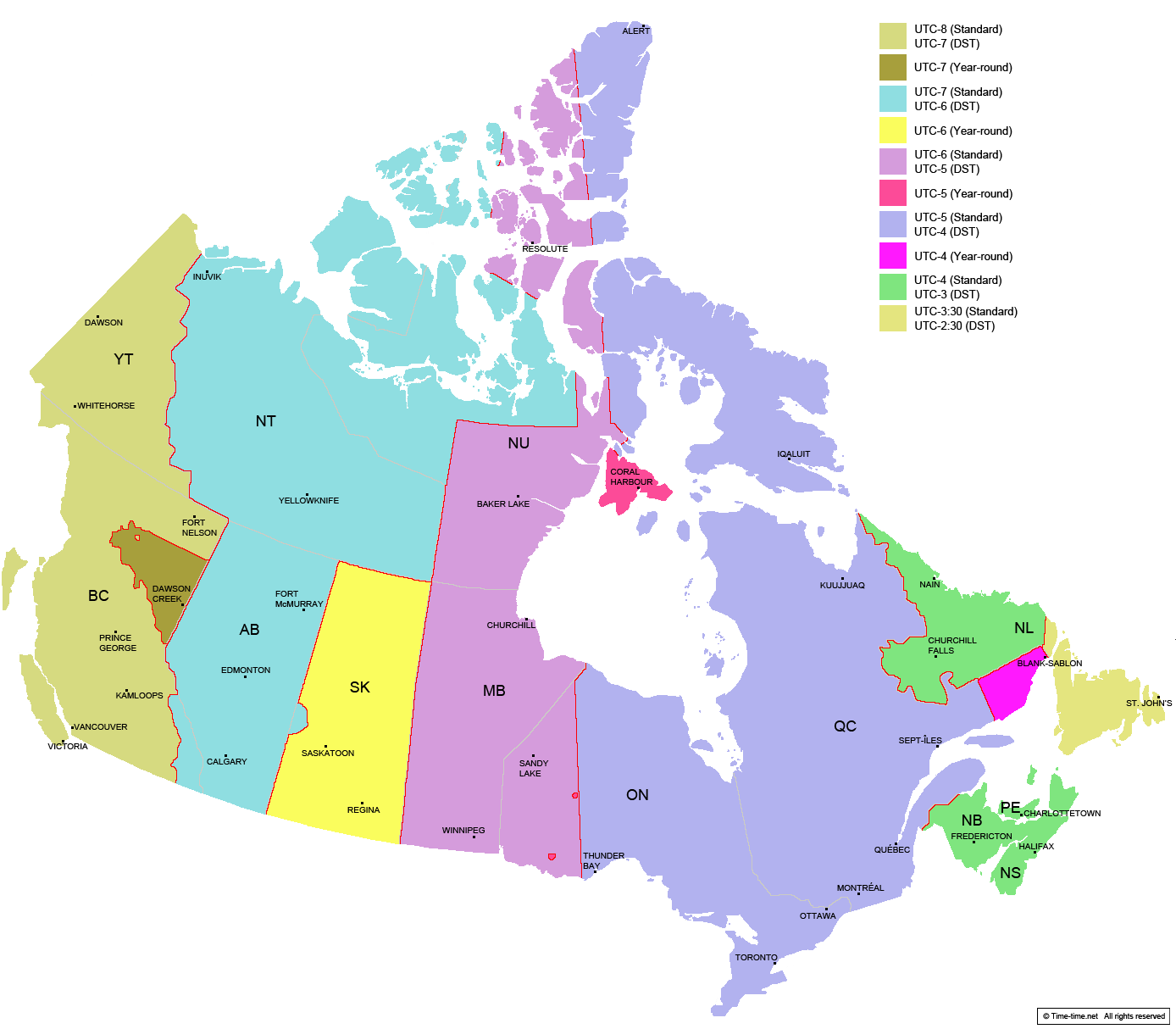
Nova Scotia operates on Atlantic Standard Time (AST). Most people in North America are obsessed with Eastern Time because that’s where the big power centers like DC and Toronto sit. But go further east, past the Maine border and through New Brunswick, and you hit a zone that’s physically closer to the Atlantic Ocean than the Great Lakes. It’s UTC-4. Or UTC-3 if we’re talking about the summer months.
It sounds simple. Just add an hour, right? But honestly, when you're dealing with flight connections at Stanfield International or trying to catch a ferry to Newfoundland—which has its own weird 30-minute time offset—the math starts to feel like a headache.
The Mechanics of Atlantic Time
Let’s get the technical stuff out of the way. Nova Scotia is exactly one hour ahead of Eastern Standard Time (EST). If it's noon in Manhattan, it's 1:00 PM in Halifax.
We use Daylight Saving Time (DST) here. We’re not like Saskatchewan, which just stays the same all year because they’ve decided they’re above the chaos. In Nova Scotia, we "spring forward" on the second Sunday of March and "fall back" on the first Sunday of November. During the summer, we call it Atlantic Daylight Time (ADT).
Why does this matter? Because the sun rises a heck of a lot earlier in Sydney, NS, than it does in London, Ontario. If we didn't have this offset, the sun would be blasting through people's windows at 4:00 AM in June. Actually, even with the time zone, the sun comes up incredibly early. It’s one of those things you don't really grasp until you’re standing on the rocks at Peggy’s Cove at 5:30 AM and the sky is already bright blue.
A Geography Lesson Most People Miss
Nova Scotia is tucked into the far eastern corner of the continent. It’s almost entirely surrounded by water. This creates a weird psychological gap for travelers. You think you’re still "out east," but you’ve actually crossed into a maritime rhythm.
The Nova Scotia Canada time zone isn't just about the clocks; it’s about the light. Because the province is so far east within its own time zone, the "solar noon"—when the sun is highest—happens earlier than it does in places further west in the same zone. This makes the evenings feel shorter in the winter. By 4:30 PM in December, it is pitch black. I’m talking "can’t see your hand in front of your face" black.
Compare that to somewhere like Indianapolis, which is on the far western edge of the Eastern Time Zone. There, the sun might stay up until 5:30 PM in the dead of winter. It’s a huge difference for your circadian rhythm.
Dealing With the "Newfoundland Half-Hour"
If you’re traveling through Nova Scotia, you’re probably headed even further east at some point. Maybe the ferry to Port aux Basques?
This is where it gets truly bizarre. Newfoundland is 30 minutes ahead of Nova Scotia.
Yes. Thirty minutes.
It’s one of the few places in the world with a fractional time zone. If you’re driving from Halifax to North Sydney to catch the boat, you have to remember that once you land on the "The Rock," you’ve lost another half hour. If you don't account for this, you'll miss dinner reservations, hotel check-ins, and tours. It’s a logistical trap that catches tourists every single year. Nova Scotia is the "buffer" zone between the rest of the continent and the unique time-keeping of Newfoundland.
Business and the "Halifax Hour"
Working in Nova Scotia means living in the future. At least, compared to your colleagues in Ontario or the US.
Most Nova Scotian businesses have to adapt to the "Eastern" world. If a company in Halifax wants to work with a partner in Vancouver, there’s a four-hour gap. By the time the person in BC is finishing their lunch, the office in Halifax is basically heading home for the day.
- Pros: You get a head start on the day. You can clear your inbox before the "Central" or "Eastern" people even wake up.
- Cons: You’re often stuck in meetings until 6:00 PM or 7:00 PM local time because you're accommodating the West Coast.
There was a push a few years ago by some Atlantic Canadian politicians to move to permanent Daylight Saving Time. The idea was to keep that extra hour of afternoon light in the winter. But as with most things in Canadian politics, it’s complicated. If Nova Scotia moves and New Brunswick doesn't, the Maritimes—which are tiny and interconnected—would be split. Imagine crossing a provincial bridge and having to change your watch. It would be chaos for the trucking industry and the daily commuters in towns like Amherst and Sackville.
Travel Tips for the Chronologically Confused
If you are visiting, don't rely on your "internal clock." It will lie to you.
When you fly into Halifax (YHZ), your phone should update automatically. Usually. I've seen plenty of phones get confused, especially if you’re using a roaming SIM or if you're on a ship near the coast. Always double-check the airport clocks.
Also, keep an eye on the ferry schedules. The Digby, NS to Saint John, NB ferry stays in the same time zone. But the ones going to Newfoundland? They will list "Local Time" for departures and arrivals. "Local Time" is a dangerous phrase when you're crossing a 30-minute boundary.
Sunset chasing
If you’re a photographer, the Nova Scotia Canada time zone is your best friend and your worst enemy. Because we are so far east, the "Golden Hour" happens much earlier than you think. In the summer, you want to be on-site by 7:30 PM for that perfect glow. In October? You better be there by 5:45 PM.
The most famous spot is probably the Cabot Trail on Cape Breton Island. Since you’re driving through mountains and valleys, the "effective" sunset—when the sun disappears behind a peak—can happen even earlier. Plan your hikes with a buffer. Nobody wants to be descending a steep trail in the dark because they forgot Nova Scotia is an hour ahead of Toronto.
Why the World Forgot the Atlantic Zone
When people talk about North American time zones, they usually list: Eastern, Central, Mountain, Pacific.
Atlantic is often left out of the conversation. It’s the "forgotten" zone. Even on national TV broadcasts in Canada, you’ll hear "8:00 PM, 9:00 PM in the Maritimes." We’re the "plus one."
This matters for live events. If the Stanley Cup playoffs start at 8:00 PM Eastern, fans in Nova Scotia are settling in at 9:00 PM. If the game goes into triple overtime—which they always do—people in Halifax are staggering into work the next morning on three hours of sleep. It’s a badge of honor, honestly. Being a sports fan in the Nova Scotia Canada time zone requires a massive amount of caffeine.
Practical Steps for Success
To make sure you don't fall victim to the "Atlantic Gap," here are a few things you should actually do:
- Sync your digital calendar manually: When setting up meetings, always specify "AST" or "ADT." Don't assume the software will catch it, especially if you're inviting people across multiple countries.
- Check the "Fall Back" dates: If you are traveling in early November, be aware that Nova Scotia changes its clocks on the same schedule as the US and the rest of Canada. If your home country (like the UK or parts of Europe) changes on a different weekend, your "usual" time difference will be off by an hour for a week or two.
- The "Plus One" Rule: Just memorize it. Halifax = Toronto + 1. It’s the easiest way to stay sane.
- Watch the Ferry Clocks: If you are heading to Newfoundland, set a secondary clock on your watch or phone to "Newfoundland Time" the moment you get to the terminal. It prevents the panic of thinking you've missed your boarding call.
- Book early flights: Stanfield is a major hub. If you're flying west, remember you’re "gaining" time. A 6:00 AM flight out of Halifax gets you to Toronto by 7:30 AM. It’s the closest thing to time travel we have.
Nova Scotia is a place defined by the sea and the sun. The time zone is just a reflection of its spot on the edge of the world. It’s a little bit faster, a little bit earlier, and just different enough to keep you on your toes. Grab a donair, set your watch forward, and enjoy the extra hour of life.