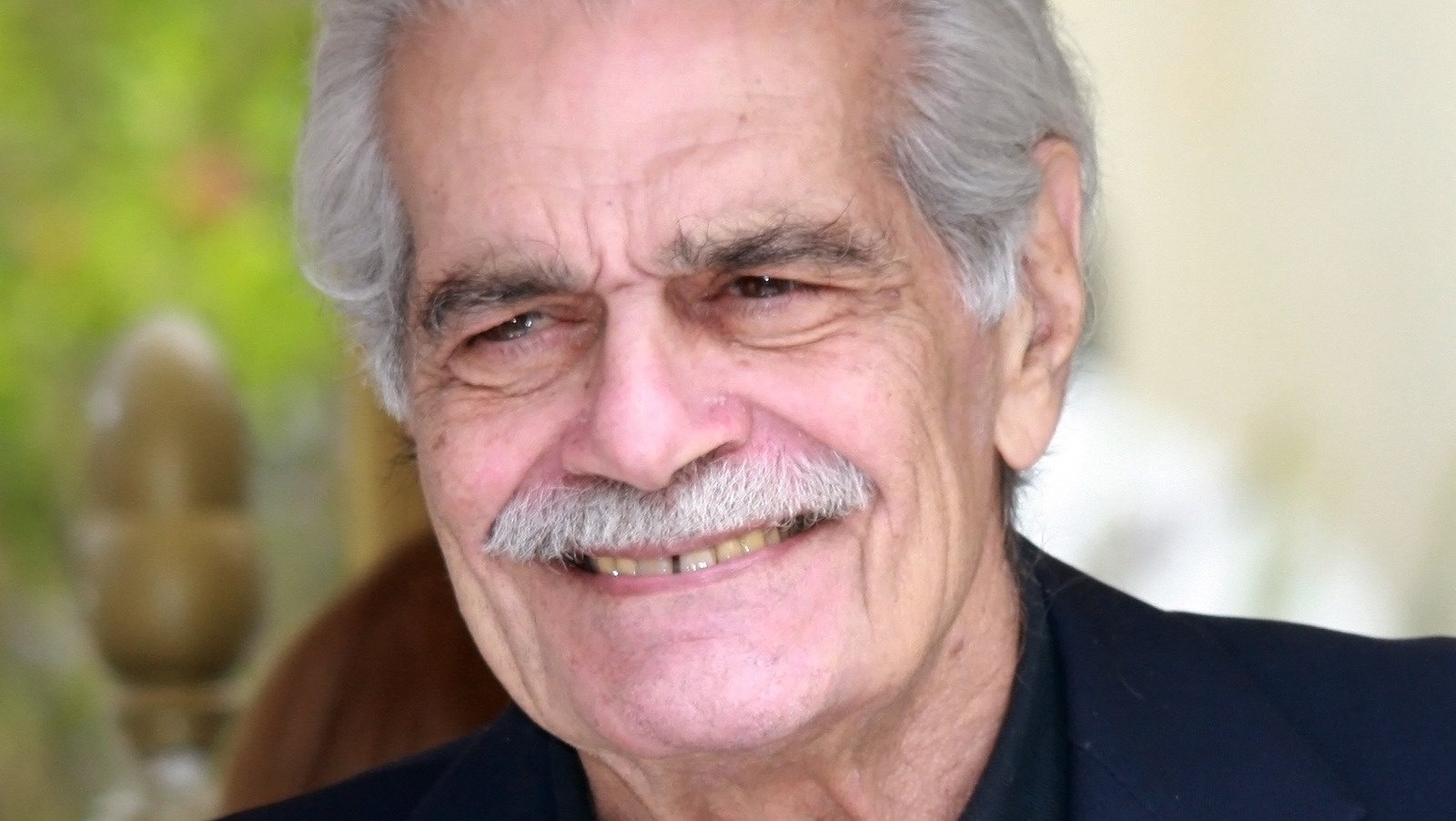
When Omar Sharif first appeared on the giant screens of 1962, he didn’t just walk into a scene; he emerged from a desert mirage in Lawrence of Arabia. It was arguably the greatest entrance in cinema history. But the way he left this world was far less cinematic. It was quiet, confined to the sterile walls of a Cairo hospital, and marked by a cruel irony for a man who spoke six languages and mastered the complex world of professional bridge.
He was 83. The date was July 10, 2015.
For years, rumors had swirled about his health. Fans noticed he was becoming more reclusive. He’d get irritable with paparazzi, once even slapping a woman who crowded him for a photo. People chalked it up to "diva" behavior or old age. The truth was much heavier.
The Official Cause of Death: A Final Heartbreak
The immediate Omar Sharif cause of death was a heart attack. His long-time agent, Steve Kenis, confirmed the news shortly after the actor passed away at a clinic in the upscale Maadi district of Cairo.
His heart had been a ticking time bomb for decades.
You’ve gotta remember that Sharif lived a high-velocity life. He was a legendary chain-smoker, sometimes burning through 50 to 100 cigarettes a day during the height of his fame. That kind of habit catches up. He actually had a major wake-up call in 1992 when he underwent triple bypass surgery. He reportedly quit smoking "cold turkey" after that, terrified by the close call, but the damage to his cardiovascular system was already done.
When he finally suffered that fatal heart attack in 2015, his body was already weary from a much more personal battle.
The Battle No One Saw Coming: Alzheimer’s Disease
While the heart attack was what finally took him, the lead-up to his death was defined by a devastating struggle with Alzheimer’s disease. This was only revealed to the public a few months before he died.
His son, Tarek El-Sharif, broke the news in an interview with the Spanish newspaper El Mundo in May 2015. It was a heartbreaking read. Tarek described how the man who once memorized entire scripts and complex bridge strategies was now confusing his own films.
- He would remember he was a famous actor.
- He would know he starred in Doctor Zhivago.
- But he would ask why fans were approaching him, forgetting he had ever met them.
- He would confuse Zhivago with Lawrence of Arabia.
It’s honestly one of the saddest ways for a polyglot and an intellectual to go. He spent his final months living in a hotel in El Gouna, a resort town on the Red Sea. He’d sit on the terrace, watching the water, perhaps lost in memories he couldn't quite grasp anymore.
The "Bad Heart, Bad Brain" Connection
Medical experts often talk about the link between heart health and cognitive decline. Dr. Chauncey Crandall, a prominent cardiologist, pointed out after Sharif's death that the "bad heart, bad brain" connection is very real.
Basically, the same things that clog your coronary arteries—smoking, high blood pressure, years of stress—also damage the tiny vessels in the brain. For Sharif, his history of heavy smoking and previous heart surgeries likely accelerated the onset of his dementia.
By the time he was hospitalized in Cairo during his final week, he had reportedly stopped eating. His friend, the famed archaeologist Zahi Hawass, told the media that Sharif was "completely depressed" and simply refused food. When the heart attack happened on that Friday morning, his spirit seemed to have already checked out.
Why His Death Still Matters
Omar Sharif wasn't just an actor; he was a bridge-builder between East and West during a time when Hollywood didn't have many seats at the table for Middle Eastern stars. He lived as a "global citizen," moving between Paris, London, and Hollywood, but he chose to die in Egypt.
There’s something poetic about that. After years of feeling like a "foreigner everywhere," as he once put it, he went back to where it all started.
What We Can Learn From His Story
If you're looking for a takeaway from the life and death of Omar Sharif, it’s not just about the dangers of smoking—though that's a big part of it. It’s about the importance of cardiovascular health for the sake of the mind.
- Vascular health is brain health. What’s good for your heart is almost always good for your memory.
- Early signs matter. That irritability and confusion his son noticed three years before the diagnosis? Those are often the first red flags of something deeper than just "getting old."
- Legacy is more than the end. We shouldn't remember Sharif as the confused man in a Cairo hospital. We remember him as Sherif Ali, galloping through the desert, eyes blazing with a fire that no disease could ever truly extinguish.
If you have a family history of heart disease, it's worth talking to a doctor about "vascular dementia" risks. Most people don't realize that managing blood pressure in your 40s and 50s is actually one of the best ways to prevent the kind of decline Sharif faced in his 80s.
Keep your heart strong, and your mind might just follow suit.