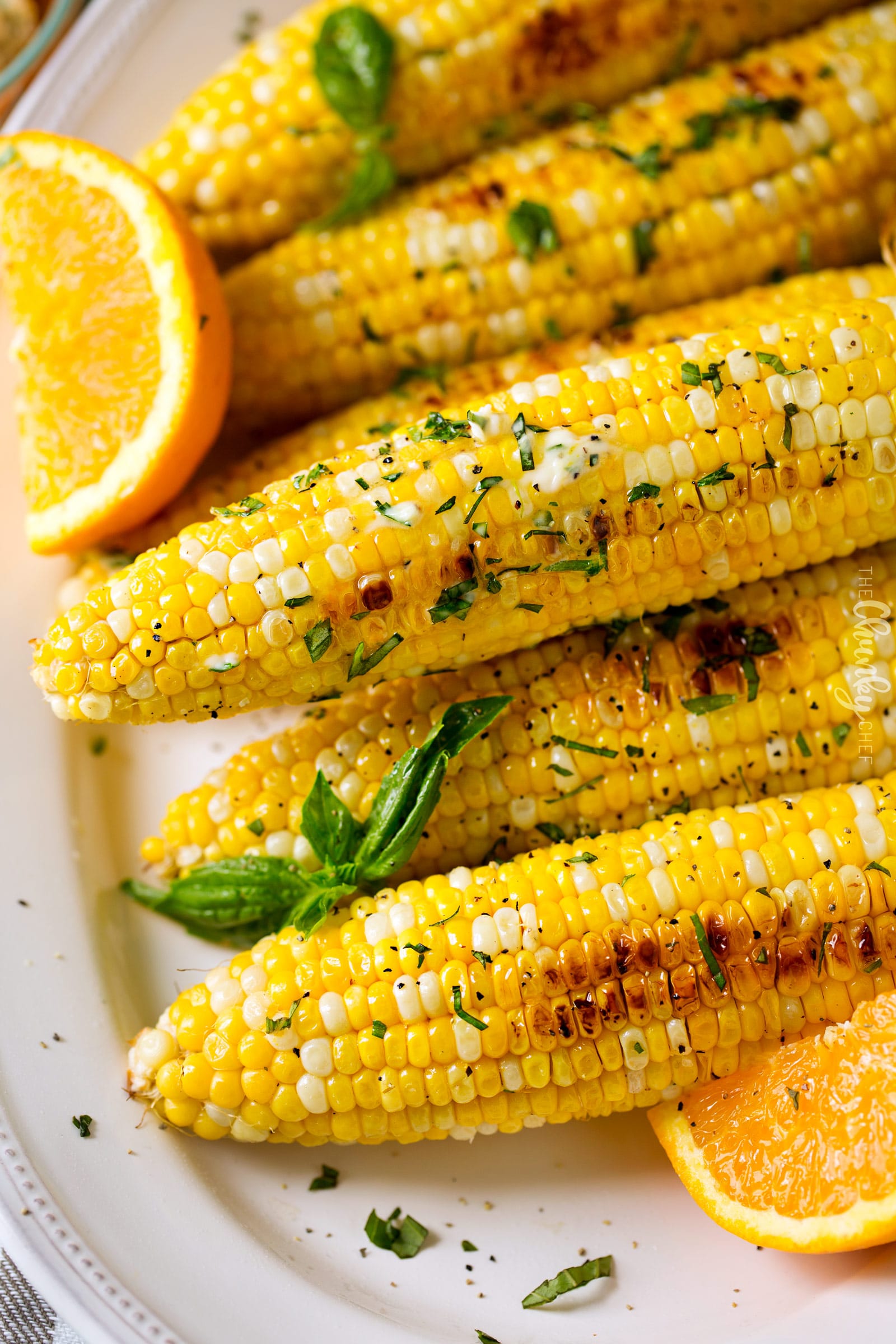
You’ve probably seen those glossy food magazine photos where the corn is perfectly charred, stripped of its silk, and looking like it belongs on a high-end restaurant menu. It’s pretty. It’s also a lot of work. Honestly, the best way to get that deep, concentrated sweetness isn’t by fussing over individual ears or wrapping things in foil like a science project. It’s much simpler. Oven roasted corn on the cob in the husk is the low-effort, high-reward method that most people skip because they think the oven is only for winter roasting. They're wrong.
By keeping the green jacket on, you aren't just roasting; you’re steaming the kernels in their own natural moisture. It’s a closed system. The sugars caramelize without drying out, and that messy silk everyone hates? It practically slides off once the heat does its job. If you’ve ever struggled to shuck cold, stubborn corn over a trash can, you know the pain. This method fixes that.
The Science of the "Husky" Steam
Why does this work better than boiling? Think about it. When you drop corn into a massive pot of water, you’re essentially diluting the flavor. Some of those natural sugars leach out into the water. In the oven, specifically when using oven roasted corn on the cob in the husk, the heat penetrates the outer layers and creates a pressurized steam environment inside.
According to J. Kenji López-Alt of Serious Eats, the husk acts as a protective barrier. It prevents the moisture from escaping too quickly. This is why the kernels come out plump rather than shriveled. If you go naked—roasting the corn without the husk—the direct heat hits the starch and can make it gummy or tough if you aren't careful. The husk is your insurance policy.
It’s also about heat transfer. Air is a poor conductor of heat compared to water, but the trapped steam inside the husk bridges that gap. You get the intensity of a 400°F oven without the scorched, "toothy" texture of grilled corn that's stayed over the coals a minute too long. It’s the middle ground between a backyard BBQ and a stovetop boil.
Stop Pre-Soaking Your Corn
There is a persistent myth in the culinary world that you must soak your corn in a sink full of water for thirty minutes before it hits the oven. People say it prevents the husks from catching fire.
Listen.
Unless you are placing your corn directly against a heating element or using a broiler on high for twenty minutes, your corn is not going to turn into a localized forest fire. The moisture already present in fresh corn husks is usually enough to handle a standard roasting time. Soaking often just leads to soggy husks that are harder to handle and a messier kitchen. If your corn is so dry that the husks are brittle and brown before they even hit the oven, it’s probably too old to be roasting anyway. Freshness matters.
Try to look for husks that are bright green and feel slightly damp to the touch. The silk at the top—the "tassel"—should be brown and sticky, not black and dry. If you pull back the tip and the kernels are pale and plump, you’re golden.
How to Actually Do It Without Making a Mess
Forget the complicated recipes. You don't need a dry rub yet. You don't need a compound butter at this stage.
- Pre-heat your oven. 400°F (204°C) is the sweet spot. Some people go lower, like 350°F, but you lose that slight toasted aroma that makes the oven method unique.
- Prep the ears. Use scissors to snip off any long, dangling silks that might get caught in the oven rack or touch the heating elements. Don't peel them. Just a quick trim.
- Place them directly on the center rack. You don't even need a baking sheet, though using one makes it easier to pull them all out at once.
- Wait. 25 to 30 minutes is the standard. You’ll know they are done when the husks turn a darker, hay-like color and the kitchen smells like popcorn.
When you take them out, give them five minutes. Seriously. The residual heat continues to cook the core, and it makes the shucking process less likely to result in first-degree burns. When you finally pull the husk down, the silk should come away in one or two big clumps. It’s satisfying. It’s also way cleaner than the raw shucking method.
Flavor Profiles and the "After-Roast" Strategy
Once you’ve mastered oven roasted corn on the cob in the husk, the real fun starts with the toppings. Since the corn is already hot and perfectly steamed, it absorbs fats like a sponge.
Most people reach for salted butter. That’s fine. It’s classic. But if you want to elevate it, think about the "Elote" style. You take that roasted ear, slather it in a mix of mayonnaise, Mexican crema (or sour cream), and lime juice. Roll it in Cotija cheese and dust it with ancho chili powder. The creaminess against the sweet, roasted kernel is unbeatable.
Or, go the herb route. Mix softened butter with fresh chives, a bit of lemon zest, and a pinch of smoked paprika. Because the corn was roasted in the husk, it has a very clean, "pure" corn flavor that serves as a perfect canvas for bold spices.
There is a school of thought that suggests adding flavor during the roast. Some people pull back the husks, rub in garlic butter, and then tie the husks back up with twine. It sounds fancy. It’s also largely unnecessary. Most of that butter just ends up at the bottom of the husk or on your oven floor. Save the seasonings for the end when the corn is ready to be eaten.
The Sustainability and Waste Factor
One thing nobody talks about is the waste. When you boil corn, you have a giant pot of "corn tea" that usually goes down the drain. When you roast in the husk, the husks themselves can be composted easily.
More importantly, the husk protects the corn from absorbing any "off" flavors if you happen to have a messy oven or are roasting something else at the same time. It’s a natural bio-packaging. In a world where we’re trying to use less plastic and foil, the husk is the ultimate eco-friendly cooking vessel.
Troubleshooting Common Mistakes
Sometimes things go wrong. If your corn comes out "mushy," you probably left it in too long or your oven temperature was too low, leading to a slow steam rather than a roast.
If the kernels are tough, the corn was likely starchy and old before it ever touched the oven. As corn ages, its sugars convert to starch. No amount of roasting can fix "past-its-prime" produce.
What about the "brown spots"? If you see a few charred kernels through the husk, don't panic. That’s actually a good sign. It means the heat penetrated deep enough to caramelize the sugars. Those spots are often the most flavorful part of the ear.
Practical Next Steps for Your Next Batch
If you’re ready to try this tonight, here is the move. Go to the store and find the heaviest ears of corn you can—weight usually equals moisture.
Check your oven racks. Move one to the middle position. Don’t bother washing the corn; the husk is going to be discarded anyway. If you're worried about the mess, put a piece of parchment paper on a rimmed baking sheet.
Once you pull them out, try the "Kitchen Towel Method" to shuck them. Hold the base of the ear with a towel, grab the silks at the top, and pull down firmly. The heat will have loosened the bond between the silk and the kernel.
For the leftovers—if there are any—cut the kernels off the cob. They are incredible in a cold salad with black beans, red onion, and a sharp vinaigrette. Because they were roasted, they hold their texture much better in a salad than boiled corn does.
Stop boiling your corn. Stop peeling it over the sink. Put it in the oven, leave it alone for a half hour, and eat the best corn of your life. It's really that simple.