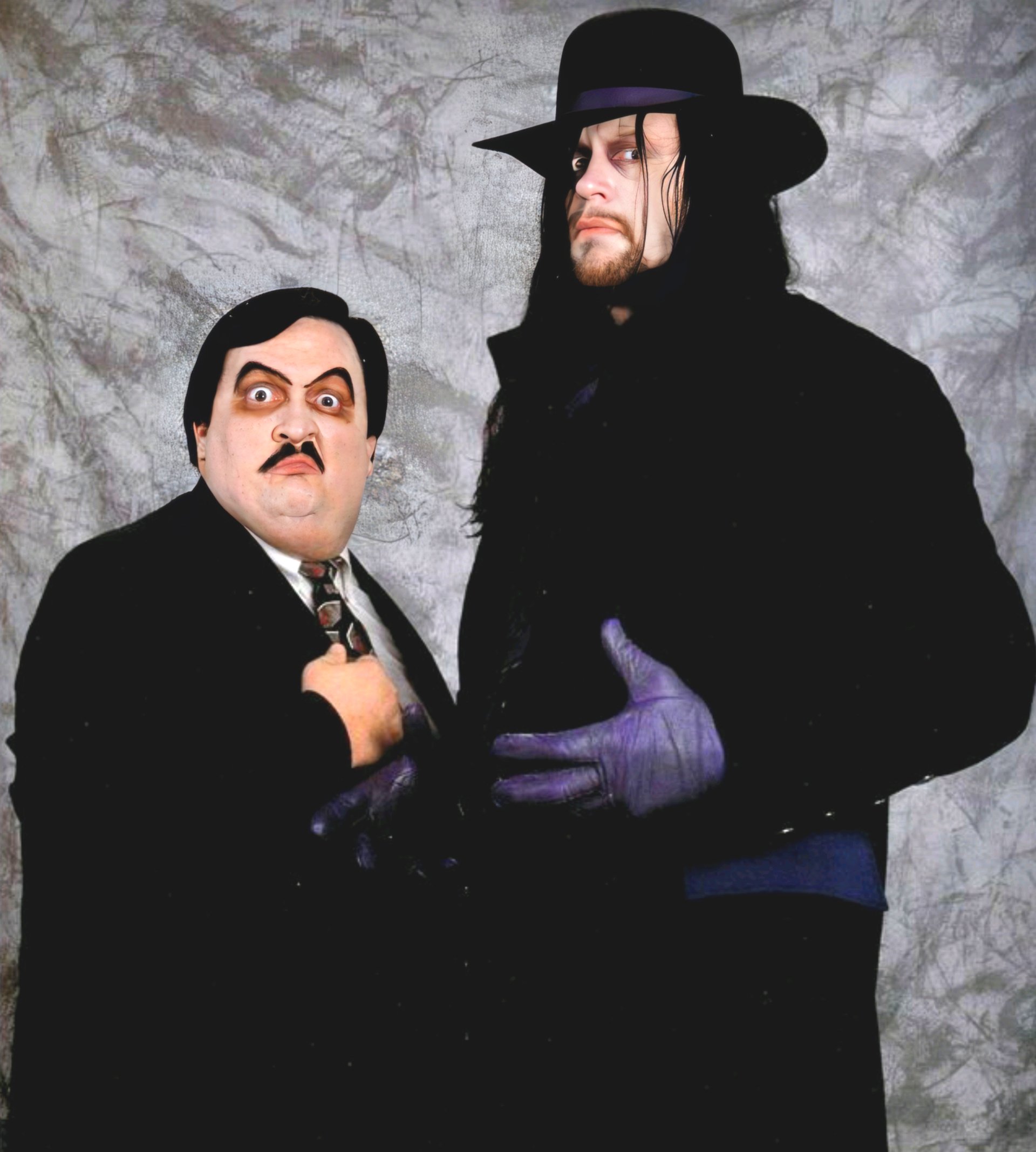
If you close your eyes and think of the early 90s WWE, you probably hear it. That high-pitched, warbling "Ohhh yeeessss!" echoing through a foggy arena. It’s creepy. It’s iconic. Honestly, it’s a bit ridiculous if you step back and look at it objectively. You had a giant man who claimed to be undead and a pale, sweaty manager carrying a gold urn filled with "mystical power."
On paper, this should have failed. It should have been one of those goofy gimmicks that fans laughed at for a month before it vanished into the bargain bin of wrestling history. Instead, the partnership of Paul Bearer with The Undertaker became the most vital foundation of the greatest career in sports entertainment.
The Mortician Who Wasn't Faking It
Most wrestling characters are built on lies. A guy plays a tax collector but doesn't know how to file a 1040. A guy plays a plumber but couldn't fix a leaky sink to save his life.
William Moody—the man behind the Paul Bearer makeup—was different.
When Vince McMahon and Pat Patterson were first looking for a new manager to replace Brother Love (Bruce Prichard), they sat down with Moody. They knew him as "Percy Pringle III," a flamboyant, blond manager from the Texas territories. They didn't know his personal life. During the interview, it came out that Moody was actually a licensed mortician and funeral director.
He had a degree in mortuary science. He had spent years embalming bodies and consoling grieving families.
Vince McMahon reportedly burst out laughing. Not because Moody was funny, but because the luck was so absurd. Here they were, trying to sell a "Deadman" gimmick, and they stumbled upon a guy who literally did the job for a living. This wasn't just casting; it was destiny.
Why Paul Bearer Was Necessary for the Deadman
The Undertaker didn't talk much in 1991. He was a silent force of nature. He was scary, sure, but a silent giant has a shelf life. You need a mouthpiece to tell the story.
Paul Bearer didn't just talk; he performed. He provided the emotional frequency that The Undertaker lacked. While "The Phenom" stood stone-faced and stoic, Bearer was a whirlwind of facial contortions and vocal gymnastics. He gave the fans a reason to be terrified.
The Logistics of the Road
Behind the curtain, the relationship was even deeper. Mark Calaway (The Undertaker) was still relatively green in the early 90s. He was a big guy carrying a massive company on his back. Bill Moody became his "road wife."
Bearer did the heavy lifting. He booked the hotels. He handled the flight arrangements. He talked to the opponents to coordinate the matches. Basically, he protected the character by making sure Calaway could stay in that "Deadman" headspace while he handled the messy reality of being a traveling circus performer.
The Secret, The Fire, and The Big Red Machine
By 1997, the "silent zombie" act was wearing thin. The Attitude Era was starting. Things needed to be grittier. This is where the story of Paul Bearer with The Undertaker took its most dramatic turn.
Bearer turned on his longtime friend. He started talking about "The Secret."
He claimed that as a young man, The Undertaker had burned down his family's funeral home, killing his parents and his younger brother. This wasn't just a wrestling feud; it was a gothic soap opera. Bearer revealed that he had been an apprentice at that funeral home and had saved the brother—Kane—from the flames.
- The Reveal: Bearer announced he was actually Kane’s biological father.
- The Betrayal: He led Kane to the ring at Badd Blood 1997 to cost Taker the Hell in a Cell match.
- The Depth: This gave The Undertaker a human history. He wasn't just a monster anymore; he was a man with a haunted past.
Without Bearer’s ability to sell that story with tears in his eyes and spit flying from his mouth, the Kane debut might have flopped. He made us believe in the arson. He made us believe in the trauma.
The Reality of the Urn
We have to talk about the urn. It was the "source" of The Undertaker's power. Whenever he was beaten down, Bearer would hold it high, the lid would glow, and Taker would sit up.
In real life, that urn was just a prop Bearer picked up from a friend in the funeral business. But it became the most important inanimate object in wrestling history. It was the tether between the two. When Bearer was away from the ring, the character felt incomplete. When he returned at WrestleMania XX, leading The Undertaker out to the "Deadman" theme for the first time in years, the "Ohhh yeeesss!" from the entrance ramp caused one of the loudest pops in history.
The Final Goodbye
William Moody passed away in 2013. It was a massive blow to the wrestling community because, by all accounts, he was one of the kindest men in the industry.
The WWE made a controversial decision to use his death in the storyline for the CM Punk vs. Undertaker match at WrestleMania 29. Some fans hated it. They thought it was disrespectful. However, those closest to Bill, including The Undertaker himself, believed he would have loved it. He was a "company man" through and through. He lived for the business.
The most touching moment came during the 2014 Hall of Fame ceremony. Kane inducted him. At the end of the night, a holographic image of Paul Bearer appeared on the stage, holding the urn one last time while The Undertaker bowed in the ring. It was a rare break in the "Deadman" facade.
What You Can Learn From This Duo
The success of Paul Bearer with The Undertaker wasn't about the spooky makeup. It was about contrast.
- Find your foil. If you are the "silent type" in your professional life, find a partner who can advocate for you.
- Authenticity sells. Bearer was a real mortician. That small grain of truth made the whole "undead" lie believable.
- Longevity requires evolution. They started as master and servant, moved to bitter enemies, and ended as legends. Don't be afraid to change the dynamic of your partnerships to stay relevant.
If you want to truly appreciate the work they did, go back and watch the 1991 vignettes. Watch the way Bearer looks at the camera. He isn't acting; he's inhabiting a world that he and Mark Calaway built together. They weren't just a wrestler and a manager. They were the architects of a myth.
To see how their legacy continues, look at the way modern managers like Paul Heyman use the "advocate" role. They are all working from the blueprint that a squeaky-voiced mortician and a giant from Texas drew up thirty years ago.
Check out the WWE Network archives for the "The Mortician: The Story of Paul Bearer" documentary. It’s the best look at the man behind the urn and will give you a whole new level of respect for what they pulled off in the ring.