If you walk through the gates of ʻIolani Palace in Honolulu today, you’ll feel a weird, heavy stillness. It’s the only royal palace on American soil. But it wasn't built by Americans. It was the home of Queen Liliʻuokalani, the woman who watched her kingdom get snatched away by a group of sugar barons and businessmen backed by US Marines.
Most people think the "overthrow" was some quick, clean political hand-off. It wasn't. It was messy. It was illegal—even the US government admitted that later. Honestly, the story of Queen Liliʻuokalani is less about a "lost era" and more about a woman who tried to play a high-stakes game of chess against people who were playing with loaded dice.
She wasn't just a figurehead. She was a composer. A scholar. A leader who genuinely believed that if she followed the rules of Western diplomacy, the West would respect her sovereignty. She was wrong.
The Hawaii Most People Don't Know
Before the coup in 1893, Hawaii was a powerhouse. We’re talking about a country that had electricity in its palace before the White House did. King Kalākaua, Liliʻuokalani’s brother, had traveled the globe. He was the first reigning monarch to circumnavigate the earth. Hawaii had treaties with major world powers. It was a recognized, independent nation.
When Liliʻuokalani took the throne in 1891, she inherited a nightmare. Her brother had been forced, literally at bayonet point, to sign the "Bayonet Constitution" of 1887. That document stripped the monarchy of its power and, more importantly, took away the voting rights of most Native Hawaiians and Asian immigrants, handing control to wealthy white landowners.
She wanted to fix it.
Liliʻuokalani drafted a new constitution. She wanted to restore power to the people and the throne. But the "Committee of Safety"—which, let's be real, was mostly a group of American and European businessmen—used this as an excuse to claim she was "revolutionary."
The 1893 Overthrow: A Coup in Slow Motion
Imagine looking out your window and seeing the USS Boston landing troops in your backyard. That’s basically what happened. On January 16, 1893, US Marines landed in Honolulu. They didn't fire a shot, but they didn't have to. Their presence alone was an implicit threat: If you fight the businessmen, you fight the United States.
Liliʻuokalani was a pacifist. She hated the idea of Hawaiian blood being spilled in a war they couldn't win. So, she did something clever, or at least she thought so at the time. She yielded her authority temporarily.
She didn't surrender to the local provisional government. She surrendered to the US government, specifically stating she was yielding to "superior force" until the United States could investigate and reinstate her. She put her faith in the American sense of justice.
The Betrayal of "Justice"
President Grover Cleveland actually agreed with her. He sent an investigator named James Blount to Hawaii. Blount’s report was scathing. He basically said the overthrow was an act of war and that the people of Hawaii overwhelmingly wanted their Queen back.
Cleveland tried to get the provisional government to step down. Their response? A giant "No."
They waited him out. They knew American politics. They knew that if they just held on until the next election, they’d eventually get a president who wanted to annex Hawaii for its strategic naval value. That’s exactly what happened when William McKinley took office.
The Imprisonment in the Palace
In 1895, after a failed attempt by royalist supporters to restore her to the throne, Queen Liliʻuokalani was arrested. They found a cache of weapons buried in the gardens of her home, Washington Place. Whether she knew they were there is still debated by historians, but the "Republic of Hawaii" used it to crush her.
They locked her in an upstairs bedroom of ʻIolani Palace for nearly a year.
She wasn't allowed to see anyone except one lady-in-waiting. She wasn't allowed to read newspapers. This is when she wrote Aloha ʻOe, or at least refined it—a song most people think is a simple goodbye song, but is actually a deeply painful metaphor for her losing her country.
She also spent that time composing music and translating the Kumulipo, the Hawaiian creation chant, into English. Think about that. While her world was ending, she was working to preserve the intellectual soul of her people.
The "Great Lie" of Annexation
You’ll often see textbooks say Hawaii was "annexed" by a treaty. That’s technically false.
To annex a country by treaty, you need a two-thirds majority in the Senate. The expansionists couldn't get the votes because enough Senators realized it was an illegal land grab. So, they bypassed the Constitution. They used a "Joint Resolution" (the Newlands Resolution), which only requires a simple majority.
Legally, you can't use a domestic resolution to acquire a foreign country. It’s like me passing a "resolution" in my house that says I now own your car. It doesn't actually work that way in international law. This legal "glitch" is still the basis for the Hawaiian sovereignty movement today.
Why Liliʻuokalani Still Matters in 2026
Liliʻuokalani died in 1917 as a private citizen in a land she used to rule. But her legacy isn't just a tragic story for history buffs.
In 1993, the US government passed the "Apology Resolution" (Public Law 103-150). It was a formal apology to Native Hawaiians for the overthrow. It admitted the United States played a role and that the Native Hawaiian people never "directly relinquished to the United States their claims to their inherent sovereignty."
That’s a big deal. It’s an admission that the legal foundation of Hawaii becoming a state is, at best, shaky.
Surprising Facts about the Queen
- She was a musical prodigy: She wrote over 160 songs. She once said that to compose was as natural to her as breathing.
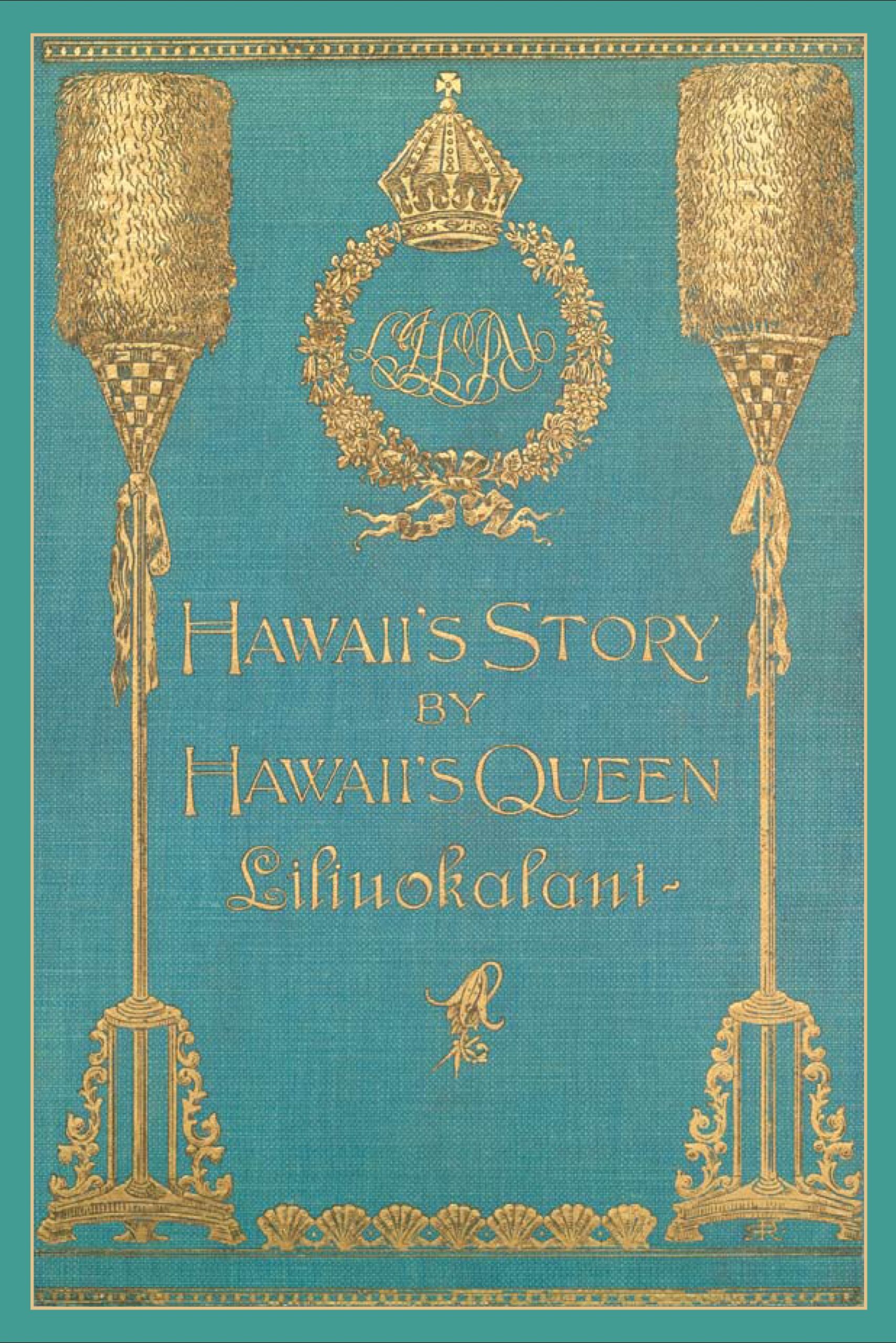
- She was an author: Her book, Hawaii's Story by Hawaii's Queen, is one of the best primary sources for understanding the indigenous perspective on the overthrow.
- She was a world traveler: She attended Queen Victoria’s Golden Jubilee in London. She was incredibly sophisticated and spoke perfect English.
- The "Liliʻuokalani Trust": Before she died, she made sure her personal lands would be used to support orphaned and destitute Hawaiian children. That trust still exists today and is a major social force in the islands.
What Most People Get Wrong
People often frame Queen Liliʻuokalani as a victim who just gave up. That’s a total misunderstanding of her strategy. She was playing a long game. She believed that by not inciting a bloody rebellion, she was preserving the Hawaiian race from total extinction. She chose the survival of her people over the pride of a lost battle.
Also, it wasn't a "conflict between cultures." It was a conflict of greed. Many of the men who overthrew her were the sons of missionaries who had been welcomed into Hawaii with open arms. They used the education and land given to them by the Hawaiian Monarchy to eventually destroy it.
How to Respect This History If You Visit
If you go to Hawaii, don't just stay at the resort. Go to ʻIolani Palace. See the "Quilt" the Queen made during her imprisonment. It’s a crazy piece of history—a crazy, beautiful, heartbreaking record of her life stitched into fabric because she wasn't allowed to write letters.
You should also check out the statue of her between the State Capitol building and the Palace. She’s holding the 1893 Constitution in one hand and extending the other in a gesture of peace. It’s a powerful image of what she stood for.
Moving Toward Actionable Understanding
To truly grasp the legacy of Hawaii’s last queen, you have to look beyond the "hula and hibiscus" tourism version of the islands.
- Read her own words. Get a copy of Hawaii's Story by Hawaii's Queen. It’s a quick read and gives you a direct line into her head during the coup.
- Support Native Hawaiian organizations. If you want to honor her legacy, look into groups like the Liliʻuokalani Trust or organizations working on land restoration and language immersion.
- Recognize the legal nuance. Understand that the "annexation" remains a point of intense legal and political debate. It’s not "settled history" for many people who live there.
- Listen to her music. Don’t just listen to the tourist versions. Find recordings of her hymns and compositions performed by Hawaiian musicians who understand the "kaona" (hidden meaning) behind the lyrics.
The story of Queen Liliʻuokalani isn't just about a fallen monarchy. It’s a case study in how a small nation tries to survive in a world of giants. She lost her throne, but she never lost her dignity, and her influence is arguably stronger today than it was a century ago.