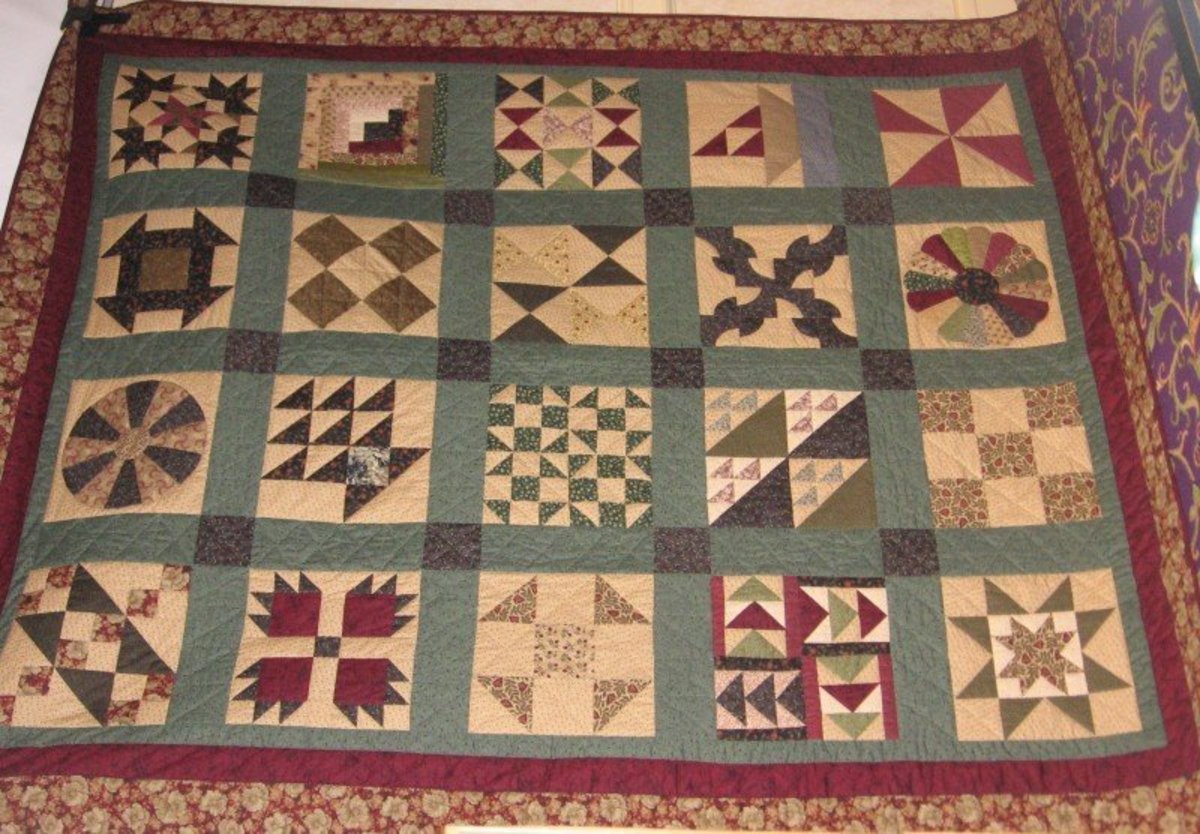
You’ve likely seen the hung quilts. Bright colors, geometric shapes, hanging over a porch railing in the humid Southern air. The story goes that these weren't just blankets. They were maps. Codes. A visual language that guided enslaved people toward the North Star and freedom. It’s a beautiful, stirring narrative that has captured the American imagination for decades. But honestly? If you talk to historians and textile experts today, the reality of quilt patterns from the Underground Railroad is way more complicated than the legend suggests.
History isn't always a straight line. Sometimes it’s a zig-zag, much like the "Drunkard’s Path" pattern itself.
For years, the "Quilt Code" theory has been a staple of school curriculum and museum exhibits. It suggests that specific designs—the Monkey Wrench, the Flying Geese, the North Star—acted as a secret GPS for freedom seekers. If a "Wagon Wheel" quilt was aired out, it meant it was time to pack. If a "Bear’s Paw" appeared, you should follow animal tracks through the woods. It’s a compelling idea. It turns a domestic craft into a tool of subversion. However, when we look at the actual evidence from the 19th century, things get a bit messy.
There is a huge divide between oral tradition and the written record.
The Origins of the Quilt Code Myth and Reality
Most of what we "know" about these codes comes from a single source: Hidden in Plain View: A Secret Story of Quilts and the Underground Railroad, published in 1999 by Jacqueline Tobin and Raymond Dobard. Tobin met an African American quilter named Ozella Williams at a market in Charleston. Williams shared a family story about a secret code passed down through generations. This book basically blew the doors off the topic. It became a bestseller. It was featured on Oprah. Suddenly, every quilt with a geometric pattern was seen as a potential map to Canada.
But historians like Giles Wright and quilt researchers like Barbara Brackman have raised some serious eyebrows.
The biggest issue? The timeline. Many of the patterns mentioned in the "code"—like the Log Cabin or the Bow Tie—weren't actually popular or even documented until after the Civil War. Fabric was expensive. Rare. Enslaved people often didn't have the luxury of specific colored scraps to make intricate, coded designs. Most quilts from that era were "utility quilts"—heavy, functional, and often made from whatever was lying around.
Does this mean the stories are fake? Not necessarily. It just means we have to look at them through a different lens. Oral history is powerful, but it's also fluid. Stories change as they're told. What started as a family metaphor might have evolved into a literal "code" over a hundred years. Or, perhaps, a few specific families used quilts while others used songs like "Follow the Drinking Gourd."
Why the Symbolism Matters Regardless of "Proof"
Whether or not every "Monkey Wrench" quilt was a signal, the symbolism of quilt patterns from the Underground Railroad still tells a deep truth about survival. Enslaved people were master communicators. They had to be. They used "hush harbors"—secret places in the woods—to pray and plan. They used spirituals to convey messages. To think they wouldn't use visual cues in their crafts seems almost more unlikely than the code itself.
Take the North Star pattern.
In a world where you couldn't carry a compass, the Big Dipper and the North Star were literally life and death. If you were escaping, you looked up. If a quilt featured that star, it served as a constant, tactile reminder of the goal. It’s a "pointing" pattern. It’s directional.
Then there’s the Flying Geese. This pattern consists of triangles that look like birds in flight. In the code theory, these triangles pointed the way. If the geese were flying south in the winter, you’d follow them? No, you’d go the opposite way. It’s about movement. Even if a quilt wasn't hanging on a fence to guide a specific person on a specific Tuesday, the presence of these patterns in a home reinforced the idea of escape. It kept the dream of freedom alive in the stitches.
Common Patterns and Their Supposed Meanings
If we look at the list Ozella Williams provided, the patterns form a narrative. It’s basically a checklist for a successful escape.
- The Monkey Wrench: Gather your tools. Get physically and mentally ready for the journey.
- The Wagon Wheel: This one is pretty literal. It meant you were going to be traveling by wagon or that there were hidden compartments available.
- The Crossroads: A warning. It represented a major city or a place where paths diverged—usually Cleveland, Ohio, which was a major hub for the Underground Railroad.
- The Bear’s Paw: Take the mountain path. Follow the tracks of animals to find water and stay off the main roads where patrols might be waiting.
- The Log Cabin: A yellow center square in this pattern supposedly signaled a "safe house."
Kinda fascinating, right?
But here’s the reality check: If you’re a freedom seeker running for your life in the dark, are you really going to stop and analyze the stitching on a quilt draped over a porch? Probably not. You’re looking for a candle in a window or a specific whistle. Historians argue that the "quilt code" might be more of a post-war legend used to teach children about the bravery of their ancestors. And honestly, that doesn't make the stories any less valuable. They are cultural artifacts.
The Role of Textiles in Resistance
We can't talk about quilt patterns from the Underground Railroad without acknowledging how Black women used textiles as a form of agency. In the 1800s, your body wasn't your own if you were enslaved. But your handiwork? That was an expression of your soul.
Quilting bees were one of the few times enslaved women could gather. They talked. They shared news. They gossiped about which plantation owners were "kind" and which were "cruel." If a message needed to be passed, the quilting circle was the perfect cover. Nobody suspected the women sewing blankets of plotting a mass exodus.
There’s also the African influence to consider. Many scholars point to the similarities between American quilt patterns and West African textiles like Kente cloth or Adinkra symbols. These fabrics used geometric shapes to convey proverbs, status, and history. The idea of "encoding" meaning into cloth wasn't a new American invention; it was an ancestral skill brought across the Atlantic.
How to Spot Authentic 19th-Century Quilts
If you’re looking at a quilt in an antique shop and the dealer tells you it’s a "coded Underground Railroad map," be careful. Authentic pre-1865 quilts are incredibly rare. They were used until they fell apart.
Look at the fabric. Is it "Prussian Blue" or "Turkey Red"? Those were common 19th-century dyes. Look at the batting. Is it full of seeds? Before the cotton gin was perfected and widely accessible for personal use, people often stuffed quilts with raw cotton that hadn't been fully cleaned.
Most importantly, look at the wear. A quilt that actually "traveled" or was used as a signal would be rugged.
The Controversy: Why Some Historians Hate the Legend
There’s a bit of a heated debate in the museum world. Some experts feel that focusing on the "Quilt Code" diminishes the actual, documented bravery of people like Harriet Tubman. They argue that by turning the Underground Railroad into a game of "secret symbols," we make it sound easier than it was.
It wasn't a scavenger hunt.
It was a brutal, terrifying journey through swamps and woods, avoided by bloodhounds and slave catchers. When we focus on quilts, we might be romanticizing a period of history that was anything but romantic. On the flip side, proponents of the oral tradition argue that "academic" history has a long track record of ignoring Black stories because they weren't written down in white-owned newspapers.
Both things can be true. The code might be a legend, AND the quilts might have been used in ways we don't fully understand yet.
Actionable Insights for Educators and Enthusiasts
If you want to explore quilt patterns from the Underground Railroad respectfully and accurately, you've got to do the legwork. Don't just take a Pinterest graphic at face value.
Research the Provenance
If you find a "coded" quilt, ask for the story behind it. Who made it? Where did they live? Real history is found in the names of the makers. Check the National Quilt Museum or the International Quilt Museum for their databases on African American fiber arts.
Support Living Traditions
Quilting isn't a dead art. Organizations like the Gee's Bend quilters in Alabama continue to create incredible, improvisational designs that carry the spirit of resistance and creativity. Their work often mirrors the "abstract" style that people associate with coded quilts.
Teach the Complexity
When talking to kids or students, present the "Quilt Code" as a beautiful oral tradition, but balance it with the documented facts of the Underground Railroad. Talk about the "conductors," the "stations," and the actual physical dangers.
Learn the Patterns
If you’re a quilter, try making a "North Star" or "Crossroads" block. As you sew, think about the precision required. Think about the silence of a 19th-century night. Working with your hands is the best way to understand the physical reality of these historical figures.
The story of the Underground Railroad is one of the most incredible chapters in human history. Whether the messages were in the quilts, the songs, or the stars, the message was always the same: Move. Keep going. Freedom is North. To get a real sense of the era, look into the WPA Slave Narratives collected in the 1930s. You'll find thousands of first-hand accounts of life during enslavement. While quilts aren't the primary focus of most, the descriptions of daily life, clothing, and secret communication offer a much clearer picture than any modern legend could.
Start by visiting the Library of Congress digital collections. Search for mentions of "quilting" or "cloth" to see how survivors actually described their work. You might find that the truth is even more impressive than the myth.