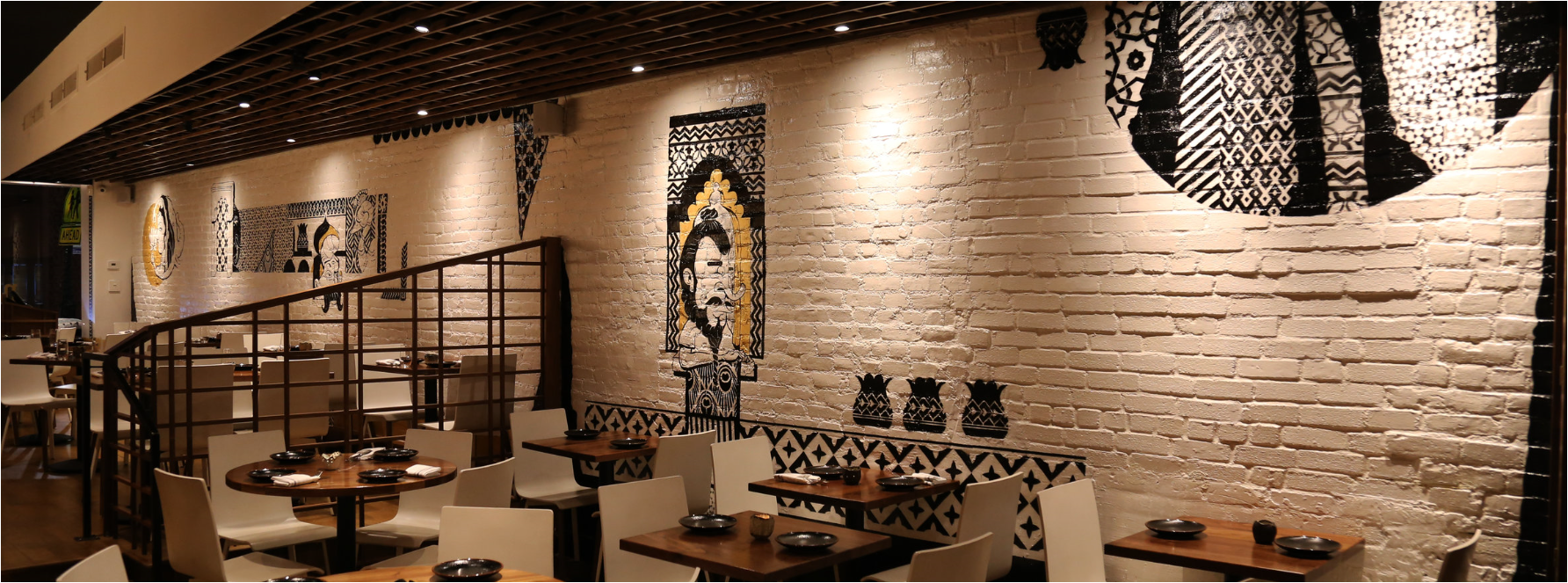
It’s gone. If you walk down Greenwich Avenue looking for that bright, mural-covered wall and the scent of truffle khichdi, you’re going to be disappointed. Rahi New York, the restaurant that basically redefined what "modern Indian" meant in the West Village for five years, officially shut its doors. Honestly, it's a bummer. In a city where restaurants open and close faster than you can snag a Resy notification, Rahi felt like it had staying power. It wasn't just another curry house; it was a vibe.
Most people don't realize how much Rahi changed the neighborhood. When it opened in 2017, the West Village was already packed with dining options, but most Indian spots were either "white tablecloth fancy" or "takeout counter humble." Rahi sat right in that sweet spot. It was chic. It was loud. It was colorful. And the food? It didn't taste like anything else in Manhattan at the time.
The Chintan Pandya Era at Rahi New York
You can't talk about Rahi without talking about Chef Chintan Pandya. Before he became a James Beard Award winner and the king of the Unapologetic Foods empire (think Dhamaka, Semma, and Adda), he was in the kitchen at Rahi. This was his playground. It’s where he started breaking the rules of Indian cuisine that New Yorkers had grown accustomed to.
He wasn't serving butter chicken.
Instead, he was doing things like "Edamame Chakri" and "Octopus Ishtew." It was weird, but it worked. The "Artisanal Indian" label they used wasn't just marketing fluff; it was an actual philosophy. They were sourcing high-end ingredients and applying regional Indian techniques to things you usually saw in French or Japanese kitchens. If you ever had the chance to eat there during those first few years, you saw a chef finding his voice. It was raw and experimental.
The atmosphere matched the plate. You had these massive, colorful murals by artist Dr. Lakra that felt edgy and contemporary. It didn't feel like a stuffy dining room; it felt like a West Village party. That’s probably why it became such a staple for dates and birthday dinners. It felt "cool" in a way that Indian food in NYC hadn't felt in a long time.
Why Rahi New York Really Closed Its Doors
Restaurants close for a million reasons, but with Rahi, it wasn't a failure—it was an evolution.
By 2022, the hospitality landscape in New York had shifted dramatically. The team behind Rahi, led by Roni Mazumdar, was seeing massive success with their other ventures. Adda in Long Island City was a hit. Dhamaka in Essex Market was arguably the hottest table in the entire city. Semma was earning Michelin stars. Rahi, while beloved, was the "older sibling" that had served its purpose.
The lease was up.
Running a restaurant in the West Village is a financial nightmare. Rents are astronomical, and the overhead for a space that size is punishing. Rather than doubling down on a concept that had already peaked, the team decided to pivot. They didn't just walk away from the space, though. They transformed it.
If you go to that same address now, 60 Greenwich Ave, you’ll find Sona, or more recently, a different vibe entirely depending on which month you're checking the news. But the soul of Rahi actually migrated. The team took the lessons they learned at Rahi—that New Yorkers were ready for bold, uncompromising, regional Indian flavors—and poured them into their newer, more focused projects. Rahi was the testing ground for the revolution that followed.
What Made the Menu So Different?
If you're still mourning the menu, you aren't alone. Most "modern" Indian restaurants just add kale to a samosa and call it a day. Rahi was different because it focused on textures.
Take the Mushroom Khichdi. Usually, khichdi is a humble, soft comfort food. At Rahi, they elevated it with truffles and wild mushrooms, turning a "sick day" dish into a luxury experience. Then there was the Chili Cheese Toast. It sounds like something you’d make in a dorm room, but they used sourdough and sharp cheddar with a spice blend that actually had some kick.
- The flavors were bright and acidic.
- They used a lot of seasonal New York produce.
- The plating was minimalist, not messy.
- Spices were used for depth, not just heat.
Honestly, the "Duck Shami Kebab" was probably the best version of that dish in the city. It was rich, gamey, and perfectly seared. It showed that Indian food didn't have to be heavy or greasy to be soul-satisfying.
The Impact on the West Village Dining Scene
Before Rahi, if you wanted great Indian food, you often headed to Curry Hill (Lexington Ave) or out to Jackson Heights. Rahi proved that a high-concept Indian restaurant could survive—and thrive—in a prime Manhattan real estate spot. It paved the way for places like Rowdy Rooster and even the upscale rebirth of the genre.
It also changed how people paired wine with Indian food. Their wine list wasn't just an afterthought of sweet Rieslings. They had funky naturals and bold reds that actually stood up to the cumin and cardamom. They treated the beverage program with the same respect as a high-end Italian bistro.
What Most People Get Wrong About the Closure
People often assume a restaurant closes because it "wasn't busy." That wasn't the case with Rahi. Every time I walked by, the place was humming. The closure was a strategic move by Unapologetic Foods to focus on "unapologetic" regionality. Rahi was "Artisanal," but their newer spots like Semma are "Ancestral." They moved away from the fusion-leaning dishes of Rahi toward a more hardcore, authentic representation of specific Indian states.
It was a shift from Western-influenced Indian to Deeply Rooted Indian.
Actionable Steps for Rahi Fans
If you are still craving that specific Rahi flavor profile, you aren't totally out of luck. Since the founders are still very active in the NYC scene, you can find echoes of Rahi's DNA across the city.
1. Visit Dhamaka for the Energy
If you loved the loud, vibrant atmosphere of Rahi, Dhamaka in Essex Market is the spiritual successor. It’s louder, the food is more aggressive, and it captures that same "cool" factor.
2. Hit up Adda for the Texture
For those who loved the rustic-yet-refined feel of Rahi’s cooking, Adda in LIC uses similar techniques but with a more casual, canteen-style approach.
3. Explore Semma for the "Artisanal" Quality
If it was the high-end ingredients and thoughtful plating that drew you to the West Village, Semma is your best bet. It’s more expensive and harder to get a table, but the culinary precision is a direct evolution of what Chef Pandya started at Rahi.
4. Check for Pop-ups
The NYC food scene is circular. Keep an eye on the Unapologetic Foods Instagram. They occasionally do "greatest hits" events where old favorites from Rahi’s menu make a guest appearance.
Rahi New York might be a memory now, but it was a crucial bridge in the history of NYC dining. It taught a whole neighborhood that Indian food could be edgy, experimental, and incredibly chic. It wasn't just a place to eat; it was the start of a movement that is still dominating the New York food scene today. If you missed it, you missed a vibe. But the chefs who made it happen are just getting started.