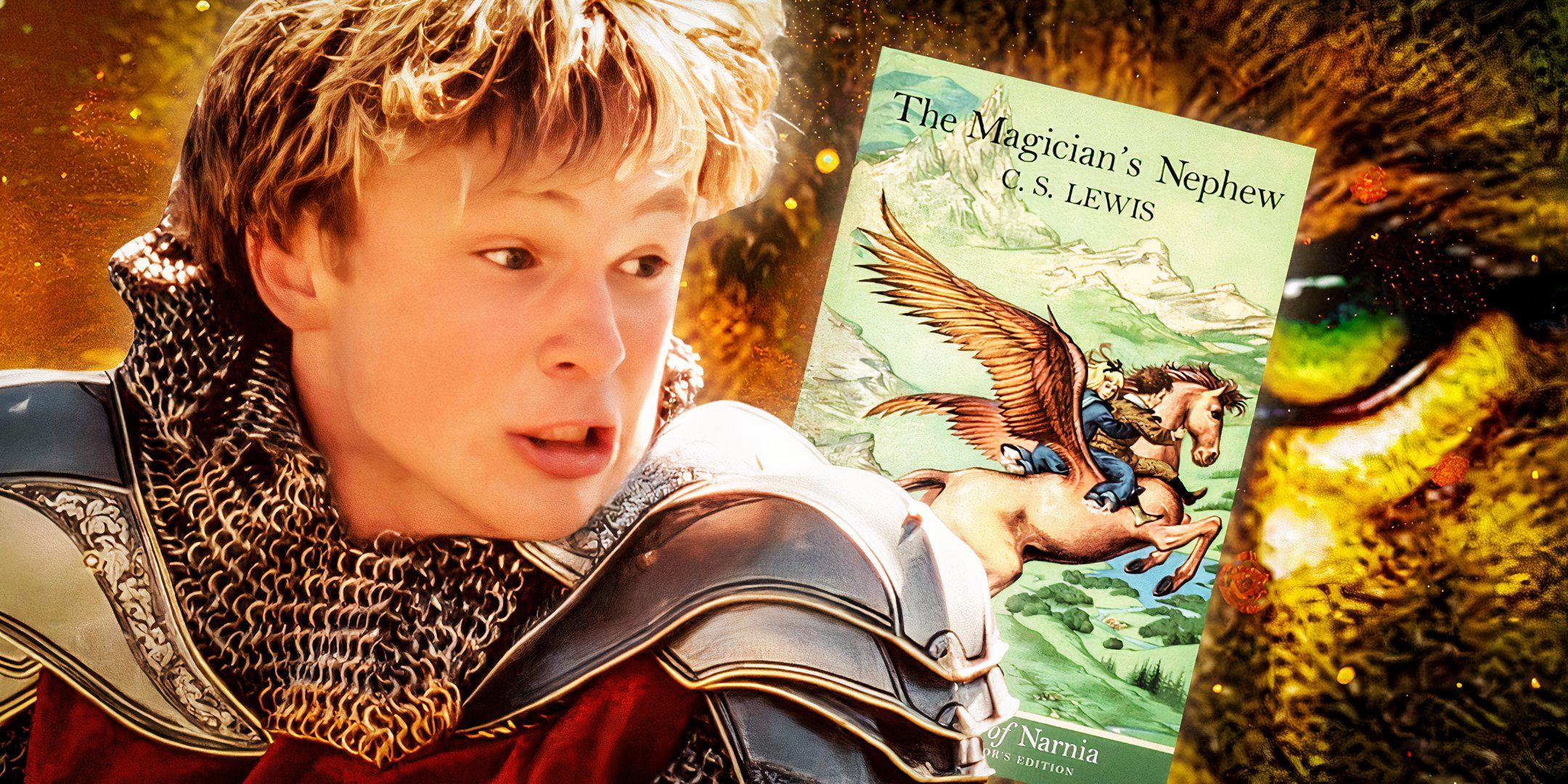
You’re standing in the middle of a bookstore, or maybe you're scrolling through a Kindle library, and you see that iconic lamppost. Your kid is finally getting into "big kid" books, and you think, "Hey, I loved Aslan! Let’s do this." But then you pause. Is this too hard? Too easy? Most people looking for the reading level Chronicles of Narnia usually get a generic "Ages 8-12" slapped on a sticker and call it a day.
That is a mistake.
Honestly, the Narnia books are a weird, beautiful paradox. C.S. Lewis was a scholar of Medieval and Renaissance literature at Oxford and Cambridge. He didn't write "down" to children. He wrote for the human soul. Because of that, the actual technical reading level of these books fluctuates wildly depending on whether you’re talking about the vocabulary, the syntax, or the heavy-duty emotional themes that might honestly be too much for a seven-year-old on a Tuesday night.
The Technical Breakdown: Lexile and Beyond
Let’s get the dry stuff out of the way first. If you’re a teacher or a parent who lives by metrics, the reading level Chronicles of Narnia typically lands in the Lexile range of 790L to 940L.
To put that in perspective, The Lion, the Witch and the Wardrobe is usually around a 5th-grade level (approx. 940L). The Magician's Nephew is slightly lower, around 790L. But these numbers are deceptive. Lexile measures sentence length and word frequency. It doesn't measure the fact that Lewis uses words like "centaur," "prophecy," and "treachery" alongside archaic British slang from the 1940s.
If your kid doesn't know what a "wardrobe" is—which, let's be real, most kids today just see a "closet"—they're already starting behind the 8-ball.
- The Lion, the Witch and the Wardrobe: Grade 4-6
- Prince Caspian: Grade 5-7
- The Voyage of the Dawn Treader: Grade 5-8
- The Silver Chair: Grade 5-7
- The Horse and His Boy: Grade 6+ (The vocabulary here gets surprisingly dense)
- The Magician's Nephew: Grade 4-6
- The Last Battle: Grade 7+ (The philosophy here is... intense)
Scholastic often rates these books with a Guided Reading Level of T, U, or V. Again, that's roughly middle-school territory. If you have a precocious 2nd grader who flies through Magic Tree House, they can probably decode the words in Narnia, but they might miss the entire point of the narrative arc.
Why "Reading Level" Is a Lie
We need to talk about "The Horse and His Boy." Most parents think of it as a side quest. It’s actually one of the more complex books in the series. The sentence structures are longer. The cultural descriptions require a bit more nuance.
Lewis wasn't writing for a specific "reading level" as we define it in 2026. He was writing for a child sitting by a fire who had a decent attention span. Today, we struggle with that.
If you hand The Silver Chair to a kid who is used to the rapid-fire pacing of Diary of a Wimpy Kid, they're going to hit a wall. It’s not that the words are too hard. It’s the "flow." Lewis meanders. He describes the scenery. He talks about the "feel" of the air. That requires a different kind of reading stamina.
The "Read-Aloud" Loophole
Here is the secret: The reading level Chronicles of Narnia drops significantly if you are the one doing the reading.
I’ve seen five-year-olds sit mesmerized by The Lion, the Witch and the Wardrobe because the story is so visceral. When you read aloud, you bridge the gap between their "decoding" level and their "listening" level. Most kids can understand stories at a much higher level than they can actually read on their own.
Lewis’s voice is conversational. He literally breaks the fourth wall. He’ll say things like, "And now we must leave Lucy for a moment," which acts as a guidepost for the reader. This makes it an elite choice for family bedtime.
Does Order Matter for Difficulty?
There is a massive, never-ending debate about reading order. HarperCollins flipped the order to "Chronological" years ago, starting with The Magician's Nephew.
Don't do it.
Start with The Lion, the Witch and the Wardrobe.
Why? Because The Magician's Nephew is actually a harder book to get into. It’s a prequel. It explains the "why" of the world, but it lacks the immediate "hook" of four kids stumbling through a coat closet. If you start with the "first" book chronologically, you might kill the momentum before you even get to Aslan.
Addressing the "Aged" Language
Let's be honest, some of the language is crusty. You’re going to run into words like "suet," "Turkish Delight" (which no kid actually likes once they taste it), and "spectacles."
There are also cultural nuances that feel a bit dated. Lewis was a man of his time. When you're looking at the reading level Chronicles of Narnia, you also have to look at the "comprehension level" of mid-century Britishisms.
Is it a dealbreaker? No. It’s a teaching moment. It’s an opportunity to explain that a "looking glass" is a mirror and that "queer" used to just mean "strange."
The Emotional Heavy Lifting
The real "level" of these books isn't about the words. It's about the stakes.
In The Last Battle, things get dark. Really dark. There is a literal apocalypse. There’s a fake god. People die. If you have a sensitive reader, the technical reading level Chronicles of Narnia doesn't matter as much as the emotional maturity required to process the ending.
Most experts, including librarians like those at the New York Public Library, suggest waiting until age 10 or 11 for the final two books, even if the child read the first one at age 7. There is a jump in gravity.
Actionable Steps for Parents and Educators
If you are ready to dive into Narnia, don't just hand over the boxed set and walk away.
First, check the edition. Some of the newer paperbacks have tiny print that makes the reading level feel much harder than it actually is. Look for a "large print" or a well-spaced hardback.
Second, start with the 1988 BBC or the 2005 Disney film. Normally, I’d say "read the book first," but for Narnia, seeing the world helps kids visualize the descriptions that Lewis spends pages on. It lowers the cognitive load.
Third, bridge the vocabulary. Keep a phone or a dictionary handy. When you hit words like "pavement" (meaning sidewalk) or "beastly," just do a quick translation.
Lastly, embrace the slow pace. Narnia isn't a "fast" read. It’s a "deep" read. If your kid takes a month to get through one book, that’s fine. The goal isn't to level up their Lexile score; it's to get them to wonder if there’s a world behind their own closet.
The best way to handle the reading level Chronicles of Narnia is to treat it like a meal. Some parts are easy to chew, and some parts require a bit of work. But the nutrition is there.
Pick up The Lion, the Witch and the Wardrobe. Read the first chapter. If they’re asking what happens to Mr. Tumnus, you’re golden. If they’re bored by the third page of descriptions about the English countryside, put it back on the shelf and try again in six months. Narnia isn't going anywhere. It’s been there for seventy years, and it'll be there when they're ready.
Next Steps for Readers
To ensure a successful journey through Narnia, begin by reading the first three chapters of The Lion, the Witch and the Wardrobe aloud with your child to gauge their engagement with the descriptive prose. If the archaic vocabulary proves a barrier, supplement the reading with an illustrated treasury edition to provide visual context for mid-century British terms. For older students aiming to master the text independently, use a simplified vocabulary guide to bridge the gap between 1950s English and modern terminology.