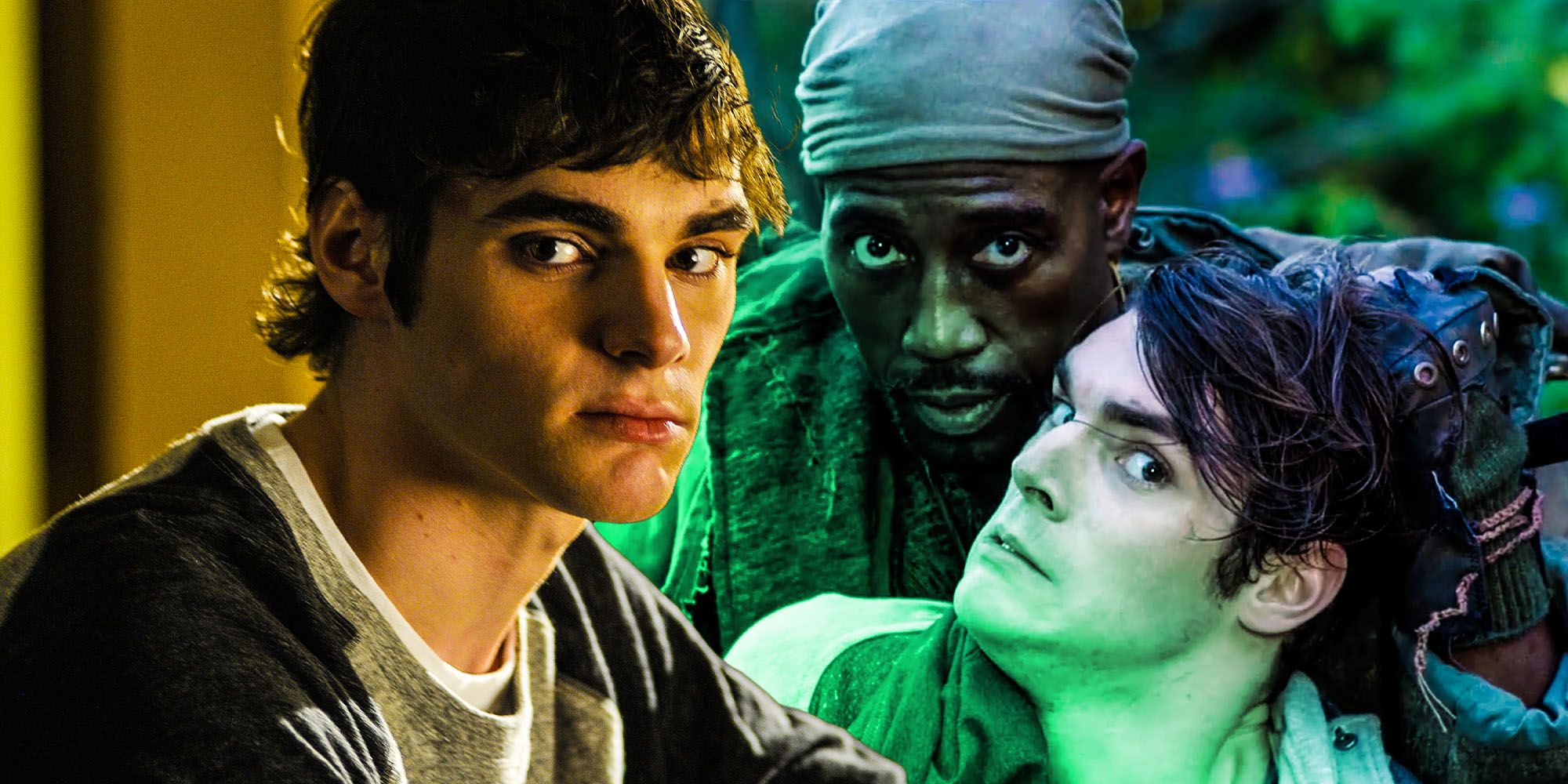
It’s been over a decade since the finale of Breaking Bad, yet people still can't stop talking about the breakfast. You know the meme. Walter White Jr., or "Flynn" as he desperately wanted to be called for a few seasons, sitting at that kitchen table while his world slowly burned down around him. But if you look past the pancakes, there is something much more profound going on with RJ Mitte from Breaking Bad.
RJ Mitte didn't just play a teenager with a disability; he became the moral compass of a show that lacked any actual morality. Most fans remember him as the kid who just wanted his dad to be normal, but the reality of his performance and the impact he had on disability representation in Hollywood is a massive story that often gets sidelined by the flashier "Heisenberg" memes.
Honestly, it’s kinda wild how much Mitte brought to the table. He was seventeen when he started. He had to dial up his own real-life symptoms of cerebral palsy to match the script's requirements. Think about that for a second. Most actors are trying to hide their "flaws," and here he was, exaggerating his physical challenges to ensure the character felt authentic to Vince Gilligan’s vision.
Why RJ Mitte from Breaking Bad Was the Only Innocent Character
In a show filled with meth cooks, neo-Nazis, and corrupt lawyers, Walt Jr. was the only one who didn't break bad. He was the anchor. While Skyler was laundering money and Marie was shoplifting tiaras, RJ Mitte had to play the straight man. He was the victim of a father who claimed everything was "for the family" while simultaneously destroying that very family.
The complexity of his role is usually understated. Fans spent years mocking his love for breakfast, but they missed the subtext. The breakfast scenes were the only times the White family functioned like a real unit. It was the only time they sat together. For RJ Mitte, those scenes weren't just about the food; they were about the agonizing tension of a kid trying to hold onto a normalcy that no longer existed.
Remember the scene where he buys the beer? Or when he tries to defend his mother with a knife? That wasn't just "teen angst." That was the sound of a kid realizing his hero was a monster. Mitte played that transition with a raw, jagged energy that felt uncomfortably real. He didn't have the "cool" lines that Aaron Paul or Bryan Cranston had. He had the heartbreaking ones.
The Reality of Cerebral Palsy on Set
A lot of people actually don't realize that RJ Mitte has cerebral palsy in real life. It wasn't just a "choice" by the casting director to find someone who could act it; they wanted someone who lived it. However, there’s a nuance here that gets lost. Mitte’s CP is actually milder than the version we see in Walter White Jr.
To play the role, he had to relearn how to use crutches. He had to slow down his speech to make it more labored. Basically, he was acting "more" disabled than he actually is. It’s a fascinating inversion of the typical Hollywood trope where able-bodied actors "crip up" for awards. Mitte did the opposite—he leaned into the physicality of his condition to give a voice to a community that rarely sees itself on screen in a non-pitying way.
Vince Gilligan has talked about this in several interviews, noting that the character was inspired by a friend of his who had CP. The goal wasn't to make Walt Jr. a "special" character. The goal was to make him a teenager who just happened to have CP. He had a car. He had friends. He had a bad attitude sometimes. He was human.
Breaking the Mold of the "Sick" Kid
Before RJ Mitte from Breaking Bad, characters with disabilities were often portrayed as either saints or sources of tragedy. Walt Jr. was neither. He was occasionally a jerk. He was sometimes lazy. He was obsessed with his Dodge Challenger.
- He challenged the "Inspiration Porn" trope.
- He showed that a disability doesn't define a person's entire narrative.
- He provided a platform for Mitte to become a literal spokesperson for the SAG-AFTRA performers with disabilities.
This wasn't just about a TV show. It was about changing the industry's DNA. After the show ended, Mitte didn't just disappear into the "former child star" ether. He leaned into his position, working with organizations like United Cerebral Palsy to advocate for better representation.
What Most People Get Wrong About "Flynn"
The name change was a huge deal. People laugh at it now, but for a kid in that position, changing your name to "Flynn" was an act of rebellion. It was a way to distance himself from a father he no longer recognized. When he finally goes back to being "Walter Jr." in the final season, it’s a tragic moment. It’s an acceptance of his heritage, even the dark parts of it.
I think we often forget how much RJ Mitte had to carry in those final episodes. The phone call. You know the one. Where Walt calls him from the bar in New Hampshire, and Jr. just loses it. "Why are you still alive? Just die!"
That scene is a masterclass. It’s the moment the show finally admits that the "family" Walt was protecting is dead. And it was Mitte’s performance that drove the stake through the heart of Walt’s delusions. He wasn't the "weak" son. He was the only one strong enough to tell his father the truth.
Life After the Blue Meth
What happened to RJ Mitte after the show? He didn't stop. He did some modeling—walking for Vivienne Westwood, which is a pretty big flex. He starred in independent films like The Oak Room and Triumph. He even did a stint on Switched at Birth.
But he’s always going to be Walter Jr. to a specific generation of TV fans. And honestly? He seems okay with that. He’s used that fame to pivot into producing and advocacy. He’s one of the few actors from that era who hasn't been swallowed by his character.
There's a specific kind of "E-E-A-T" (Experience, Expertise, Authoritativeness, and Trustworthiness) that Mitte brings to the table. He isn't just an actor; he’s a lived-experience expert. When he talks about the lack of disability roles in Hollywood, people listen because he’s the one who actually broke through the ceiling.
Why We Are Still Talking About Him in 2026
The reason RJ Mitte from Breaking Bad remains relevant isn't just because of Netflix reruns. It’s because the conversation around diversity has finally caught up to what Breaking Bad was doing in 2008. We are finally seeing more disabled actors being cast in roles that aren't about their disability.
Mitte paved the way for actors in shows like Sex Education or Stranger Things to just exist. He proved that an audience doesn't need to feel sorry for a character to love them. They just need to see them as real.
Actionable Takeaways for Fans and Creators
If you're a filmmaker or a writer, there is a lot to learn from how Mitte’s character was handled. If you're a fan, there's a lot more to appreciate on your next rewatch.
- Watch the physicality: Notice how Mitte uses his body to convey emotion, especially in the scenes where he’s frustrated. It’s not just the lines; it’s the struggle to get the words out.
- Look for the subtext: Stop focusing on the breakfast. Look at the way he watches his parents. He’s often the only one in the room who sees the truth.
- Support inclusive casting: The success of RJ Mitte shows that when you cast authentically, the story becomes richer. It adds a layer of reality that you can't fake with a "standard" actor.
- Revisit the final phone call: It’s arguably one of the top five emotional peaks of the series. Mitte’s raw anger is the actual climax of the White family's story.
The legacy of RJ Mitte from Breaking Bad is more than just a supporting role. It’s a landmark in television history. He wasn't just Walter White’s son; he was the soul of the show. While everyone else was busy trying to build an empire or stay out of prison, he was just trying to grow up in a house that was falling apart. That’s a story anyone can relate to, regardless of their physical abilities.
To truly appreciate the depth of the series, you have to stop viewing Walt Jr. as a side character. He was the stakes. He was the reason the "bad" was so tragic. Next time you see a clip of him on social media, remember that the actor behind the character was doing some of the heaviest lifting on the set, both physically and emotionally.
To see the real impact of his work, look at the landscape of TV today. You see more crutches. You see more wheelchairs. You see more neurodivergence. And in a lot of ways, you can trace that back to a teenager in Albuquerque who just wanted some damn veggie bacon.
Check out RJ Mitte’s recent work in independent cinema to see how he has evolved as a performer. His role in The Oak Room shows a completely different side of his range—dark, moody, and intense. It’s a far cry from the breakfast table, but it carries that same signature authenticity he brought to the screen over a decade ago.
Stop looking at the memes and start looking at the performance. That's where the real story is.