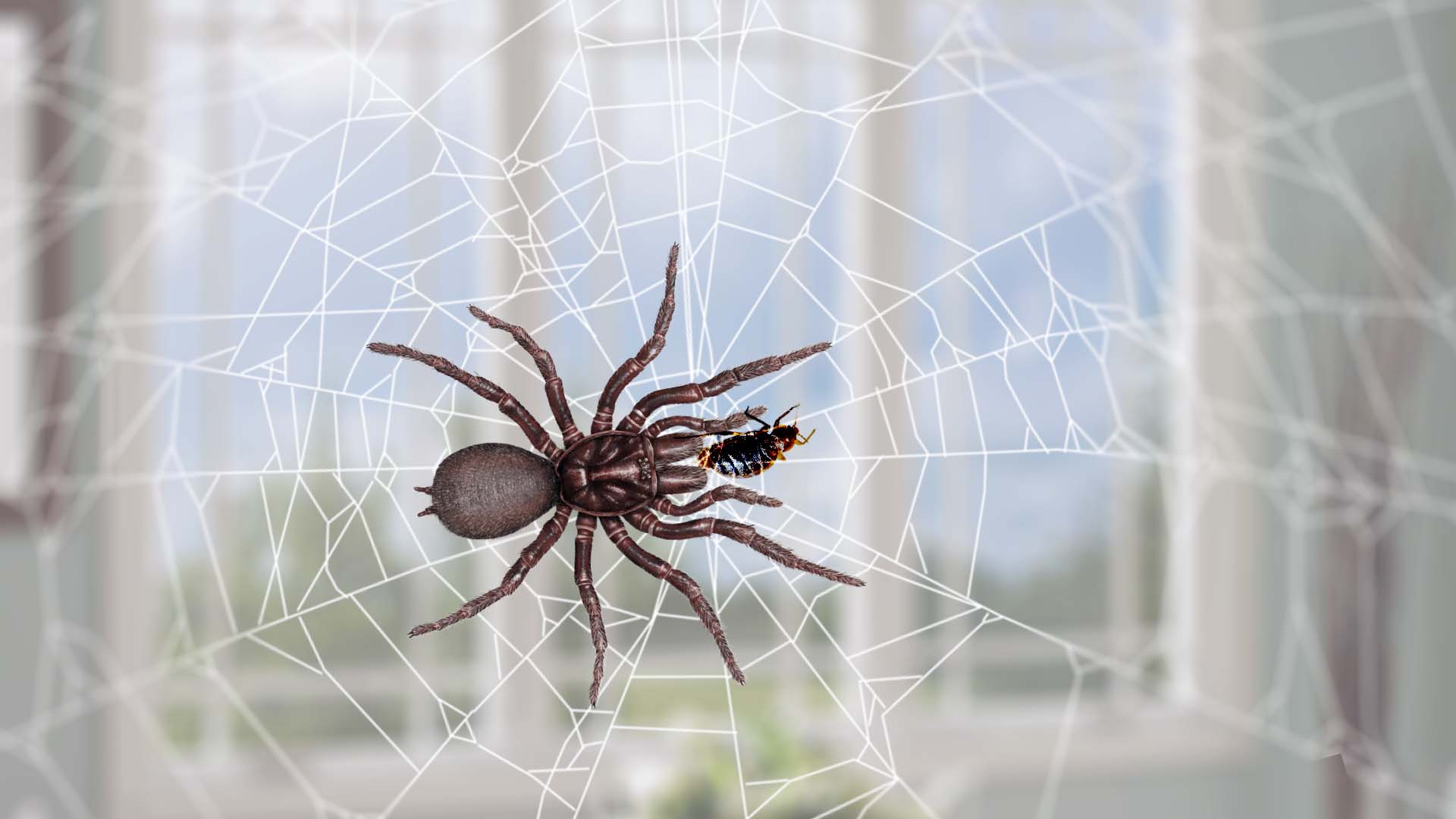
Pixar's 1998 sophomore effort did something weird. It made us like bugs. Most people remember Flik or the terrifying Hopper, but honestly, the heart of the "warrior" troupe was always Rosie. She's the spider from A Bug's Life that everyone recognizes but maybe doesn't know as well as they think. She isn't just "the spider." She’s a Black Widow with a tragic past, a motherly instinct, and a talent for taming rhinoceros beetles.
Most people see a Black Widow and run. Understandable. But Pixar’s character designers, led by Bob Pauley and Bill Cone, flipped that script. They gave her a soft, velvet-like texture and a voice—provided by the legendary Bonnie Hunt—that felt like a warm hug. It’s that contrast that makes her work.
What Most People Get Wrong About Rosie
You probably think she's just a background character. Wrong. Rosie is actually the emotional anchor for the circus bugs. While P.T. Flea is losing his mind over money and Francis is fighting everyone in sight, Rosie is the one keeping the peace.
She’s a Black Widow, yet she’s the least "deadly" personality in the group. Think about that for a second. Pixar was playing with irony before it was cool. Her character design features the classic red hourglass on her abdomen, but she uses her silk for costume repairs and safety nets rather than trapping prey. It’s a subversion of the "femme fatale" trope that usually follows spiders in media.
The Mystery of the Twelve Husbands
Remember that joke? It’s arguably the darkest line in a "G" rated movie. Rosie mentions having twelve husbands. They’re all dead.
In the real world, Latrodectus mactans (the Southern Black Widow) is famous for sexual cannibalism. However, actual entomologists like those at the Smithsonian have noted that males often survive the encounter if the female is well-fed. Rosie’s "husbands" being gone is a direct nod to this biological fact, but delivered with Bonnie Hunt’s signature dry wit. It adds a layer of "black" comedy to a character who is otherwise incredibly sweet. She’s a widow who has moved on to a platonic, deeply loyal friendship with Dim, the rhino beetle.
Their bond is fascinating. Dim is huge, dim-witted (hence the name), and easily frightened. Rosie treats him like a son or a very large, clumsy pet. She’s the only one who can truly control him. When the bird attacks or the grasshoppers threaten the colony, Rosie isn't the one biting; she's the one directing Dim like a tank commander.
How the Spider from A Bug's Life Changed Animation
In 1998, rendering hair and complex limbs was a nightmare. Rosie has six arms/legs visible (since she’s anthropomorphized, she doesn't always show the full eight in a traditional way to make her more "human-like" to the audience).
Animating a spider is hard. Spiders move in a jerky, hydraulic fashion. Their legs don't have muscles like ours; they move via fluid pressure. Pixar’s animators had to balance that "creepy" realistic movement with the fluid, expressive requirements of a circus performer. If she moved too much like a real spider, kids would have been terrified. If she moved too much like a human, the "bug" magic was lost.
They landed on a design that used her multiple limbs for multitasking. You’ll see her sewing, gesturing, and holding Dim all at once. It was a technical showcase for the time.
The Voice of Reason
Bonnie Hunt’s performance shouldn't be overlooked. She brought a mid-western "mom" energy to a venomous arachnid. It’s a masterclass in casting. Originally, the circus bugs were supposed to be more "freak show" and less "lovable losers." Early drafts of the script had them being much more cynical. Rosie was the bridge that helped the audience transition from seeing them as pests to seeing them as a family.
Why We’re Still Talking About Rosie in 2026
It’s about the E-E-A-T—Experience, Expertise, Authoritativeness, and Trustworthiness. In the world of character design, Rosie is a textbook example of how to make an "unpleasant" creature sympathetic.
If you look at modern character design in films like The Bad Guys, you can see the DNA of Rosie. She paved the way for the "misunderstood predator" archetype. She isn't scary because she chooses not to be. That's a powerful narrative tool.
Also, can we talk about the web-slinging? Long before the MCU made Spider-Man a household staple for every toddler, Rosie was using silk as a structural engineering tool. In the final battle against the grasshoppers, her ability to create fast, sticky restraints is what allows the ants to gain the upper hand. She’s the tactical support.
Practical Lessons from Rosie’s Character
If you’re a storyteller or a creator, there’s a lot to learn here:
- Contrast is King: A venomous spider with a heart of gold is more interesting than a ladybug who is just "nice."
- Subvert Expectations: Take the scariest thing in the room and make it the most nurturing.
- Physicality Matters: Use the unique biology of your subject (the silk, the multiple limbs) to solve plot problems.
The Legacy of the Circus Tents
Rosie represents the era of Pixar where every character, no matter how small, had a "soul." She wasn't just "the spider from A Bug's Life." She was a widow, a trainer, a seamstress, and a friend.
When you re-watch the movie today, pay attention to her eyes. Pixar gave her large, expressive, singular eyes rather than the cluster of eight small ocelli real spiders have. This was a deliberate choice to ensure the audience could connect with her emotions. It’s "cheating" biologically, sure, but it’s winning emotionally.
Next time you see a spider in your garden, maybe don't grab the shoe. Think of Rosie. She’s probably just looking for her rhino beetle or a bit of silk to mend a jacket.
To truly appreciate the craft behind Rosie, go back and watch the "outtakes" during the credits. Seeing a digital spider "flub" her lines humanizes the technology of the 90s in a way that modern CGI rarely bothers to do. It’s a reminder that at the end of the day, even the most advanced animation is just a puppet for a great performance.
Identify the character archetypes in your own favorite films. You’ll likely find a "Rosie"—the character who holds the group together while the protagonist gets all the glory. Study how their presence shifts the stakes from simple survival to protecting a family.