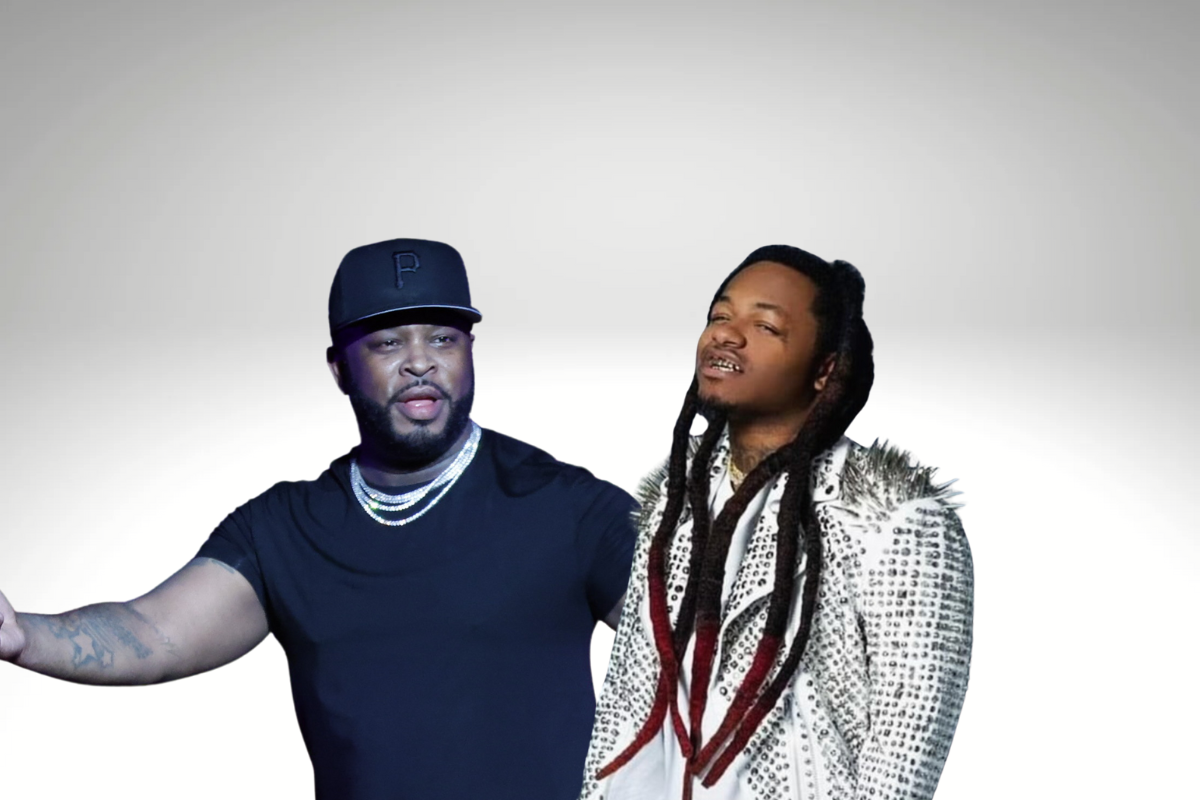
If you grew up in the mid-2000s, you remember the grind. It was the era of baggy jeans, oversized white tees, and a group out of Miami that basically redefined what it meant to be a "boy band" for the hip-hop generation. We’re talking about Pretty Ricky. And while Marcus Cooper (Pleasure P) had the vocals and Spectacular had the abs, everyone knew that Slick Em from Pretty Ricky was the absolute soul of the chaos.
Corey "Slick Em" Mathis wasn't just another rapper in a group. He was the energy. He was the one with the braids flying everywhere, the gravelly voice that sounded like it had seen some things, and a stage presence that felt dangerously unpredictable. Honestly, without Slick Em, Pretty Ricky would have just been another R&B group. He gave them that raw, "Blue Stars" edge that made them a staple on 106 & Park.
But what actually happened to him? If you look at the trajectory of the group, it’s a rollercoaster of platinum plaques, public feuds, and some genuinely concerning headlines that left fans wondering if Slick Em was ever going to catch a break.
The Miami Roots and the Rise of the Blue Stars
Pretty Ricky wasn’t some manufactured group put together by a label executive in a glass office. They were brothers—mostly. Corey "Slick Em" Mathis, Diamond "Baby Blue" Smith, and Spectacular Smith are brothers, with Pleasure P being the "brother from another mother" who rounded out the sound. They were managed by their father, Joseph "Blue" Smith. This family dynamic is key to understanding why Slick Em operated the way he did.
In the early 2000s, Miami’s music scene was dominated by Trick Daddy and Trina. It was loud, fast, and unapologetic. Slick Em embodied that. When "Grind With Me" dropped in 2005, it changed everything. It wasn't a sweet ballad. It was provocative. Slick Em’s verse—shouted more than rapped—cut through the smooth production like a serrated knife. It worked.
The group's debut album, Blue Stars, went gold within months and eventually hit platinum status. People forget how big they were. We are talking about a group that could cause riots at malls. Slick Em was often the focal point of that frenzy because he felt relatable. He wasn't the "pretty boy" archetype; he was the guy from the neighborhood who happened to be a superstar.
The Sound That Defined an Era
Slick Em’s style was basically "organized frenzy." While the other members focused on the choreography and the harmonies, Slick Em was the one keeping the crowd hyped. His flow was rhythmic but choppy, a hallmark of the Florida "bounce" influence.
Think about the track "On the Hotline." The way he interacts with the beat isn't just about lyricism; it's about vibe. He used slang that felt authentic to Liberty City and Overtown. He didn't try to sound like a New York lyricist or a West Coast gangster. He sounded like Miami. That authenticity is why, even years later, his verses are the ones fans scream the loudest during throwback sets.
However, being the "wild one" in a group managed by a strict father figure often leads to friction. As the group’s fame grew, so did the whispers of internal conflict. It’s a story as old as the music business itself: money, ego, and the pressure of staying on top.
When the Music Stopped: The Struggles of Slick Em from Pretty Ricky
Life after the initial peak of the mid-2000s wasn't kind to the group. Pleasure P left to pursue a solo career (which was actually quite successful with "Did You Wrong"), leaving a massive hole in the Pretty Ricky sound. While the group tried to replace him with singers like 4Take and Lingerie, it never felt the same.
For Slick Em from Pretty Ricky, the transition into the 2010s was particularly rocky. There were reports of financial struggles and legal issues. The most jarring moment for fans came when videos surfaced online showing Slick Em in a state that didn't look like the superstar we saw on BET. He looked tired. He looked like he had been through the ringer.
There were rumors of substance abuse, though Slick Em has been hit or miss when addressing these directly. In various interviews, he’s alluded to the dark side of the industry—the "vultures" and the way young artists are chewed up and spit out. It’s a sobering reminder that the "Grind With Me" lifestyle has a real cost.
- The group went on hiatus as members pursued solo ventures.
- Spectacular became a massive social media mogul and entrepreneur.
- Baby Blue ended up facing serious legal trouble regarding PPP loan fraud.
- Slick Em... well, Slick Em sort of faded into the background, resurfacing mostly for reunion tours.
It’s kinda heartbreaking when you think about it. The man who provided the energy for a generation’s soundtrack seemed to be the one struggling the most to find his footing in the "real world."
The Millennium Tour and the Comeback Attempt
In 2019, the nostalgia cycle finally came back around for Pretty Ricky. The Millennium Tour was a massive success. Seeing Slick Em back on stage with Baby Blue, Spectacular, and Pleasure P was a "pinch me" moment for 90s and 2000s kids.
He still had it.
Even if his voice was a little raspier and he moved a little slower, the charisma was undeniable. The tour proved that there was still a massive market for their brand of raunchy, melodic hip-hop. It also seemed to provide Slick Em with a much-needed win. Fans were supportive, showing him love on social media and reminding him that his contribution to the culture wasn't forgotten.
But the comeback was marred by the aforementioned legal drama involving Baby Blue. It’s hard to keep a group together when one member is heading to federal prison. Slick Em found himself once again in a position of uncertainty.
What Most People Get Wrong About Corey Mathis
People love to label Slick Em as the "troubled" one. It’s an easy narrative. But if you listen to his peers and the people who actually know him, they describe a man who is incredibly loyal and perhaps too sensitive for the industry he's in.
The music business requires a certain level of cynicism to survive. Slick Em always felt like he wore his heart on his sleeve. When he was up, he was way up. When he was down, he didn't have the "industry mask" to hide it. That’s not a weakness; it’s just a different way of existing in a space that usually demands perfection.
Also, we have to talk about his influence. You see bits of Slick Em’s DNA in a lot of the "SoundCloud rappers" that emerged a decade later. That high-energy, distorted, almost punk-rock approach to rap? Slick Em was doing that in 2005. He brought a frantic energy to R&B-adjacent tracks that simply didn't exist before him.
The Reality of Being an Independent Artist Today
Slick Em has tried to launch solo projects. He’s released music under his own steam, but without the massive marketing machine of Atlantic Records or the synergy of his brothers, it’s been an uphill battle.
The digital landscape is different now. You can't just be a good performer; you have to be a content creator, a marketer, and a brand manager. For an artist who came up in the era of physical CDs and TRL, that shift is jarring. Honestly, it’s a miracle any artist from that era manages to stay relevant without a major machine behind them.
Slick Em’s Instagram and social media presence often show him working on new music, hanging out in Miami, and connecting with fans. He seems to be in a better place than he was five or six years ago. There’s a resilience there that deserves respect. You can’t knock a man who keeps getting back up.
Why We Still Care About Pretty Ricky
You might wonder why we are still talking about a group that peaked twenty years ago. It’s simple: they represent a specific moment in time. They were the bridge between the Boyz II Men era and the modern era of trap-infused R&B.
Slick Em was the "bad boy" of that bridge.
His verses are etched into the memories of everyone who attended a middle school dance between 2005 and 2008. When you hear that "Pretty Ricky-y-y-y" tag, you expect his energy to follow. He wasn't just a member; he was the seasoning.
Actionable Takeaways for Fans and Aspiring Artists
If you’re looking to support Slick Em or if you’re an artist looking at his career as a case study, here’s what you need to know:
- Support the independent hustle: If you see Slick Em dropping new music on Spotify or selling merch, buy it directly. Legacy artists often don't see a dime from their old hits due to predatory contracts from the early 2000s.
- Mental health in the industry is real: Slick Em’s journey highlights how important it is for artists to have a support system that isn't just based on financial gain.
- The Power of Niche: Slick Em’s success came from being unapologetically Miami. He didn't try to fit in; he made the world fit him.
- Nostalgia is a Currency: Never underestimate the value of what you created in your prime. The Millennium Tour proved that your "old" work can provide a lifeline decades later.
Corey Mathis is a survivor. Whether he’s on a stadium stage or recording in a home studio, he remains a singular figure in Florida music history. He’s the reminder that fame is fleeting, but the impact you have on a generation’s culture is permanent. Stay tuned to his official channels for news on potential solo drops or the inevitable "final" reunion—because with Pretty Ricky, the story is never truly over until the last note hits.