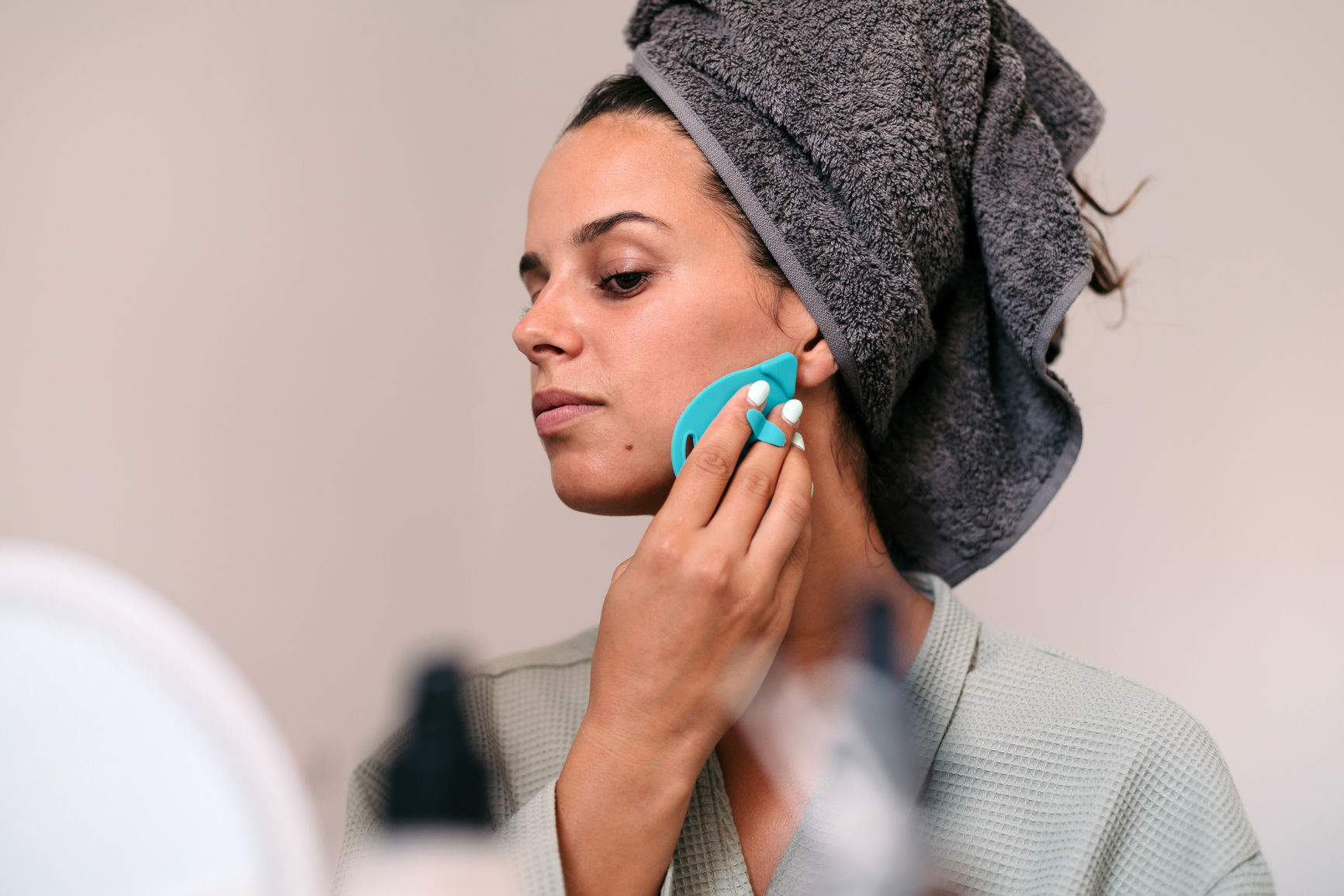
You’ve probably seen the DIY recipes. Mix a little pantry sugar with olive oil, rub it on your nose, and boom—instant glow. Or at least, that’s what the Pinterest boards from 2012 promised us. In reality, sugar exfoliation for face care is a polarizing topic among dermatologists, and for good reason. It’s cheap. It’s accessible. But if you do it wrong, you’re basically invitation-only for micro-tears and a wrecked skin barrier.
Stop and think about a sugar crystal under a microscope. It’s not a smooth pearl. It’s a jagged, multi-angled rock. When you’re scrubbing that against the delicate skin of your cheeks, you aren't just "buffing away dead skin." You might be creating tiny fissures that let bacteria in and moisture out.
Honestly, I’ve seen people transform their texture with sugar, but I’ve also seen people end up in a derm’s office with a case of contact dermatitis or raw, weeping skin because they went too hard with a Tupperware mix.
Is sugar exfoliation for face actually safe?
It depends on your "grit."
Brown sugar is generally the softest because it has a higher moisture content and smaller granules. It’s the "entry-level" sugar. Then you have granulated white sugar, which is the standard middle ground. At the top of the "danger zone" is sugar in the raw—those big, chunky crystals. Use those on your face and you’re basically using sandpaper.
The American Academy of Dermatology (AAD) notes that mechanical exfoliation—which is what a sugar scrub is—isn't for everyone. If you have inflammatory acne (the deep, painful kind) or rosacea, physical scrubs are usually a hard no. You’re just spreading inflammation around.
But if you have oily, resilient skin? Or maybe some flaky patches on your chin that won't budge? A gentle sugar touch might be the ticket. Sugar is a natural source of glycolic acid, an alpha-hydroxy acid (AHA). While the concentration in raw sugar isn't enough to replace a chemical peel, it does mean sugar is a "humectant." It draws moisture into the skin while it works. That’s a huge plus over salt scrubs, which are incredibly drying and should really stay below the neck.
The science of the "glow"
When you exfoliate, you're removing the stratum corneum. That’s the outermost layer of dead cells. These cells get "glued" together by lipids, and sometimes the body’s natural shedding process (desquamation) gets sluggish.
Sugar physically breaks those bonds.
It’s satisfying. You feel the grit, you rinse it off, and your face feels like a dolphin. But that "smoothness" is often just the result of removing your skin's natural protection. If your face feels tight or squeaky clean afterward, you’ve gone too far.
How to do it without ruining your skin barrier
If you're dead set on trying sugar exfoliation for face, don't just grab a bag of Domino and start rubbing.
- Start with a damp face. Never, ever scrub dry skin. Water provides a lubricant that helps the sugar glide rather than catch and tear.
- The 30-second rule. You don't need five minutes. Thirty seconds of light, circular motions is plenty.
- Use your ring fingers. They apply the least amount of pressure. If you're using your palms or "scrubbing" like you're cleaning a kitchen floor, stop.
- Consistency matters. Once a week is plenty for most people. Twice if you’re very oily. Any more and you’re asking for chronic redness.
Let's talk about the carrier oil. If you’re prone to breakouts, stay away from coconut oil. It’s highly comedogenic, meaning it’s a pore-clogging nightmare for many. Instead, look for jojoba oil—which mimics the skin’s natural sebum—or squalane.
What the experts say
Dr. Joshua Zeichner, a well-known dermatologist in NYC, often points out that while physical scrubs provide immediate gratification, chemical exfoliants (like salicylic or lactic acid) are often more precise. With sugar, the "dose" is inconsistent. One crystal might be sharp; another might be dull.
However, for those who prefer "clean beauty" or a DIY approach, sugar remains a staple. The key is the "melt factor." As you rub sugar on your skin, it starts to dissolve. This is a built-in safety mechanism. Unlike plastic microbeads (which are thankfully banned in many places) or crushed walnut shells (which don't dissolve and stay sharp), sugar rounds out as it gets wet.
Common mistakes that lead to breakouts
People often think more is better. It’s not.
If you scrub too hard, your skin panics. It thinks it’s under attack, so it produces more oil to compensate for the moisture loss. Now you’re oilier than when you started, and you’ve got microscopic wounds where bacteria can throw a party. Hello, "scrub acne."
Another big mistake? Using a body scrub on your face. Brands like Tree Hut make amazing body scrubs, but they are formulated for the thick skin on your legs and elbows. Putting those on your face is like using a power sander on silk.
Alternatives you might actually like better
If the idea of jagged sugar crystals makes you nervous, you aren't alone. The skincare industry has moved toward "enzymatic" exfoliation. Think pineapple or papaya enzymes. These "eat" the dead skin cells without any rubbing required.
Or, look for "spherical" physical exfoliants. These are tiny beads made of jojoba wax. Because they are perfectly round, they can't tear the skin. They give you that "scrubby" feeling without the risk of micro-tears.
But look, there's a certain nostalgia to sugar. It smells good. It tastes okay if it gets in your mouth. It’s biodegradable.
A quick "Safe-ish" DIY Recipe
If you’re going to do it, do it this way:
Mix 1 tablespoon of finely ground brown sugar with 1 tablespoon of honey. Honey is a natural antibacterial and a potent humectant. It adds a "slip" to the sugar that makes it much safer. Add a few drops of hemp seed oil if you’re worried about dryness. Apply, massage for 20 seconds, rinse with lukewarm water.
The final verdict on sugar exfoliation for face
Sugar isn't the devil, but it isn't a miracle either. It's a tool.
If you have sensitive skin, stay away. If you have "tough" skin and want a quick brighten-up before an event, it's a fine occasional treat. Just remember that the goal of skincare is to support your barrier, not beat it into submission.
Your skin is a living organ, not a piece of wood that needs sanding. Treat it with a bit of respect, and it’ll glow on its own.
Next Steps for Your Routine
- Audit your current products. Check if you’re already using acids (AHA/BHA) or Retin-A. If you are, do NOT add sugar exfoliation to the mix. You’ll over-exfoliate and end up with a chemical burn sensation.
- Patch test. Try your sugar mix on the side of your neck for 24 hours before putting it all over your face.
- Moisturize immediately. After any exfoliation, your skin's "door" is wide open. Lock in hydration with a ceramide-heavy cream to repair the barrier you just disturbed.
- Sunscreen is non-negotiable. New skin cells are incredibly sensitive to UV damage. If you exfoliate at night, you must wear SPF 30+ the next morning, or you're just trading dull skin for sun spots.