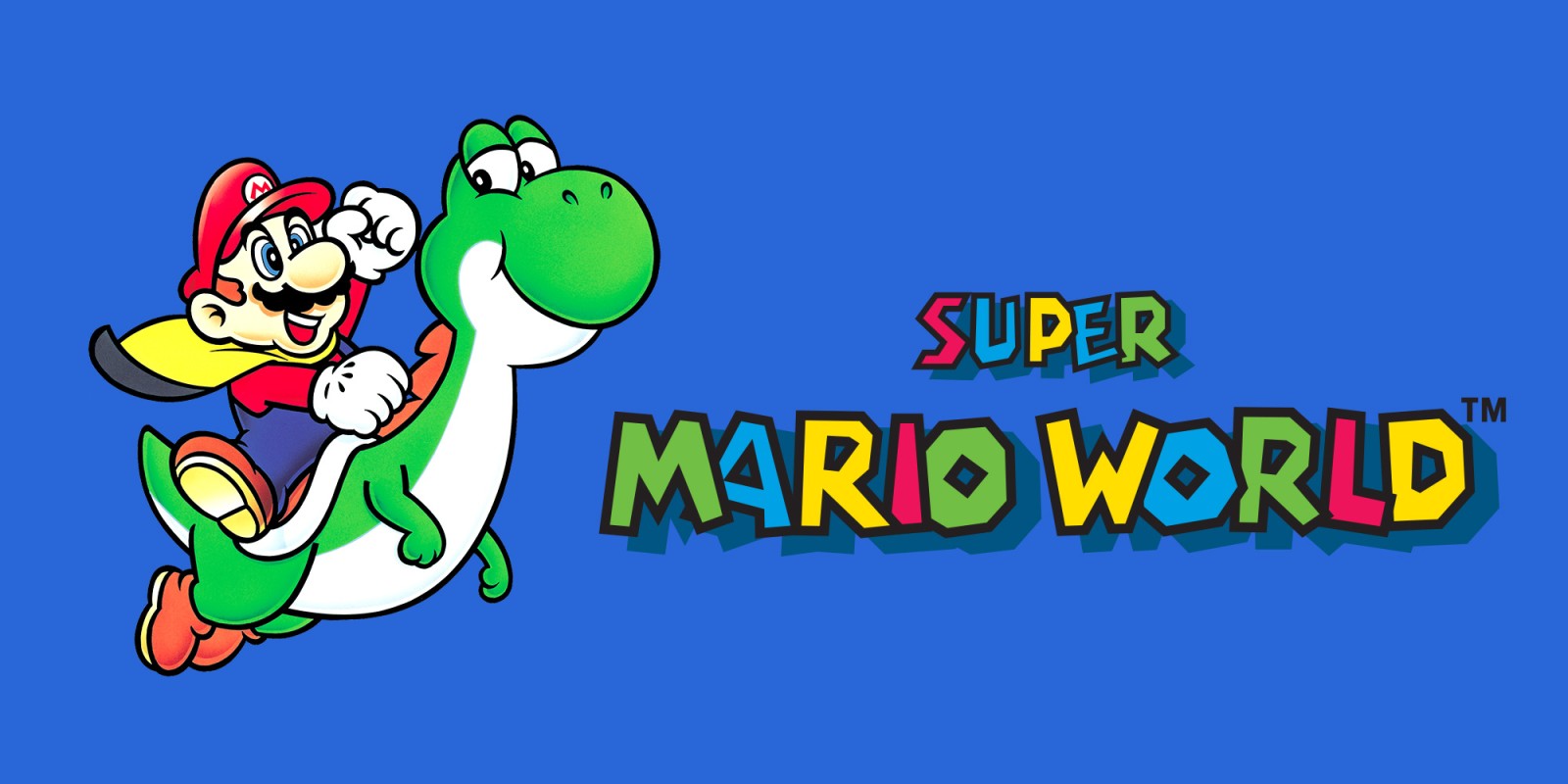
In 1991, everything changed. You probably remember the commercial—the one with the neon lights and the frantic pacing—but nothing compared to actually holding that gray, rounded controller for the first time. The Super Mario Super Nintendo era didn’t just iterate on what came before; it blew the doors off the hinges. It was loud. It was colorful. It was arguably the peak of 2D platforming design.
Most people call it Super Mario World. It was the pack-in title that sold millions of consoles, yet calling it a "launch game" feels like a massive understatement. Usually, launch games are rushed tech demos. This was a symphony. Shigeru Miyamoto and his team at Nintendo EAD took the foundation of the NES trilogy and expanded it into a sprawling, interconnected map that felt like a living world rather than a series of menus.
Honestly, it’s the secret exits that get me. You’d be playing a level like "Donut Plains 1," thinking you’re just headed for the goalpost, and then you find a key. A key! Suddenly, the map changes. New paths appear. You realize that what you thought was a straight line is actually a labyrinth.
The Secret Sauce of the Super Mario Super Nintendo Launch
The transition from 8-bit to 16-bit wasn't just about more colors on the screen, though the jump from a 52-color palette to 32,768 was substantial. It was about the "Mode 7" rotoscale technology. This allowed the SNES to rotate and scale background layers, creating a pseudo-3D effect that made boss fights, like the final showdown with Bowser in his Koopa Clown Car, feel cinematic.
Bowser didn't just sit on the right side of the screen anymore. He flew toward you. He receded into the distance. It felt like the hardware was finally catching up to the imagination of the developers.
Takashi Tezuka, the director, has often spoken about how the development was a bit of a "crunch." The team was small—only about 15 people. Compare that to the hundreds of people who work on a modern Mario title like Wonder. It’s wild to think that such a skeleton crew defined an entire generation of gaming. They were working with the Ricoh 5A22 CPU, which wasn't actually the fastest chip on the market at the time—Sega fans will never let you forget "Blast Processing"—but Nintendo used it to prioritize "juice" and feel over raw speed.
Yoshi was the real game changer
Did you know Miyamoto wanted Mario to ride a horse? That was the original concept. He’d wanted a mount for Mario since the first NES game, but the hardware just couldn't handle the sprites. When the Super Mario Super Nintendo project began, that horse turned into a green dinosaur named Yoshi.
Yoshi isn't just a power-up. He's a mechanic. He can eat berries, spit fire, and fly if he gulps down a blue shell. But there’s a darker side to the Mario-Yoshi relationship that fans have debated for decades. If you watch the animations closely, Mario actually punches Yoshi on the head to make him stick his tongue out. Nintendo later tried to claim it was a "pointing" gesture, but the original sprite work tells a different story.
Then there’s the ultimate betrayal: the Yoshi Jump. We’ve all done it. You’re about to fall into a pit, so you press the jump button mid-air, ejecting Mario from Yoshi’s back to get that extra bit of height. You survive. Yoshi falls into the abyss. It’s a rite of passage for every SNES owner.
Why the Physics Feel So Different
If you go back and play Super Mario Bros. 3 on the NES and then switch to the Super Mario Super Nintendo flagship, you’ll notice the momentum is heavier. Mario has more "weight."
The spin jump changed the meta. By pressing A instead of B, Mario spins, allowing him to break through certain blocks from above or bounce off enemies that would otherwise hurt him, like Spinies. It added a layer of strategy. You weren't just jumping; you were choosing a specific type of jump based on the threat.
- The cape feather replaced the leaf.
- Instead of floating, you could catch the wind and soar across entire levels if you had the skill.
- It required a rhythmic tapping of the D-pad that felt more like a flight simulator than a platformer.
The Mystery of the Special Zone
The endgame of Super Mario World is where the real "expert" status comes in. Most kids finished the game by beating Bowser. The real ones found the Star Road. And the truly obsessed found the Special Zone.
Tubular. Way Cool. Awesome. Groovy. Mondo. Outrageous. Funky. You.
These levels were brutally hard. They stripped away the hand-holding and demanded pixel-perfect precision. If you managed to clear "You," the entire world map changed colors. The Koopas started wearing Mario masks. The Piranha Plants turned into weird pumpkin-headed things. It was a badge of honor. It was Nintendo’s way of saying, "Yeah, we see you. You're the best."
The Legacy of the 16-Bit Era
When we talk about the Super Mario Super Nintendo experience, we also have to talk about Yoshi’s Island. Released near the end of the console's life cycle in 1995, it used the Super FX 2 chip to do things the SNES shouldn't have been able to do.
The art style looked like a coloring book. It was a direct middle finger to the pre-rendered CGI trend started by Donkey Kong Country. Nintendo wanted to prove that hand-drawn aesthetics were timeless. And they were right. Yoshi's Island still looks beautiful today, whereas early 3D games look like a pile of sharp gray bricks.
What most people get wrong about SNES Mario
A common misconception is that Super Mario World was the only Mario game on the system. People forget about Super Mario All-Stars. This was a massive deal—a full 16-bit remake of the NES library. It wasn't just a port; they redid the sprites and the music.
Some purists actually hate it. They argue that the physics in the All-Stars version of Super Mario Bros. 1 are "broken" because Mario’s hit detection when breaking blocks is slightly different. It’s a small detail, but in the world of high-level gaming, those millimeters matter.
How to play it today (the right way)
If you want to revisit this era, you have options. Most people just use the Nintendo Switch Online service. It’s fine. It’s convenient. But the input lag is real. If you’re trying to do a frame-perfect shell jump, you’re going to feel those few milliseconds of delay.
For the purists, nothing beats original hardware on a CRT television. The way the glow of the scanlines softens the pixels makes the art pop in a way that a 4K OLED just can't replicate. If you can't find a heavy old Sony Trinitron, the next best thing is an FPGA-based console like the Analogue Pocket or the MiSTer. These recreate the actual electrical signals of the original SNES, meaning zero lag and perfect accuracy.
Actionable steps for the modern retro fan
- Check your regional versions: The Japanese version (Super Mario World) is actually slightly easier in a few spots and has a different logo, but the gameplay is identical.
- Learn the "Orb" glitch: If you’re into the technical side, look up how to get the "Moons" and the glitch items. It opens up a whole new world of speedrunning.
- Explore the ROM hack scene: This is the most important step. Fans have created thousands of new levels using a tool called Lunar Magic. Games like Invictus or Grand Poo World take the SNES engine and turn it into a high-octane challenge that makes the original game look like a tutorial.
- Invest in a good controller: If you're playing on PC or Switch, get the 8BitDo SN30 Pro. The D-pad is the closest you'll get to the original 1991 feel without hunting down an antique.
The Super Mario Super Nintendo era wasn't just a moment in time. It's a design philosophy. It's the idea that a game should be simple enough for a five-year-old to finish, but deep enough for a thirty-year-old to spend a decade mastering. It’s about the joy of discovery. Whether it's finding a green switch palace or finally landing that flight across the Forest of Illusion, the game never stops rewarding you for being curious.
Go back and play it. Don't use save states if you can help it. Feel the tension of having zero lives left while staring down a Big Boo. That’s where the magic is.
The SNES era defined what a sequel should be. It didn't just give us more; it gave us better. It took a plumber and turned him into a legend, and it took a gray box and turned it into the center of our living rooms. It’s been over thirty years, and honestly? We’re still trying to catch up to what Nintendo did in 1991.