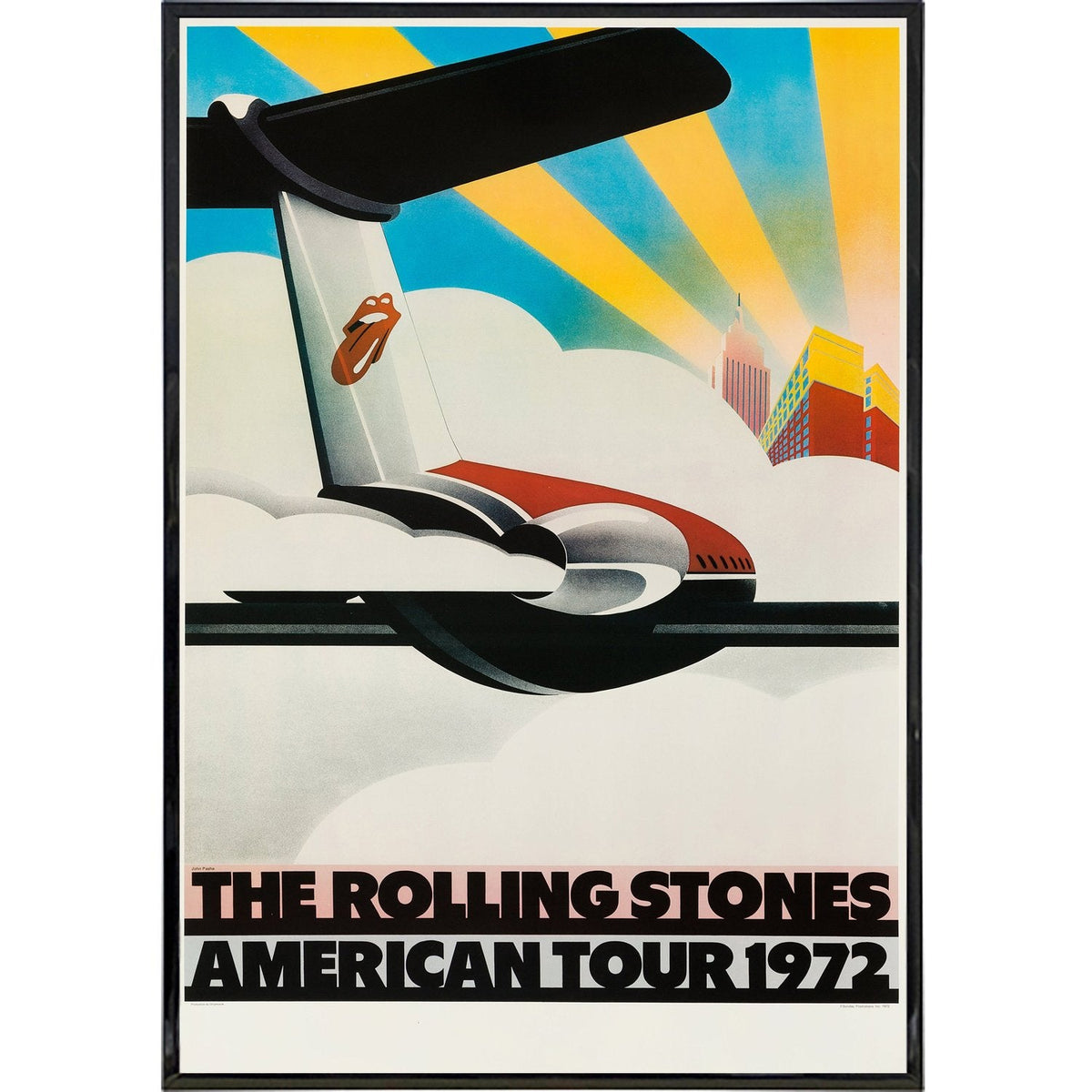
It was loud. It was sweaty. Honestly, it was a miracle nobody actually died during the 1972 Rolling Stones tour, though between the bombs, the arrests, and the sheer amount of illicit substances, it was a close call. You’ve probably seen the grainy photos of Mick Jagger in that silver jumpsuit or Keith Richards looking like he hadn’t slept since the Eisenhower administration. But the "S.T.P." (Stones Touring Party) wasn't just another rock roadshow; it was the moment the 1960s dream officially curdled into something much darker, more professional, and infinitely more dangerous.
They were promoting Exile on Main St., an album that was basically a messy, soulful middle finger recorded in a basement in France. The vibe of that record—dirty, desperate, and brilliant—carried over into the American trek. It was the first time they’d come back to the States since the nightmare at Altamont in '69. Everyone was on edge. The Hells Angels were making threats. The press was hungry for blood. The band? They just wanted to play loud.
Why the 1972 Rolling Stones Tour Felt Like a War Zone
If you were there, you remember the tension. If you weren't, it’s hard to describe how much people expected a riot at every single stop. It started in Vancouver. Within minutes of the first show, 31 policemen were injured as fans tried to storm the Pacific Coliseum. This wasn't just "Bigger Bang" corporate rock. This was visceral.
Truman Capote was there. Yeah, that Truman Capote. Rolling Stone magazine sent him to cover the tour, but he hated it. He spent most of his time complaining about the noise and eventually bailed because he couldn't handle the "low-rent" energy of the entourage. Meanwhile, Robert Frank was filming Cocksucker Blues, a documentary so debauched and raw that the Stones basically sued to keep it from ever being legally released in its entirety.
The logistics were a nightmare. In Montreal, a bomb went off in a van parked behind the forum, destroying the band's equipment. Why? Because some separatists weren't happy about the ticket prices or the British influence. The band had to borrow gear just to finish the set. It’s wild to think about Mick Taylor, arguably the best technical guitarist the Stones ever had, trying to cut through that kind of literal and metaphorical smoke. His melodic, fluid lines on "Sway" and "All Down the Line" provided the only bit of sanity in a setlist that felt like a runaway train.
The Midnight Ramblers and the Rhode Island Jail
One of the most legendary stories from the 1972 Rolling Stones tour happened in Warwick, Rhode Island. The band's plane couldn't land in Boston because of fog, so they diverted to Warwick. While waiting, a photographer named Andy Dickerman got into a scuffle with the band's entourage.
Cops didn't care who they were.
Mick Jagger, Keith Richards, and three others were tossed into the clink. Imagine the mayor of Boston, Kevin White, freaking out because 15,000 kids were waiting at the Boston Garden and were probably going to burn the building down if the Stones didn't show up. He actually had to negotiate with the Warwick police to get them released into his custody. They finally took the stage after midnight. Jagger walked out and asked the crowd, "Do you want to stay all night?" They did.
The Sound of Exile on Main St. Live
Musically, this tour was the peak. Period. There are bootlegs like Brussels Affair (technically from '73 but part of the same era) that prove it. The brass section, featuring Bobby Keys on saxophone and Jim Price on trumpet, gave the band a greasy, Stax-inspired soul sound that they never quite captured again. Bobby Keys' solo on "Brown Sugar" was a nightly religious experience.
- Rocks Off: The opener. Pure adrenaline. It usually took the sound guy three songs to get the mix right, but when it hit, it hit hard.
- Bitch: A masterclass in riff-weaving between Keith and Mick Taylor.
- Midnight Rambler: This was the centerpiece. It wasn't just a song; it was a 12-minute psychodrama where Jagger would stalk the stage with a belt, playing the role of the Boston Strangler.
Keith Richards was playing his "Micawber" Telecaster, usually tuned to open G with the sixth string removed. That's the secret sauce. That's why those riffs sound so hollow and percussive. If you try to play "Tumbling Dice" in standard tuning, it just sounds... wrong. Like a cover band at a Marriott.
The Excess That Defined an Era
We have to talk about the plane. The "Starship" wouldn't come until later, but the 1972 trek saw the band traveling in a private plane with the iconic tongue logo on the tail. It signaled the end of the "band in a van" era of rock. It became a traveling circus of sycophants, drug dealers, and elite journalists.
The lifestyle was grueling. They played 48 shows in 30 cities over 54 days. That is a punishing pace even if you aren't living on a diet of Jack Daniels and pharmaceutical-grade chaos. By the time they hit the final four-night stand at Madison Square Garden, the band was exhausted but playing with a frantic, "nothing left to lose" energy. Those MSG shows are often cited by fans as some of the greatest rock concerts ever performed in New York City. Dick Cavett even filmed a special backstage, capturing Jagger in all his glittery, preening glory.
What Most People Get Wrong About 1972
A lot of people think Altamont killed the 60s, and it did. But the 1972 Rolling Stones tour was the wake. It was the transition into the "Glimmer Twins" era of superstardom. People often assume the tour was just a drug-fueled haze where the music was secondary, but the tapes tell a different story. These guys were rehearsed. They were tight. They were competing with the likes of Led Zeppelin and The Who for the title of "Greatest Rock and Roll Band in the World," and in '72, they actually earned it.
There's also a misconception that the tour was a financial windfall. While it made a lot of money, the overhead was insane. Between the private security (to avoid another Altamont), the private jet, and the legal fees from various arrests, the Stones weren't as rich as you'd think. They were actually "tax exiles" for a reason—the British government was taking 98% of their earnings at the time. This tour was a desperate grab for cash as much as it was an artistic statement.
How to Experience the Tour Today
Since Robert Frank’s Cocksucker Blues is still legally restricted (it can only be shown in very specific settings with the director present, or at least that was the deal for years), you have to look elsewhere.
- Watch 'Ladies and Gentlemen: The Rolling Stones': This concert film was shot in Texas during the '72 tour. It’s the best visual record of what the band actually sounded like. No fancy editing, just the music.
- Listen to 'Exile on Main St. Deluxe': The bonus tracks often feature rehearsals and alternate takes from this period.
- Read 'S.T.P.: A Journey Through America with The Rolling Stones': Robert Greenfield’s book is the definitive account. He was on the plane. He saw the madness. It's much better than any sanitized "official" history.
The Actionable Insight for Rock Fans
If you want to understand why rock music became the stadium-filling, myth-making machine it is today, you have to study the 1972 Rolling Stones tour. It set the blueprint. It showed that a band could be dangerous and corporate at the same time. It proved that you could play "the blues" in a sequined jumpsuit and somehow make it work.
For musicians, the takeaway is the "open G" tuning. If you’ve never tried it, grab an electric guitar, drop your strings to D-G-D-G-B-D, and play a chord with just one finger. That’s the Keith Richards sound. It’s about space. It’s about the notes you don't play.
The 1972 tour wasn't just a series of concerts. It was a cultural shift. It was the moment the Stones stopped being a band and started being an institution. They survived the bombs, the arrests, and the critics, leaving behind a trail of feedback and legend that hasn't really been topped since. If you're looking for the soul of rock and roll, it’s buried somewhere in the setlist of a 1972 show in a sweaty arena in the American South. Go find the bootlegs. Turn them up until your neighbors complain. It's the only way to hear it.
Next Steps for Deep Diving into the Stones Mythos:
- Audit the Tuning: Get a guitar and tune it to Open G ($G-D-G-B-D$). Remove the low E string if you want to be a purist like Keith. Play the opening riff to "Brown Sugar" and feel the resonance change.
- Source the Bootlegs: Search for the "Philadelphia Special" or "Fort Worth Express" recordings. These are unofficial captures of the 1972 tour that many purists claim sound better and more raw than the official live releases.
- Visual History: Track down the photography of Ethan Russell or Jim Marshall from this specific year. Their black-and-white stills capture the exhaustion and the "court of the king" vibe better than any modern documentary can.