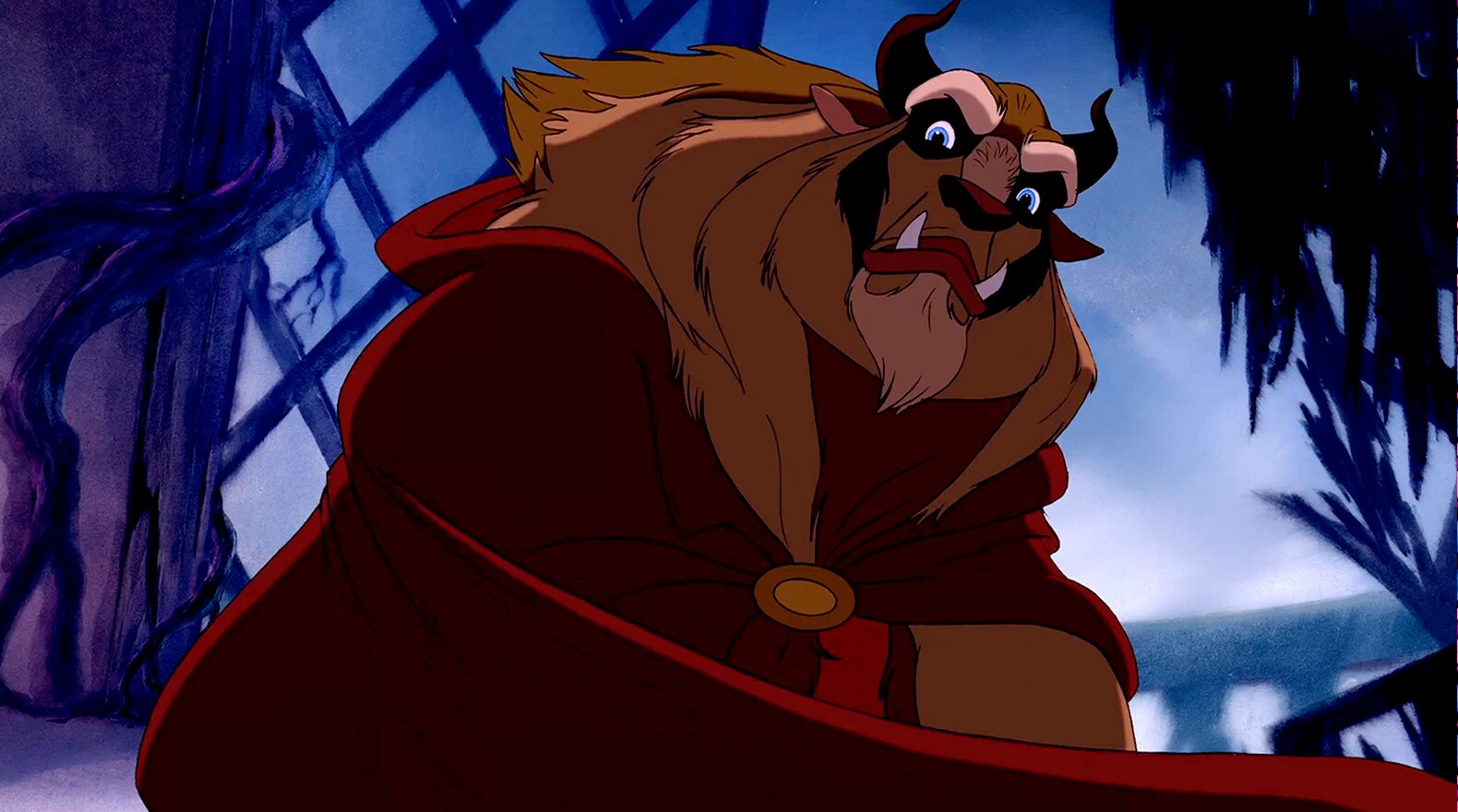
Most people think they know the story of Beauty and the Beast because they’ve seen a yellow dress and a talking teapot. Honestly, that’s just the tip of the iceberg. We’ve been retelling this story for centuries, and the film history is way weirder than Disney lets on. Did you know there’s a version where the Beast’s face was modeled after a director’s Alaskan Husky? Or one where the Beast is a werewolf living in modern-day Seoul?
The truth is, all Beauty and the Beast movies offer something different, from surrealist French masterpieces to 80s synth-musicals and even gritty "mockbusters" that popped up just to confuse parents at Blockbuster.
The One That Started It All: Cocteau’s Surreal Dream
Before the 1991 animation became the gold standard, there was Jean Cocteau’s 1946 film La Belle et la Bête. If you haven't seen this, you're missing out on pure cinematic magic. Cocteau didn't have CGI. He used human arms holding candelabras sticking out of the walls and faces carved into stone that actually breathed smoke. It’s haunting.
Jean Marais played the Beast, and his makeup took five hours to apply every single day. Interestingly, they almost used a deer head for the design, but Cocteau thought it looked too much like a myth and not enough like a dangerous, feral animal. They ended up using a look inspired by Marais' dog, Moulouk. It worked. The film feels like a fever dream, moving away from the "happily ever after" trope into something much more visceral and strange.
Disney’s Massive 1991 Gamble
You've probably heard that the 1991 Beauty and the Beast was the first animated movie nominated for Best Picture at the Oscars. That’s a huge deal. But the production was a total mess at first. The original director, Richard Purdum, wanted a dark, non-musical period piece.
Jeffrey Katzenberg hated it. He scrapped the whole thing and brought in the team from The Little Mermaid.
Howard Ashman, the lyricist, was actually dying of AIDS during production. He never saw the finished film. The movie is dedicated to him because he was the one who suggested making the household objects characters. Without him, we wouldn't have Lumière or Cogsworth. The ballroom scene was also a massive technical risk, using some of the earliest CGI to create a 3D space for hand-drawn characters to dance in. It was basically the "Avatar" of the 90s for animation nerds.
The Weird 80s: Cannon Movie Tales and TV Grit
In 1987, things got kinda weird. Two very different versions of the story dropped at the same time.
First, there was the Cannon Movie Tales version starring Rebecca De Mornay. It’s a musical shot in Israel, and it’s... well, it's very 80s. The Beast looks a bit like a guy in a very hairy sweater, and the Prince in Belle's dreams actually berates her for not falling in love with the Beast fast enough. It's awkward. It's cheesy. But for a certain generation, this is the "real" version because it played on cable constantly.
Then you have the 1987 TV series. This wasn't a fairy tale world. It was a gritty crime drama set in New York. Linda Hamilton (from Terminator) played Catherine, a lawyer, and Ron Perlman was Vincent, a lion-faced man living in a secret community under the subways. It basically turned the story into an urban legend about outcasts. It was so popular it even got a CW reboot in 2012, though that version was much more "pretty people with scars" and less "beastly."
Modern Retellings and the Live-Action Boom
By the time 2014 rolled around, France decided to reclaim the story with Léa Seydoux and Vincent Cassel. This version, La Belle et la Bête, is visually stunning but leans heavily into a tragic backstory involving a Golden Deer and a Forest God. It’s much closer to the original 1740 Gabrielle-Suzanne Barbot de Villeneuve novel, which was much longer and more complicated than the kids' versions we know.
And then, of course, the 2017 Disney live-action remake.
It made over $1.2 billion.
People loved the nostalgia, even if some critics felt Emma Watson’s Belle was a bit too "modern" or the CGI Beast lacked the soul of the hand-drawn one. It filled in plot holes, like why the village forgot there was a giant castle next door (magic, obviously), but it mostly served as a polished victory lap for the 1991 version.
A Quick Look at the Timeline
- 1946: La Belle et la Bête (The French Masterpiece)
- 1987: Beauty and the Beast (Cannon Movie Tales)
- 1987-1990: The TV Series (The Subway Beast)
- 1991: Disney’s Animated Classic (The Oscar Nominee)
- 1992: Golden Films "Mockbuster" (The one your grandma accidentally bought)
- 1997: The Enchanted Christmas (Direct-to-video sequel)
- 2011: Beastly (The high school version with Alex Pettyfer)
- 2014: Christophe Gans’ French Film (Visual spectacle)
- 2017: Disney Live-Action Remake (The Box Office King)
What’s Next for the Franchise?
As of right now in 2026, the story is still evolving. Netflix is currently filming a K-drama titled Beauty in the Beast starring Kim Min Ju and Lomon. It's a modern supernatural rom-com where the "Beast" is a freshman werewolf trying to hide her identity in college. It’s expected to drop in 2027. It sounds like a total departure, but that's what makes this story work—it’s flexible.
If you’re looking to truly understand the history of these films, you've gotta step outside the Disney bubble.
Actionable Insight: Start by watching the 1946 Cocteau version. It’s available on most prestige streaming platforms or through the Criterion Collection. Seeing how they did those "magical" effects by hand makes you realize that the most beautiful parts of the story don't need a $200 million budget. After that, track down the 1987 Cannon version if you want a laugh—it’s a perfect time capsule of 80s fantasy filmmaking.
The "Beauty" and the "Beast" are just archetypes. Whether it's a lion-man in a sewer or a werewolf in a library, we're probably going to be making these movies for another hundred years.