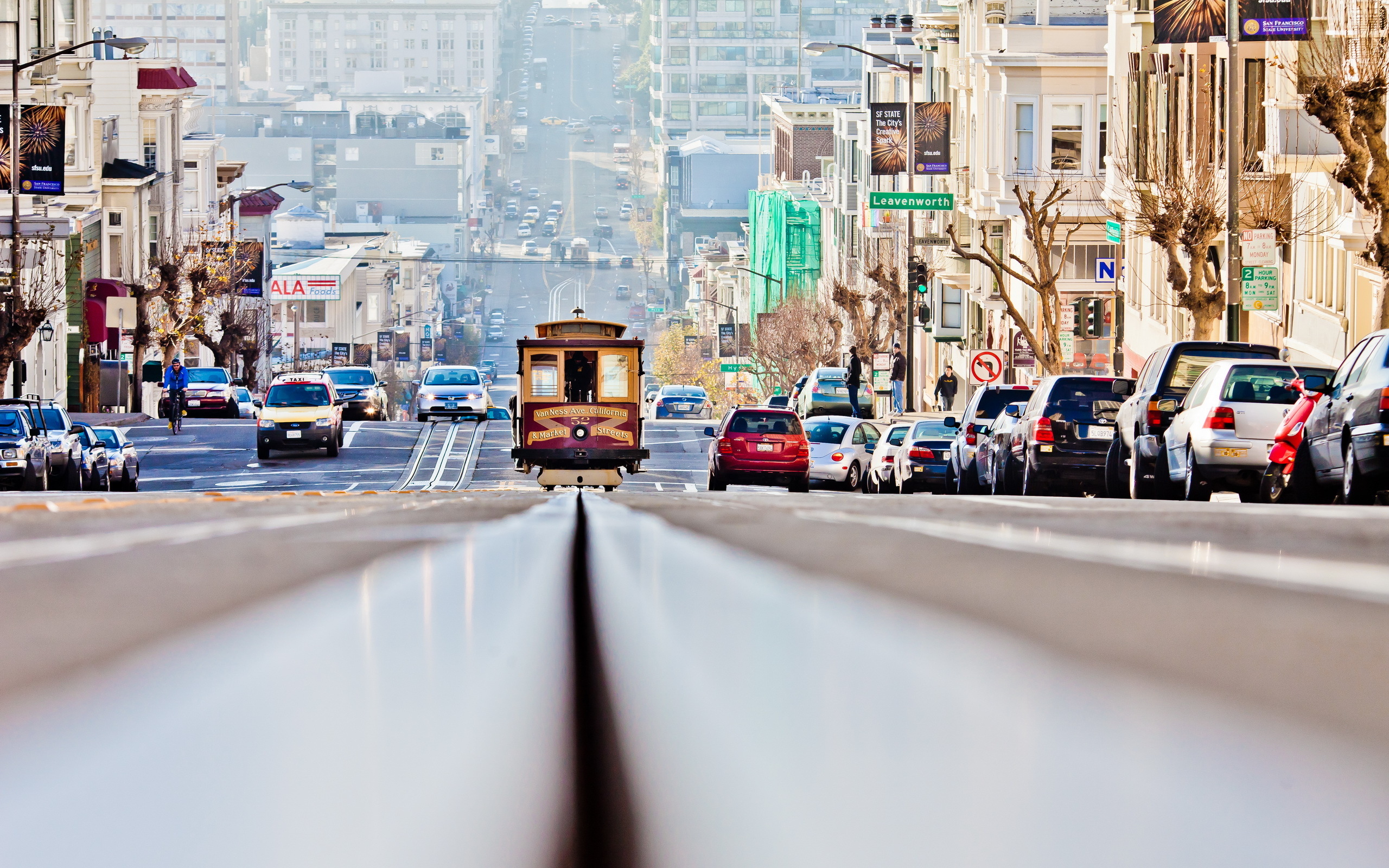
You can almost hear the brass. That punchy, driving theme song by Pat Williams kicks in, and suddenly you’re staring at a brown Ford Galaxie 500 screeching around a corner in the Presidio. It was 1972. TV was changing. The cast of Streets of San Francisco wasn’t just a random pairing of actors; it was a passing of the torch that defined a decade of police procedurals.
It worked.
Karl Malden brought the gravitas of a literal Oscar winner to the small screen, while a young, relatively unknown Michael Douglas provided the kinetic energy. They had this "father-son" chemistry that wasn't faked. Honestly, it’s the reason the show survived 121 episodes when so many other cop dramas of the era faded into obscurity. San Francisco itself was the third lead actor, all fog and steep hills and gritty Wharf locations, but without the central duo, it would have been just another travelogue with handcuffs.
The Anchors: Malden and Douglas
Karl Malden played Detective Lieutenant Mike Stone. He was the veteran. The guy with the trench coat and the iconic hat. Malden already had an Academy Award for A Streetcar Named Desire, so him taking a TV gig in the early '70s was actually a pretty big deal. He brought a sense of blue-collar decency to the role. Stone wasn't a superhero; he was a widower with a daughter and a lot of mileage on his tires.
Then you had Steve Keller.
Michael Douglas was barely a "name" then. He’d done some stuff, sure, but The Streets of San Francisco made him. As Inspector Keller, he was the college-educated "intellectual" cop, which was a trope just starting to gain traction back then. He wore the corduroy jackets. He asked the "why" questions. The friction between Stone’s old-school gut instinct and Keller’s modern methodology provided the show's engine.
Douglas stayed for four seasons. He left in 1976, not because he hated the show, but because he was busy producing a little movie called One Flew Over the Cuckoo's Nest. You might’ve heard of it. It won Best Picture. It’s wild to think that while he was filming chase scenes on Lombard Street, he was also navigating the high-stakes world of Hollywood production.
What Happened When Douglas Left?
Replacing a lead is a nightmare for any showrunner. When Douglas exited, the producers brought in Richard Hatch to play Inspector Dan Robbins.
Hatch was fine. He really was. But the magic shifted. The "cast of Streets of San Francisco" felt different because the mentor-protege vibe had been baked into the DNA of the pilot. Hatch stayed for the fifth and final season, but the ratings started to slide. It’s a classic TV lesson: you can’t just swap a gear and expect the machine to hum the same way.
A Who’s Who of Guest Stars
If you go back and watch the reruns now, the guest list is basically a time capsule of future superstardom. It’s kind of a game for TV buffs. You’ll be watching a Season 2 episode and suddenly—wait, is that Arnold Schwarzenegger? Yes. It was.
In the episode "Dead Lift," Arnold plays a bodybuilder with a hair-trigger temper. It’s one of his earliest roles, and you can see him grappling with the English language just as much as he grapples with the plot. But he wasn't the only one. The cast of Streets of San Francisco episodes featured:
- Nick Nolte: Long before he was the gravel-voiced veteran we know today, he was playing a target of an investigation.
- Don Johnson: Years before Miami Vice made him an icon, he was guesting in San Francisco.
- Mark Hamill: He appeared just before Star Wars turned him into Luke Skywalker.
- James Woods: Playing the kind of intense, jittery character he’d eventually perfect.
The show was a massive training ground. Because Quinn Martin (the producer) had such a high standard for production, young actors wanted to be on it. It looked like a movie. It felt like a movie.
Why the Chemistry Worked
Malden and Douglas actually liked each other. In interviews later in life, Douglas often referred to Malden as his "mentor" in real life, not just on the script pages. Malden was famous for his work ethic. He’d show up early, lines memorized, ready to work. That rubbed off on Douglas. That genuine respect is visible in every scene where they’re eating chili or sitting in the car discussing a lead. You can't fake that kind of rapport for 26 episodes a year.
The Secondary Characters You Forgot
While the leads got the glory, the supporting cast of Streets of San Francisco kept the precinct running.
Darleen Carr played Jeannie Stone, Mike’s daughter. She was a crucial tether for Mike’s character. She made him human. Usually, in '70s cop shows, the protagonist is a lone wolf. Giving Stone a daughter who worried about him added a layer of vulnerability that resonated with families watching at home.
Then there was the precinct staff.
- Fred Sadoff as Lenny Burtmetz.
- Lee Harris as Officer Marsh.
- Reuben Collins as Inspector Bill Schiller.
These guys provided the procedural backbone. They weren't flashy, but they made the world feel lived-in. When Stone walked into the station, it felt like a real workplace, not a set at Warner Bros.
San Francisco as a Character
You can't talk about the cast without talking about the city. Most shows at the time were shot on backlots in Burbank with a few "stock footage" shots of the Golden Gate Bridge thrown in for flavor. Not this one.
They shot on location.
The hills. The fog. The Pacific Heights mansions. The decaying docks. The cast of Streets of San Francisco had to deal with the actual elements of the city. This gave the show a noir-lite aesthetic that separated it from the sunny, flat look of CHiPs or The Rookies. When Stone and Keller were chasing a suspect down a steep alley, they were actually there. It gave the actors a different physical energy.
The Impact of the "Quinn Martin" Style
Quinn Martin was the king of '70s television. His style was distinct: "Act I," "Act II," "Act III," "Act IV," and the "Epilog." This structure gave the cast of Streets of San Francisco a very specific rhythm to play with. Each act usually ended on a cliffhanger or a dramatic revelation.
Malden was a master of the Act Break Face. He had this way of looking into the distance with a mix of worry and determination that practically forced you to stay through the commercial.
The Legacy of the Cast
When the show ended in 1977, it didn't just disappear. It lived on in syndication for decades. It influenced the gritty realism of Hill Street Blues and later, NYPD Blue.
Karl Malden went on to become the face of American Express ("Don't leave home without it"), but for a certain generation, he will always be Mike Stone. Michael Douglas, of course, became one of the biggest movie stars on the planet. He never forgot his roots, though. He famously thanked Malden when he received his AFI Life Achievement Award.
The show also holds a weirdly specific place in San Francisco history. Residents at the time remember the film crews taking over neighborhoods. It was one of the first major productions to prove that the city was a viable "Hollywood North."
If You’re Planning a Rewatch
If you’re looking to dive back into the series or check it out for the first time, don’t just look for the big names. Look at the chemistry.
- Watch for the nuance: Notice how Malden uses his hands. He was a very physical actor who understood how a detective would handle a notebook or a radio.
- Check the backgrounds: Since they shot on location, you're seeing a San Francisco that doesn't really exist anymore. The cast is moving through a city on the cusp of a massive tech and cultural shift.
- The Pilot Episode: It’s basically a feature film. It sets the tone perfectly and shows exactly why Douglas and Malden were the perfect "odd couple" of the Bay Area.
Actionable Steps for Fans and Researchers
To truly appreciate the cast of Streets of San Francisco, you should look beyond the IMDB page.
First, track down the 1992 TV movie Back to the Streets of San Francisco. Karl Malden returned as Mike Stone (now a Captain). While Douglas didn't return (his character was said to be "missing" or off on other business), it’s a fascinating look at Malden reprising the role 15 years later. It offers a sense of closure that the original series finale—which was a bit of a standard episode—didn't quite provide.
Second, explore the archives of the San Francisco Chronicle from the mid-70s. There are dozens of stories about the local actors and extras who made up the "background" cast. Many local theater actors got their SAG cards working on this show.
Third, if you're a media student or a writer, analyze the dialogue. The way Stone and Keller speak to each other isn't just "cop talk." It’s a masterclass in establishing hierarchy and mutual respect without stating it explicitly.
The show remains a benchmark. It proves that while gadgets and special effects age, a well-cast duo and a sense of place are timeless. Whether it's the 1970s or 2026, people still want to see a veteran and a rookie figure it out together.