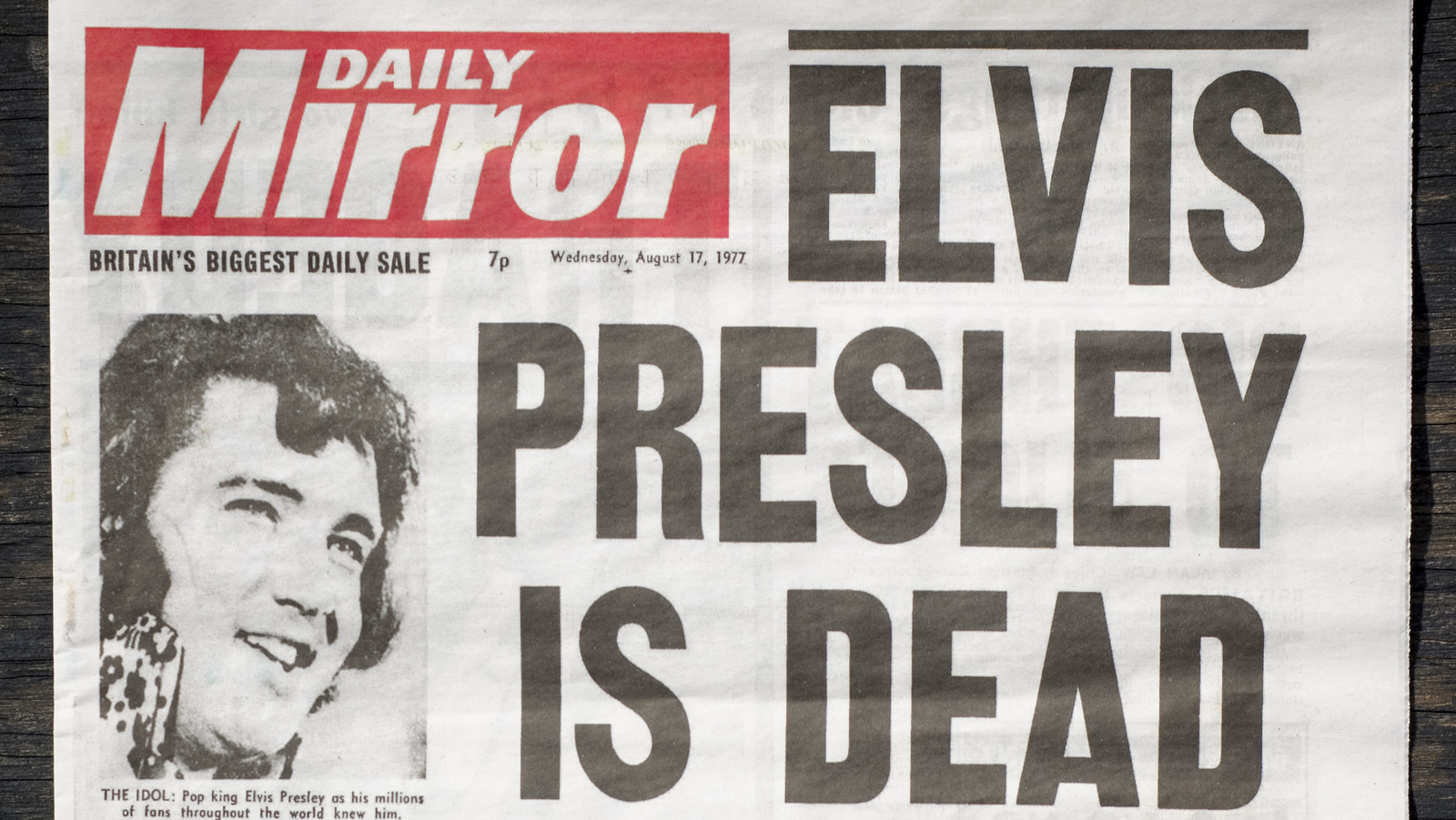
He looked tired. That’s the first thing you notice when you really stare at the last known photos of Elvis Presley before he died. It isn't just the physical weight or the sweat under the stage lights of the Market Square Arena in Indianapolis. It’s the eyes. They look heavy, like he’d seen everything there was to see and was just ready for a nap that never ended.
Most people remember the young, hip-swiveling rebel from the fifties. Or maybe the leather-clad icon of the '68 Comeback Special. But those final images from the summer of 1977? They’re different. They’re haunting. They capture a man who was essentially a ghost before his heart actually stopped at Graceland on August 16.
Honestly, looking at these pictures is a bit like looking at a car crash in slow motion. You want to look away, but you can’t because the charisma is still there, buried under layers of prescription medication and the crushing burden of being "The King."
The Last Picture Ever Taken: August 16, 1977
The very last photo wasn't on a stage. It wasn't professional. It was grainy, snapped through a windshield. At around 12:28 AM on the day he died, Elvis was caught on camera driving his black Stutz Blackhawk III back to Graceland.
He had just come from the dentist. Dr. Max Shapiro. Elvis liked to do things at night, so a midnight dental appointment wasn’t even weird for him. In the photo, you can see his oversized signature sunglasses. He's behind the wheel. Ginger Alden, his fiancée at the time, is sitting next to him.
It’s just a guy driving home.
But within fourteen hours, he would be found on his bathroom floor. That makes this specific image—the "gate photo"—absolutely chilling for fans. It represents the final moment of normalcy. No jumpsuits, no screaming fans, just a tired man going home to a house that had become his gilded cage.
The Indianapolis Performance: The Final Stage Photos
A lot of people think Elvis was a total wreck at the end, and while his health was definitely failing, the photos of Elvis Presley before he died taken during his final concert tell a slightly more nuanced story.
On June 26, 1977, Elvis performed at Market Square Arena. He was 42. Looking at the high-res shots from that night, his face is undeniably puffy. This was likely due to a combination of diet, kidney issues, and the side effects of the massive amounts of steroids and other medications he was taking for various ailments like glaucoma and an enlarged colon.
He wore the "Mexican Sundial" jumpsuit. It was heavy. He was heavy.
Yet, there are shots from that night where he is smiling. He looks genuinely connected to the music. Witnesses say his voice was still a powerhouse, even if his body was struggling to keep up. He performed "Hurt" and "Bridge Over Troubled Water" with a soul-crushing intensity. It’s almost as if he knew the end was circling.
Why the "Fat Elvis" Narrative is Only Half True
We’ve all heard the jokes. The jumpsuits getting bigger, the peanut butter and banana sandwiches. But when you examine the photos of Elvis Presley before he died alongside his medical history, the "laziness" narrative falls apart.
Elvis was sick. Really sick.
Dr. George Nichopoulos, "Dr. Nick," has been a controversial figure for decades, but the medical records don't lie. Elvis had hypertensive heart disease. He had a tortured digestive system. He was dealing with chronic pain.
When you see photos of him from 1976 and 1977, the bloating wasn't just "fat." It was edema. His body was retaining fluid because his organs were failing. He looked like a man who was being poisoned by his own lifestyle and the very medicine meant to keep him upright.
The Hidden Toll of the 1977 Tour
There’s a specific set of photos from the CBS TV special Elvis in Concert, filmed just weeks before he died. These are arguably the most famous photos of Elvis Presley before he died because they were broadcast to millions.
Elvis looks pale. He’s sweating profusely, even when he isn't moving much.
The producers were reportedly horrified by his appearance. They tried to use lighting to mask the puffiness. They focused on his face and hands. But the camera doesn't lie as well as a press release does. You can see the struggle in his breathing between songs.
It’s heavy stuff.
The Rapid Decline: Comparing 1973 to 1977
If you want to understand the tragedy, you have to look at the photos chronologically.
- January 1973: Aloha from Hawaii. He is lean, tanned, and looks like a god. He’s the peak of human performance.
- Late 1975: The face starts to round out. The eyes look a bit more glazed.
- Early 1977: The transformation is startling.
In just four years, he aged twenty. The grueling schedule of Las Vegas residencies and constant touring destroyed him. He was doing two shows a night sometimes. Imagine the toll on a 40-year-old body that is already fighting internal disease.
The Private Side: Rare Candid Moments
Not every photo from the final months was a tragedy. There are rare, grainy shots of Elvis at Graceland, or at a local racquetball court he had built.
In these, he’s usually wearing tracksuits. He looks like a regular guy from Memphis who happened to be the most famous person on the planet. He spent a lot of time in his bedroom, which he called "The Sanctuary." It was black and gold, windowless, and kept at a freezing temperature.
These "behind the scenes" glimpses are rare because Elvis was incredibly protective of his image. He didn't want the world to see the "ghost" version of himself. He wanted them to see the King.
The Legacy of the Final Images
Why do we keep looking at these photos of Elvis Presley before he died?
Is it morbid curiosity? Maybe. But for most, it’s about humanity. We want to see the man behind the myth. These photos prove that Elvis wasn't a cartoon character or a corporate product. He was a human being who was pushed too hard and stayed too long.
The photos serve as a cautionary tale about the price of fame and the fragility of health. They remind us that even the most powerful voices eventually go quiet.
Analyzing the Details: What to Look For
When you are researching or viewing these historical images, pay attention to the small things that historians often point out:
- The Hands: In many 1977 photos, Elvis’s hands look swollen. This is a classic sign of the systemic issues he was facing.
- The Stare: Notice how often he is looking "through" the audience rather than at them.
- The Support: You can often see him leaning on the microphone stand or his backup singers (The Sweet Inspirations or J.D. Sumner & The Stamps) for physical balance.
These aren't just pictures; they are medical charts in visual form.
Preserving the History
If you're a collector or a fan looking to dig deeper into the visual history of Elvis's final year, there are several reputable archives and books that offer high-quality, unedited glimpses into this era.
- The Joseph Tunzi Books: Tunzi has published several "Elvis Sessions" books that include rare, day-by-day photos of Elvis in the 70s.
- The Graceland Archives: While they tend to curate the "prettier" images, their digital exhibits often include candid shots of Elvis with his daughter, Lisa Marie, during his final months.
- Newspaper Archives: Local Indianapolis and Cincinnati papers from June 1977 often have the rawest, least-touched-up photos of his final performances.
To truly understand the gravity of these images, one must view them with empathy. It is easy to judge the "Vegas Elvis" era, but the photos reveal a man who was working until his literal last breath to provide for a massive entourage and satisfy a global fan base that wouldn't let him go.
To verify the authenticity of any "final" photo you find online, cross-reference the date with his tour itinerary. Elvis was in Cincinnati on June 25, Indianapolis on June 26, and then returned to Memphis. Any photo claiming to be from July or August 1977 that shows him on a stage is almost certainly mislabeled, as he did not perform publicly after the Indianapolis show.
Understanding the timeline of these images is the best way to separate internet myth from the tragic reality of a legend's final days.