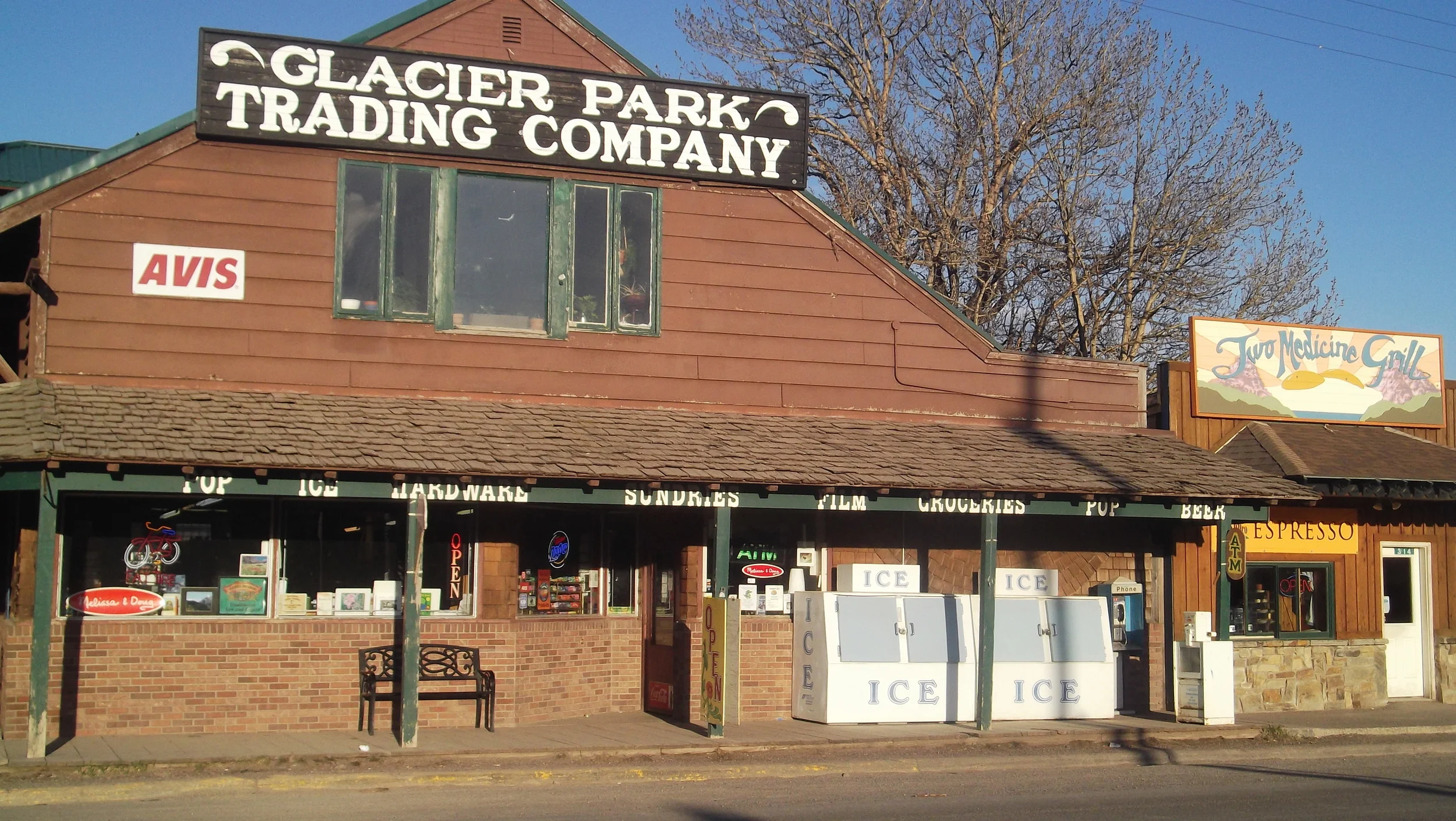
If you’ve ever stood on the creaky floorboards of a general store in Northwest Montana, you’ve felt it. That specific smell of cedar, wool, and history. Most people driving toward the jagged peaks of Glacier National Park see the signs for the Glacier Park Trading Co and think it’s just another pit stop for huckleberry jam or a last-minute fleece. They're wrong. It’s actually a surviving piece of a much larger, more complex puzzle involving the Great Northern Railway, the expansion of the American West, and the evolution of how we "consume" the wilderness.
Glacier Park Trading Co isn't just a shop. It's a landmark.
To really get what makes this place tick, you have to look past the souvenir t-shirts. Historically, the "Trading Company" model in the Flathead Valley and surrounding areas was the lifeblood of remote communities. It wasn't just about selling goods; it was about survival and connection in a landscape that, frankly, wants to kill you for about six months of the year.
The Iron Horse and the Birth of a Brand
The history of commerce in this region is inseparable from the Great Northern Railway. Back in the early 20th century, Louis Hill—son of the "Empire Builder" James J. Hill—realized that if he wanted people to ride his trains to Montana, he had to give them a reason to stay. He marketed Glacier as the "American Alps." But you can't have the American Alps without infrastructure.
You needed places to sleep, places to eat, and places to buy gear. This is where the concept of the trading company took root. While various iterations of the "Glacier Park Trading Co" name have existed over the decades, the core mission remained consistent: serving as the intermediary between the rugged reality of the Rockies and the needs of the traveler.
Think about the logistical nightmare of the 1920s. You’re in East Glacier or Babb. The nearest major city is hundreds of miles away. If you need a specific type of canvas for a tent or a heavy-duty cast iron skillet, you aren't hopping on Amazon. You go to the trading post. The Glacier Park Trading Co became a focal point for this specific brand of high-altitude commerce.
Why the East Glacier Location is Different
If you head to the East Entrance of the park, you’ll find the most prominent manifestation of the brand today. It’s located in East Glacier Park, Montana. This isn't the sterilized, corporate-feeling gift shop you find inside some of the more modern national park visitor centers. It feels lived in.
One thing most people don't realize? The East side of Glacier is fundamentally different from the West side. While the West side (near Kalispell and Whitefish) has seen an explosion of luxury development and high-end boutiques, the East side—where the Trading Co sits—retains a grittier, more authentic vibe. It borders the Blackfeet Nation. The commerce here is a mix of tourist needs and local essentials.
You’ll see a hiker from Germany buying high-end dehydrated meals standing in line behind a local rancher buying work gloves. That’s the magic. It bridges the gap. Honestly, it’s one of the few places left where the "Old West" isn't just a marketing slogan; it’s the actual business model.
What You’ll Actually Find Inside
- The Huckleberry Obsession: Yes, they have it. Everything from chocolates to vinaigrettes. In Montana, huckleberries are basically currency.
- Authentic Native American Art: Unlike some roadside traps, the Trading Co often features genuine beadwork and craftsmanship from the Blackfeet community. This is a big deal. It’s about cultural respect, not just a transaction.
- Technical Gear: If you’re heading up to Dawson-Pitamakan or hitting the Piegon Pass, and you realized your socks are trash, this is your bail-out spot.
- Groceries: It serves as a vital resource for people staying in the nearby cabins who don't want to drive 50 miles for a gallon of milk.
The Business of Nostalgia
How does a small-town trading company survive in the age of globalism? It’s not by beating the big-box stores on price. You can’t. It’s by selling an experience.
When you walk into the Glacier Park Trading Co, you’re buying into a narrative. You’re participating in a century-old tradition of "gearing up" for the mountains. There’s a psychological component to it. The heavy timber beams, the slightly uneven floors, the sound of the wind whipping off the plains and hitting the building—it all creates a "sense of place" that a website can't replicate.
From a business perspective, the company has had to pivot. The rise of the "Van Life" movement and the massive surge in National Park attendance (over 3 million people annually for Glacier) changed the demographics. It’s no longer just the wealthy train travelers of the 1930s. It’s Gen Z backpackers, retired RVers, and international tourists. The Trading Co has managed to curate an inventory that appeals to all of them without losing its soul. That is a very difficult needle to thread.
Common Misconceptions About the Area
A lot of visitors get confused. They think the "Trading Co" is part of the National Park Service. It’s not. It’s a private enterprise. This is an important distinction because it allows the shop to carry a wider variety of goods and maintain a more local character than the strictly regulated concessionaires inside the park boundaries.
Another mistake? Thinking they’re only open year-round. Montana winters are brutal. East Glacier basically goes into hibernation once the snow starts piling up (and it piles up deep). If you’re planning a trip in November, don't expect the lights to be on. This is a seasonal business that thrives on the frantic energy of the June-to-September window.
The Economic Impact on East Glacier
East Glacier Park is a small community. When a primary anchor like the Trading Co does well, the whole town feels it. It provides jobs for locals and seasonal workers who often come from all over the world to spend a summer in the shadow of the peaks.
But it’s more than just payroll. The Trading Co acts as an unofficial information hub. "How’s the snow on Logan Pass?" "Are the bears active near Many Glacier?" "Where can I get a good burger?" The staff usually knows. That kind of "tribal knowledge" is invaluable in a place as wild as Glacier.
Navigating the Logistics of a Visit
If you're heading there, here is the reality: parking can be a nightmare in July. The town of East Glacier wasn't designed for the volume of traffic it sees today. My advice? Get there early. Grab your supplies, talk to the folks behind the counter, and then get out into the park.
Don't just look at the souvenirs. Look at the architecture. Look at how the building is sited to handle the massive wind loads coming off the Continental Divide. It’s a lesson in Montana resilience.
Actionable Steps for Your Glacier Trip
If you're planning to stop by the Glacier Park Trading Co, keep these specific tips in mind to make the most of the experience and the surrounding area:
- Check the Seasonality: Always verify their opening dates if you are traveling in the "shoulder seasons" of May or October. Weather dictates everything here.
- Prioritize Local Goods: Look for the "Made in Montana" stickers. Supporting the local economy is part of the ethos of a true trading post.
- Use it as a Resource: Don't be afraid to ask the staff about trail conditions. They often hear reports from hikers coming off the trails long before the official park website is updated.
- Stock Up on Bear Spray: If you're hiking, you need it. The Trading Co usually has it in stock, and it's cheaper than paying a fine or, well, the alternative.
- Respect the Border: Remember that East Glacier is adjacent to the Blackfeet Reservation. Be a respectful traveler, follow local laws, and recognize the heritage of the land you're standing on.
The Glacier Park Trading Co remains a testament to a time when commerce was personal and the journey was as important as the destination. It’s a bridge between the old world of the Great Northern Railway and the modern world of the 21st-century explorer. Whether you need a postcard or a pair of boots, it stands as a reminder that some things in Montana don't need to change.