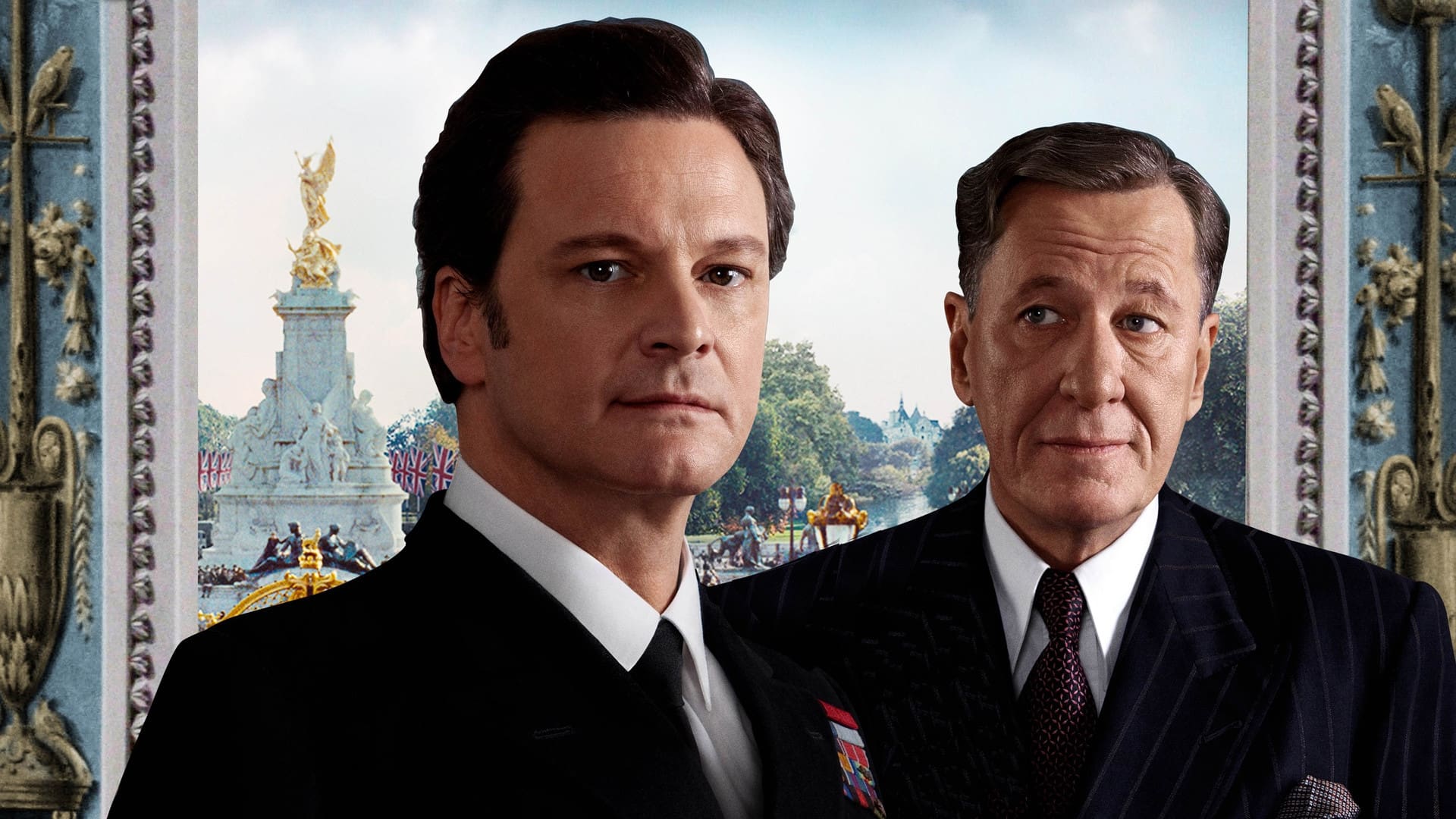
He didn't want the job. That’s the first thing you have to understand about King George VI. He was never supposed to be the "King's Speech" king. He was the "spare," the quiet Duke of York who preferred his garden and his family to the terrifying glare of a microphone. But when his brother, Edward VIII, walked away from the throne for Wallis Simpson in 1936, Albert—known to his family as Bertie—was thrust into a role that required the one thing he didn't have: a reliable voice.
Public speaking is a nightmare for most people. For a King with a profound, debilitating stammer in the era of the burgeoning BBC radio broadcast, it was an actual nightmare.
The Man Who Saved the King’s Speech
If you've seen the movie, you know Lionel Logue. But the real Logue was even more interesting than the cinematic version. He wasn't a doctor. He wasn't even a "speech therapist" in the way we think of them now, with degrees and clinical certifications. Logue was an Australian former actor and elocution teacher who set up shop in London.
Think about the guts that took.
A self-taught Australian sitting across from the King of England, telling him to curse, to breathe differently, and to treat him as an equal. Logue’s brilliance wasn't just in the physical mechanics of speech, though he was obsessed with diaphragm control. It was the psychology. He realized that the King's Speech king wasn't just struggling with a glottal stop; he was struggling with the crushing weight of expectation and a childhood filled with "corrections" from a stern father, George V.
What the Movie Got Right (and Wrong)
Historical dramas always smudge the timeline for the sake of a two-hour runtime. In reality, the King started seeing Logue in 1926—a full decade before he became King. By the time the famous 1939 declaration of war speech happened, they had been working together for thirteen years.
It wasn't a sudden breakthrough.
It was a long, slow, often frustrating grind. The 1925 Empire Exhibition speech at Wembley, which the film uses as a prologue, was actually a total disaster in real life. It was the low point that forced the Duke to find help. But they didn't meet and fix it in a few months. It was a lifelong partnership. Logue was actually in the room for almost every major broadcast the King made during World War II. He was there, standing just out of sight, helping Bertie find his rhythm.
The Physicality of the Stammer
Most people think a stammer is just repeating a sound. Like "k-k-k-king." For George VI, it was often "blocking." This is where the throat literally constricts, and no sound comes out at all.
Silence.
Total, agonizing silence on live radio.
To combat this, Logue had the King practice tongue twisters and gargle with warm water. They focused on "vowel extensions." If the King could slide into a word rather than hitting it hard, the block was less likely to happen. They also marked up the King's Speech scripts. If you ever see the original documents, they are covered in Logue's pencil marks. He would underline certain words to indicate a breath and delete words that started with "hard" consonants that the King found impossible to navigate.
The 1939 Broadcast: A Turning Point for the Monarchy
When the UK declared war on Germany in 1939, the King had to speak to the entire British Empire. This wasn't just a PR stunt. It was a moment where the voice of the King needed to be the "steady hand" for a terrified population.
Honestly, the recording is haunting.
If you listen to the actual archive audio today, you can hear the hesitations. You can hear the immense effort in every syllable. It isn't the polished, booming voice of a natural orator like Churchill. It’s the voice of a man who is working incredibly hard just to exist in the moment. And that’s exactly why the public loved him. They knew he struggled. They knew he was "one of them" in the sense that he was doing a difficult job under immense pressure.
Why We Are Still Obsessed With This Story
The King's Speech king represents something universal. We all have that one thing—that "stammer"—that makes us feel inadequate for the tasks life throws at us.
Whether it's social anxiety, a lack of confidence, or a literal physical barrier, the image of a King trembling before a microphone is incredibly humanizing. It stripped away the crown and the velvet robes. It showed a man who was terrified but did it anyway because he had a duty to his people.
Critics sometimes argue that the movie The King's Speech glosses over the King's politics or the complexity of the abdication crisis. That might be true. But as a study of human resilience and the power of an unlikely friendship, it hits the mark. Logue and the King remained friends until the King’s death in 1952. Logue was even awarded the Royal Victorian Order, a personal gift from the King that didn't require government approval.
Expert Nuance: Was it "Cured"?
Let’s be real. You don't "cure" a stammer of that magnitude. You manage it.
Even in his later years, the King struggled. If he was tired or stressed, the blocks came back. This is a common misconception in the way we talk about speech disorders. People want a "happily ever after" where the problem vanishes. But the true victory for George VI wasn't that he became a perfect speaker; it was that he stopped letting the fear of his voice prevent him from leading.
Lessons for Modern Speakers
If you’re looking to improve your own presence based on the "King's Speech" king's journey, there are actual, actionable takeaways that speech coaches still use today.
- Breath is everything. Logue’s focus on the diaphragm wasn't just old-school elocution. Controlled breathing lowers the heart rate and reduces the physical tension that leads to speech blocks or "umms" and "ahhs."
- The Power of the Pause. One of the reasons the King's war speech was so effective was the long pauses. He used them to gather his breath, but the audience heard them as "gravitas." If you get stuck, stop. Silence is better than filler.
- Script Customization. Stop trying to use words that don't fit your natural mouth-feel. If you struggle with a certain phrase in a presentation, change the phrase. The King did it constantly. He swapped "King" for "Sovereign" or "Government" for "His Majesty's Ministers" depending on what his vocal cords were doing that day.
- Find Your "Logue." Everyone needs a feedback loop. Whether it's a professional coach or just a friend who will tell you the truth without judging you, you can't fix a deep-seated habit in a vacuum.
The legacy of George VI isn't just that he was a good King during a bad war. It’s that he showed the world that "flawless" isn't the same thing as "effective." His voice, with all its cracks and pauses, became the sound of British defiance.
To really understand the impact, go listen to the 1939 speech on YouTube or a historical archive. Don't just watch the movie version. Listen to the real man. Listen to the pauses. You can hear the history of the world hanging on a man trying to get a single word out of his throat. It’s one of the most human things ever recorded.
If you want to dive deeper into the mechanics of how Logue worked, look for the book The King's Speech: How One Man Saved the British Monarchy by Mark Logue (Lionel's grandson) and Peter Conradi. It uses the actual diaries and letters that were discovered long after both men had passed away, providing a much grittier, more technical look at their sessions than the Hollywood version ever could.
Pay attention to the specific exercises mentioned in those diaries. They weren't just about "speaking clearly." They were about building a relationship between the mind and the body. That's a lesson that applies to way more than just speech; it's about how we show up when the world expects us to be perfect and we know, deep down, that we are anything but.