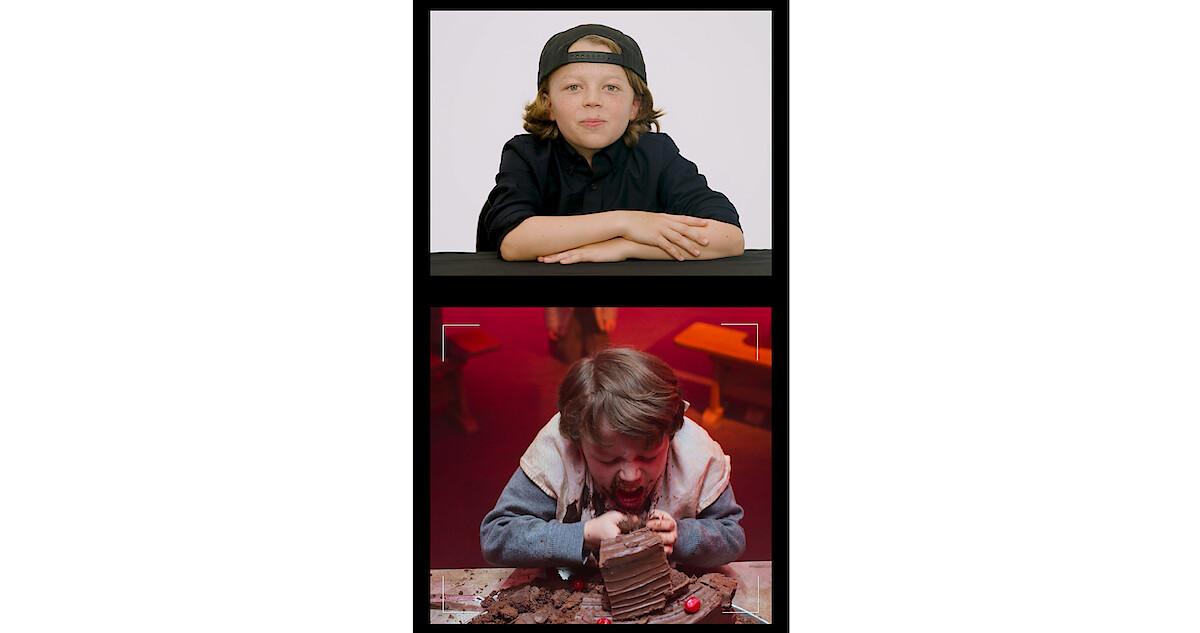
It is sticky. It is glistening. It’s arguably the most famous food moment in cinema history, yet it’s deeply uncomfortable to watch. If you grew up in the nineties, the Matilda chocolate cake scene is burned into your brain like a fever dream. You remember the sweat on Bruce Bogtrotter’s forehead. You remember the sound of the fork scraping the tin. Most of all, you remember the sheer, terrifying scale of that dessert.
Why does it stick with us? Honestly, it’s because Danny DeVito—who directed the 1996 adaptation of Roald Dahl's book—understood something visceral about childhood. Being a kid is often about being small in a world of giants who have all the power. In this scene, the cake isn't a treat. It is a weapon. It’s a trial by combat.
The Logistics of Making a 450-Pound Prop
Let's get into the weeds of how they actually filmed this. They didn't just buy a cake at Costco. The production team had to create something that looked appetizing for approximately three seconds before becoming absolutely repulsive.
Paul Reubens, who played FBI Agent Bob in the film, once noted the intensity of DeVito's directing style, but it was the prop department that really suffered here. They needed multiple cakes because filming took weeks. Weeks. Imagine sitting in a room with a massive, rotting chocolate sponge under hot studio lights. Jimmy Karz, the actor who played Bruce Bogtrotter, didn't even like chocolate cake that much. That’s the ultimate irony. He had to act like he was in heaven while actually facing a culinary nightmare.
The cake itself was designed to look "heavy." To achieve that specific, dense shimmer, the food stylists used a mix of real frosting and what essentially looks like dark ganache. It had to be thick enough to stick to Karz's face but soft enough that he could plow through it with his hands.
Why Bruce Bogtrotter is a Cinematic Hero
Bruce isn't just a kid who stole a slice of cake. In the context of the Matilda chocolate cake scene, he represents the first real crack in the Trunchbull’s armor. Up until this point, Miss Trunchbull is an invincible force of nature. She throws kids over fences by their pigtails. She puts them in the Chokey. She is the ultimate authoritarian.
When she forces Bruce to eat that entire cake in front of the whole school, she expects him to fail. She expects him to be sick, to cry, and to be humiliated. But then the unexpected happens. The kids start to cheer. "Bru-cie! Bru-cie! Bru-cie!"
It’s a low-key revolutionary moment. By finishing the cake, Bruce doesn't just survive an ordeal; he wins a battle of wills. He consumes the punishment and asks for more. That’s why the scene resonates. It’s about the underdog turning a "sentence" into a "victory lap." It’s messy and gross, but it’s triumphant.
The Roald Dahl Factor: Why the Book Was Different
If you go back to the original text by Roald Dahl, the tone is a bit darker. Quentin Blake’s illustrations make the cake look like a dark, looming monolith. Dahl had this obsession with the "grotesque" side of food. Think about the Enormous Crocodile or the chocolate river in Charlie and the Chocolate Factory.
In the book, the Matilda chocolate cake scene serves a specific narrative purpose. It establishes the "Black Widow" nature of the Trunchbull’s kitchen. She claims her cook, Cookie, made it with "real butter and real cream," but in the book, there’s a subtext that the cake is almost poisonous in its richness.
- The Film: Focuses on the physical endurance and the "gross-out" humor.
- The Book: Focuses on the psychological warfare and the silence of the assembly hall.
- The Musical: Uses a high-energy song ("Revolting Children" vibes start here) to turn the moment into a rhythmic ensemble piece.
It’s interesting how each medium handles the "disgust" factor. DeVito’s film leans into the foley work—the squelching sounds are incredibly loud in the mix. It makes the audience feel full just by listening to it.
Behind the Scenes: The "Spit Bucket" Reality
Jimmy Karz wasn't actually eating pounds of cake every day. That’s a common misconception. In Hollywood, when you see an actor eating on screen, there is almost always a "spit bucket" just out of frame.
Karz would take a bite, chew, the director would yell "cut," and he’d spit it out. However, for the shots where his face is covered in chocolate, he had to stay in that state for hours. He’s mentioned in interviews later in life—he’s a doctor now, by the way—that the smell of chocolate became nauseating to him during the shoot.
The "Cook" in the movie, played by Marion Dugan, adds to the horror. She looks like she hasn't seen a health inspector in forty years. When she brings the cake out, she’s wiping her hands on a filthy apron. It adds a layer of "germaphobe's nightmare" to the whole sequence. You aren't just worried about Bruce getting a stomach ache; you’re worried about him getting food poisoning.
The Psychological Impact on 90s Kids
Why does this scene show up in every "Top 10 Movie Food Moments" list? It’s the tension.
The Matilda chocolate cake scene is structured like an action sequence.
- The Inciting Incident: Bruce gets caught.
- The Escalation: The cake is revealed. It’s too big.
- The Midpoint: Bruce slows down. He looks like he’s going to vomit. The Trunchbull is gloating.
- The Climax: Matilda stands up. The cheering starts.
- The Resolution: The empty platter.
It’s a perfect short film within a film. It also taps into a universal childhood fear: being forced to do something "fun" until it becomes painful. Every kid wants a giant cake, until they realize what eating a giant cake actually does to the human body.
Cinematic Techniques Used by DeVito
Danny DeVito used wide-angle lenses (often called "the Whammy") to distort the actors' faces. This is why the Trunchbull looks so terrifying and why the cake looks so distorted and large. It creates a sense of claustrophobia. You feel trapped in that assembly hall with them.
The lighting is also surprisingly grim. It’s not bright and "candy-colored" like Willy Wonka. It’s dusty, brownish, and filtered through high windows. This makes the chocolate look darker, almost like mud. It’s a deliberate choice to strip the "sweetness" away from the dessert.
The Legacy of Bruce Bogtrotter
Jimmy Karz eventually stepped away from acting, but his contribution to pop culture is immortal. There are "Bruce Bogtrotter Challenges" on YouTube where people try to eat a massive cake in one sitting. (Side note: Don't do this. It’s medically ill-advised and generally ends poorly.)
The Matilda chocolate cake scene also sparked a trend in "Matilda Cakes" at bakeries. If you search for a Matilda cake recipe today, you’ll find thousands of results for ultra-moist, fudge-heavy cakes. People want to taste the legend, even if the movie made it look like a punishment.
There is a strange comfort in the scene now. It represents a time when practical effects and real food were used instead of CGI. You can tell that cake is real. You can see the crumbs. You can see the way the frosting breaks. That tactile reality is what makes it a masterpiece of disgusting cinema.
Common Misconceptions About the Scene
Some people think the cake was made of something non-edible to make it look better. Nope. It was a real, edible cake, just not a very fresh one after day three of filming. Others believe the actor actually finished a whole cake. Again, no—that would be a massive health risk for a child actor. It was all clever editing and a very busy spit bucket.
Another myth is that the "sweat" on Bruce’s face was real perspiration from eating. It was actually a mix of water and glycerine sprayed on by the makeup department to simulate the physical toll of the "marathon."
How to Experience the "Matilda Cake" Today
If you’re looking to recreate the magic (without the Trunchbull screaming at you), there are a few things you should know about the "ideal" version of this cake.
First, it has to be a Devil’s Food base. It needs that deep, dark cocoa profile. Second, the frosting shouldn't be a light buttercream. It needs to be a ganache or a heavy fudge frosting. The kind that leaves a coat on the back of the spoon.
Next Steps for Fans:
- Watch the 2022 Musical Film: Compare how the new version handles the scene. It’s much more stylized and less "muddy" than the 1996 version.
- Check out the Roald Dahl Museum: They often have exhibits on the food from his books, including the specific inspirations for the Trunchbull's "Cook."
- Read "Revolting Recipes": This is an official book that gives you the actual recipe for Bruce Bogtrotter's cake, designed to be slightly more edible than the one in the movie.
- Look into Danny DeVito's Directing: If you liked the "look" of Matilda, watch Death to Smoochy. He has a very specific, dark, distorted style that is unique in Hollywood.
The Matilda chocolate cake scene remains a masterclass in tension, gross-out humor, and childhood rebellion. It’s the moment we all realized that sometimes, to beat a bully, you just have to keep chewing.