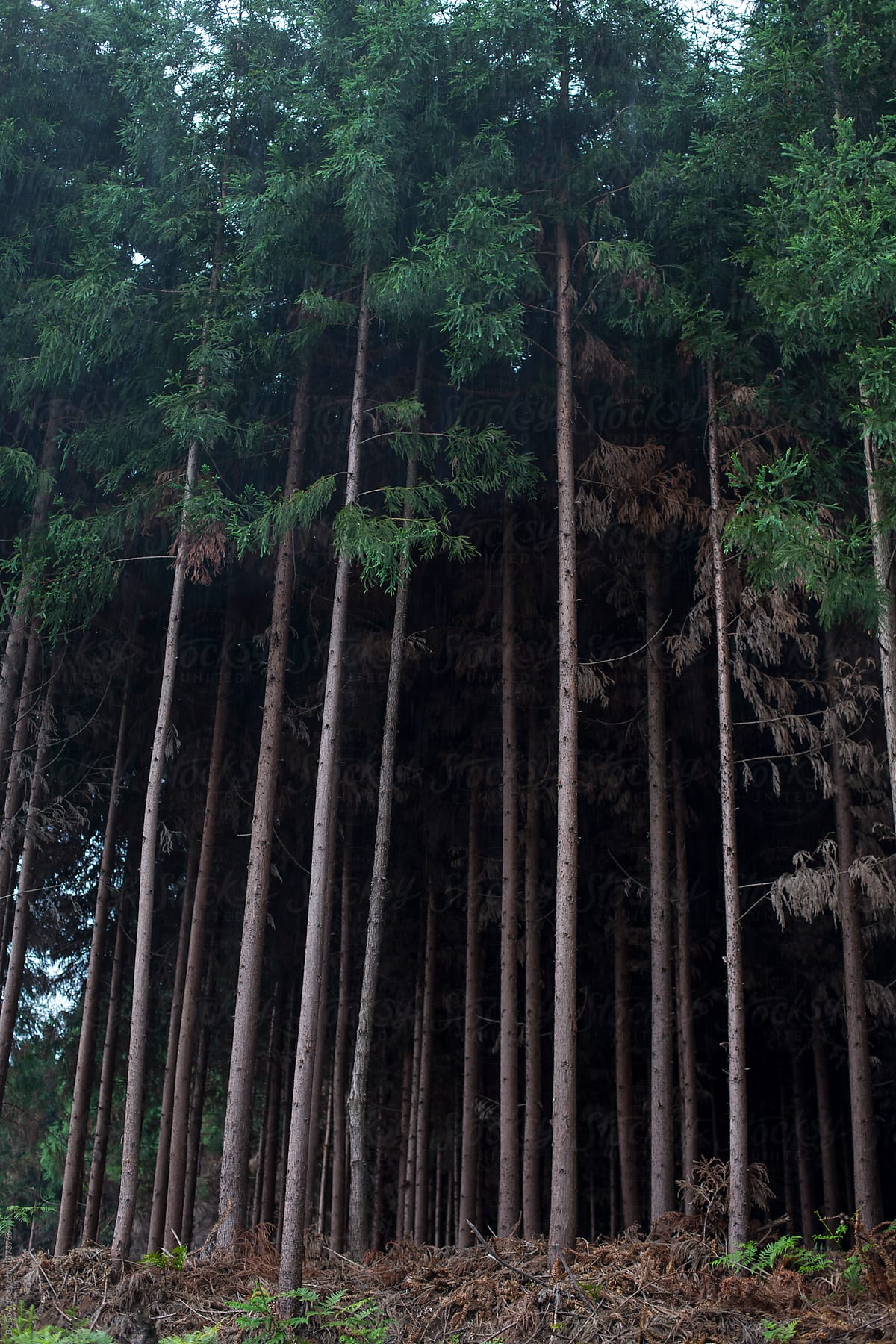
You're standing in a damp Florida flatwood at dusk. The air is thick, smelling of wet needles and peat. Suddenly, a sound cuts through the humidity. It isn't a croak or a peep. It sounds exactly like a frantic telegraph operator sending a message into the void. This is the pine woods tree frog, and honestly, it’s one of the most misunderstood little creatures in the American Southeast. While most people are busy looking for the bright green icons of the frog world, this "Morse code frog" is hiding in plain sight, usually way higher up than you’d expect.
The Secret Identity of Hyla femoralis
Most folks see a small, brownish frog and immediately think "toad" or just "generic frog." That’s a mistake. The pine woods tree frog (Hyla femoralis) is a master of camouflage. They aren't just brown; they are a living tapestry of deep russet, gray, and charcoal. But there is one dead giveaway. If you pick one up—which you should do carefully because their skin is sensitive—and look at the hidden surface of their thighs, you’ll see orange or yellowish spots. It looks like someone splashed tiny drops of paint back there. Scientists call these "femoral spots," and they are the definitive ID card for this species.
Why the spots? Predators.
Imagine a hungry bird diving toward a motionless brown lump. Suddenly, the lump leaps, revealing flashes of bright orange. The bird flinches, just for a millisecond, confused by the sudden burst of color. That’s all the time the frog needs to vanish into the leaf litter. It’s a low-tech survival strategy that works incredibly well. They usually stay between one and 1.5 inches long. Tiny. You could fit two of them on a standard credit card with room to spare.
Where They Actually Hang Out
If you’re looking for these guys on the ground, you’re looking in the wrong place. They are arboreal. That means they spend the vast majority of their lives in the canopy of pine forests and cypress swamps. They love the "high life."
They range from the coastal plains of Virginia down through the entirety of Florida and over to eastern Louisiana. But don't expect to find them in a manicured suburban lawn. They need the acidic, sandy soil and the specific ecology of pine flatwoods. They are particularly fond of Longleaf Pine ecosystems. Since we’ve lost about 97% of original Longleaf Pine forests in the US, these frogs have had to get scrappy.
They aren't just in the trees, though. During the breeding season—roughly April to October—they move toward ephemeral wetlands. These are "now you see them, now you don't" pools of water that dry up periodically. Why? Because ephemeral pools don't have fish. If you’re a pine woods tree frog laying eggs, a fish-free pond is the difference between your kids growing up or becoming a snack.
The Morse Code Call
You’ll hear them long before you see them. The call is a rapid-fire get-it, get-it, get-it. It’s staccato. It’s rhythmic. On a warm, rainy night, a chorus of a hundred males can be deafening. It’s not the musical drone of a Bullfrog or the high-pitched whistle of a Spring Peeper. It’s mechanical.
I've talked to hikers who thought they were hearing a distant jackhammer or some kind of weird rhythmic engine trouble. Nope. Just a very horny, very small frog.
Survival in a Fire-Driven World
Here is something most people get wrong: fire is good for these frogs. We’ve spent decades thinking forest fires are the enemy. In the Southeast, the pine woods tree frog evolved alongside lightning-strike fires. Periodic, low-intensity burns keep the understory clear and prevent hardwoods from taking over the pine savannas. When the fire clears the brush, it keeps the wetlands open and sunny, which is exactly how the frogs like their breeding pools.
When we suppress fire, the habitat changes. The pines get crowded out. The ephemeral pools get choked with shade. The frogs move out.
Diet and the Food Web
What does a one-inch frog eat? Basically anything it can overpower. They are sit-and-wait predators. They aren't chasing down prey like a cheetah. They sit on a branch, camouflaged against the bark, and wait for a moth, a beetle, or a fly to wander too close.
- Ants
- Small beetles
- Crickets
- Spiders
They are basically the pest control of the pine canopy. In turn, they get eaten by almost everything. Snakes, larger frogs, birds, and even large spiders will take a crack at them. It’s a tough life.
The Problem with Identification
The pine woods tree frog is frequently confused with the Squirrel Treefrog (Hyla squirella). Both are small. Both can be brownish. But the Squirrel Treefrog lacks those distinctive orange spots on the back of the thighs. Also, the Squirrel Treefrog has a call that sounds more like a duck's quack or a raspy chatter. If it sounds like a telegraph, it's a Pine Woods. If it sounds like a squirrel having an argument with a duck, it's a Squirrel Treefrog.
Conservation Reality Check
Are they endangered? No. At least, not yet. The IUCN lists them as "Least Concern." But that’s a bit misleading if you look at local populations. In areas where suburban sprawl is eating up the pine barrens, these frogs are vanishing. They don't do well with habitat fragmentation. They can't just hop across a six-lane highway to find a new pond.
Climate change is also messing with their breeding cycle. These frogs rely on specific rainfall patterns to fill their breeding pools. If the rains come too late, or if it’s too hot and the pools dry up before the tadpoles metamorphose, an entire generation can be lost in a single season.
How to Find One (The Ethical Way)
If you want to see a pine woods tree frog, wait for a rainy night in early summer. Drive out to a national forest or a state park with pine flatwoods. Roll down your windows. When you hear the "Morse code," pull over safely.
Use a flashlight with a red filter if possible; it's less stressful for the animals. Look at the trunks of the pines near the water's edge. You’ll see them clinging to the bark, their throats expanding as they call.
Don't use bug spray before you go out. Seriously. Frogs breathe through their skin. The chemicals in DEET or even "natural" repellents can be lethal to them. If you must handle one to check for the orange spots, make sure your hands are wet with pond water first. Dry human hands can tear their delicate skin or introduce salts and oils that shouldn't be there.
Actionable Steps for Enthusiasts
If you live in their range and want to help, or if you just want to see more of them, here is the "real world" list of what to do:
- Stop using pesticides. If you have a yard near a wooded area, those chemicals eventually wash into the breeding pools.
- Support prescribed burns. If your local forestry service is planning a controlled burn, don't complain about the smoke. It's literally saving the habitat for the pine woods tree frog.
- Build a "frog hotel." A simple upright PVC pipe (about 2 inches wide and 4 feet tall) stuck in the ground can provide a moist, safe hiding spot for tree frogs during the day. Just make sure the bottom is capped or buried so they don't get trapped.
- Use Citizen Science apps. Upload your photos and recordings to iNaturalist. It helps herpetologists track population shifts in real-time.
These frogs are a vital part of the southern ecosystem. They are small, yes. They are loud, definitely. But they are also a biological indicator of how healthy our pine forests really are. If the woods go silent, we’ve got a much bigger problem than just losing a cool sound in the night.
Look for the orange spots. Listen for the telegraph. Protect the pines.