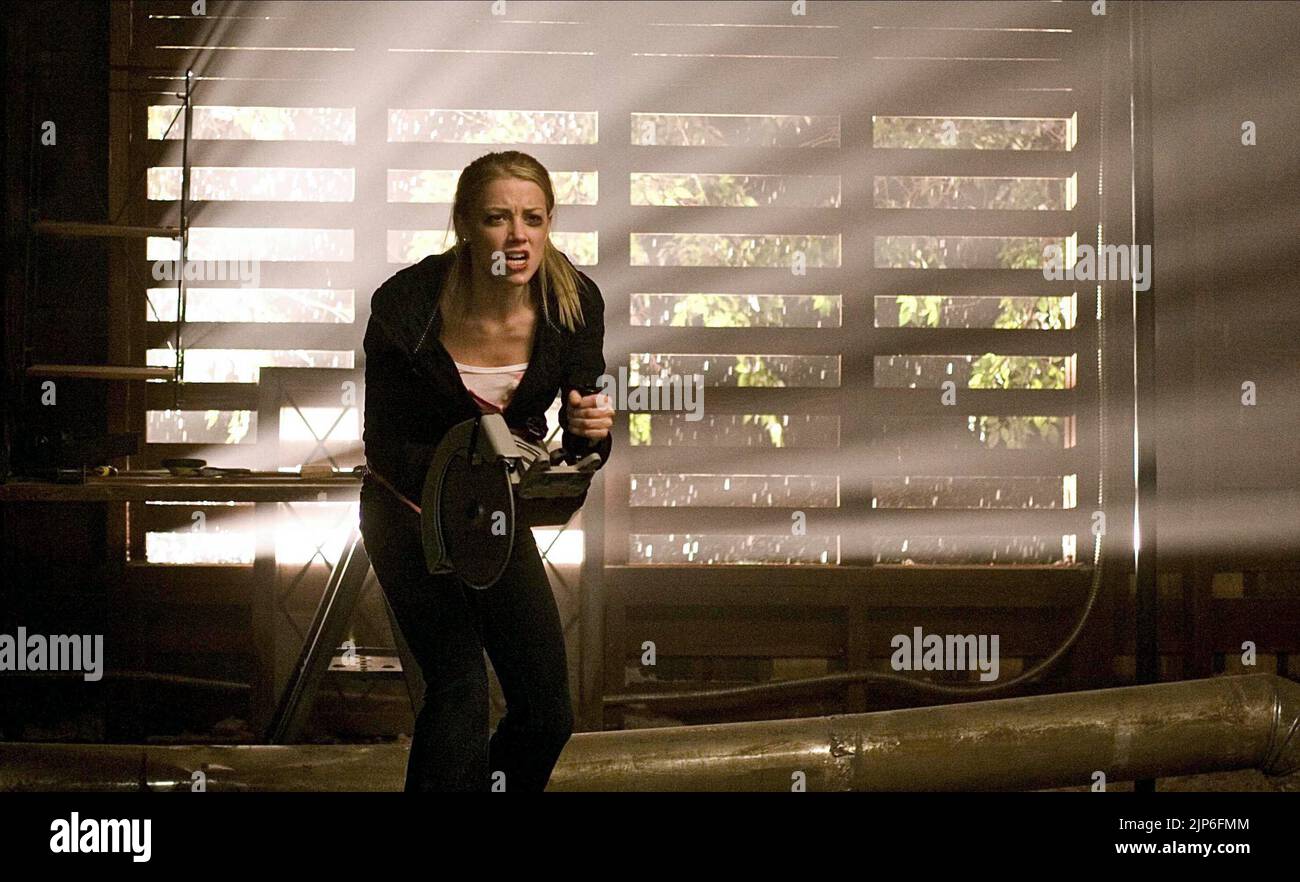
You probably remember 2009 for different reasons. Maybe it was the rise of Lady Gaga or the fact that everyone was suddenly obsessed with Avatar. But in the world of mid-budget psychological thrillers, a specific remake was making waves—mostly for its cast. If you look back at the credits for The Stepfather, you’ll see a name that has since become one of the most talked-about figures in Hollywood: Amber Heard.
At the time, Heard wasn't the household name she is today. She was a rising star, the "it-girl" of the late 2000s who seemed to be in every other trailer. In The Stepfather, she played Kelly Porter, the girlfriend of the main protagonist, Michael Harding (played by Penn Badgley). It was a classic "damsel-meets-detective" role, but looking back, the film serves as a fascinating time capsule of her early career.
The Role of Kelly Porter: More Than Just the Girlfriend?
In the movie, Amber Heard’s character, Kelly, is the voice of reason—until she isn't. She’s the supportive girlfriend who initially thinks Michael is just being paranoid about his mom’s new boyfriend, David Harris (Dylan Walsh). Honestly, if you’ve seen the movie, you know the vibe. It’s that classic "suburban dread" where the newcomer is a little too perfect.
Kelly is frequently seen poolside or helping Michael investigate, which led some critics at the time to argue her role was a bit one-dimensional. Kim Newman, a well-known film critic, noted that Heard felt "stuck with a conventional girlfriend role," especially compared to her more complex lead in the cult horror hit All the Boys Love Mandy Lane.
Still, Kelly is pivotal. She’s the one who eventually gets caught in the crosshairs during the climax. While Michael is busy playing amateur sleuth, Kelly is the one who provides the emotional stakes. If she’s in danger, the audience feels it.
Why The Stepfather Was a Career Pivot
By 2009, Heard was coming off the success of Pineapple Express and Never Back Down. She was transitiong from "the girl next door" to a legitimate box-office draw. The Stepfather wasn't a critical darling—it holds a pretty low 11% on Rotten Tomatoes—but it was a commercial success for its genre. It pulled in over $31 million worldwide on a $20 million budget.
For Heard, this was about visibility. She was sharing the screen with Sela Ward and Penn Badgley, who was then at the height of his Gossip Girl fame. It was a "safe" career move that kept her in the public eye before she took on more controversial or high-profile projects like The Rum Diary, where she eventually met Johnny Depp.
The "Pool Scene" and 2000s Marketing
If you look at the marketing for The Stepfather, it’s very "of its time." A lot of the promotional material focused heavily on the younger cast members. Specifically, there was a lot of emphasis on Amber Heard in swimwear.
- The Aesthetic: The film leaned into the sunny, suburban California look.
- The Contrast: Bright, blue pool water versus the dark, murderous secrets of the titular stepfather.
- The Target Audience: It was clearly aimed at the teen and young adult demographic who followed Badgley and Heard.
Critics like Corve DaCosta pointed out that the film felt a bit "conservative on the bloody side" compared to other slashers, which helped it maintain a PG-13 rating and broader appeal. It was a thriller designed for Friday night dates, not necessarily for hardcore horror fans who wanted the grit of the original 1987 version.
What Most People Get Wrong About the Remake
A lot of people think the 2009 version is a shot-for-shot remake of the Terry O'Quinn original. It’s not.
In the original, the perspective is centered more on the daughter. In the 2009 version, it shifts to the son, Michael. This changed the dynamic for Amber Heard’s character. Instead of being a secondary friend, she became the primary romantic interest and a secondary protagonist.
There's also a misconception that this was a "flop." While critics hated it, the movie actually did decent business on DVD and Blu-ray, pulling in an additional $13 million in domestic video sales. It’s one of those movies that lived a second life on cable TV and streaming platforms, which is why people still search for it today.
Behind the Scenes and Trivia
Working on a thriller like this isn't all tension and jump scares. The cast actually seemed to get along quite well.
Heard has mentioned in past interviews that she enjoyed the physicality of the ending. Without spoiling too much for the three people who haven't seen it, the finale involves a heavy rainstorm, a roof fight, and a lot of practical effects.
Interestingly, this was the same year Heard had a blink-and-you'll-miss-it cameo in Zombieland as "406." It was a year of extremes for her—from a leading lady in a thriller to a zombie in a comedy.
Key Stats for The Stepfather (2009)
- Director: Nelson McCormick
- Budget: $20,000,000
- Opening Weekend: $11,581,586
- Amber Heard's Role: Kelly Porter
- Co-stars: Penn Badgley, Dylan Walsh, Sela Ward
How to Watch and What to Look For
If you’re revisiting The Stepfather to see Amber Heard’s early work, pay attention to the chemistry between her and Badgley. It’s very 2009. The fashion, the flip phones, the "suspicious" internet searches on bulky laptops—it’s all there.
You can usually find the movie on major streaming platforms like Amazon Prime or Apple TV for rent. It pops up on Netflix or HBO Max occasionally too.
Actionable Insights for Fans and Cinephiles:
- Compare the Versions: If you really want to see how the genre changed, watch the 1987 original first. The 2009 version is much more focused on "tech-thrills" (PDAs, digital cameras).
- Trace the Career Path: Watch this alongside The Joneses (also 2009). You’ll see Heard playing two very different types of "American girls" in the same year.
- Check the Soundtrack: The movie features some great late-2000s tracks that really set the mood for that era of thrillers.
The movie might not be an Oscar winner, but for anyone interested in the evolution of Amber Heard's career, it's a mandatory watch. It shows her at a turning point—moving away from indie horror and into the mainstream Hollywood machine.