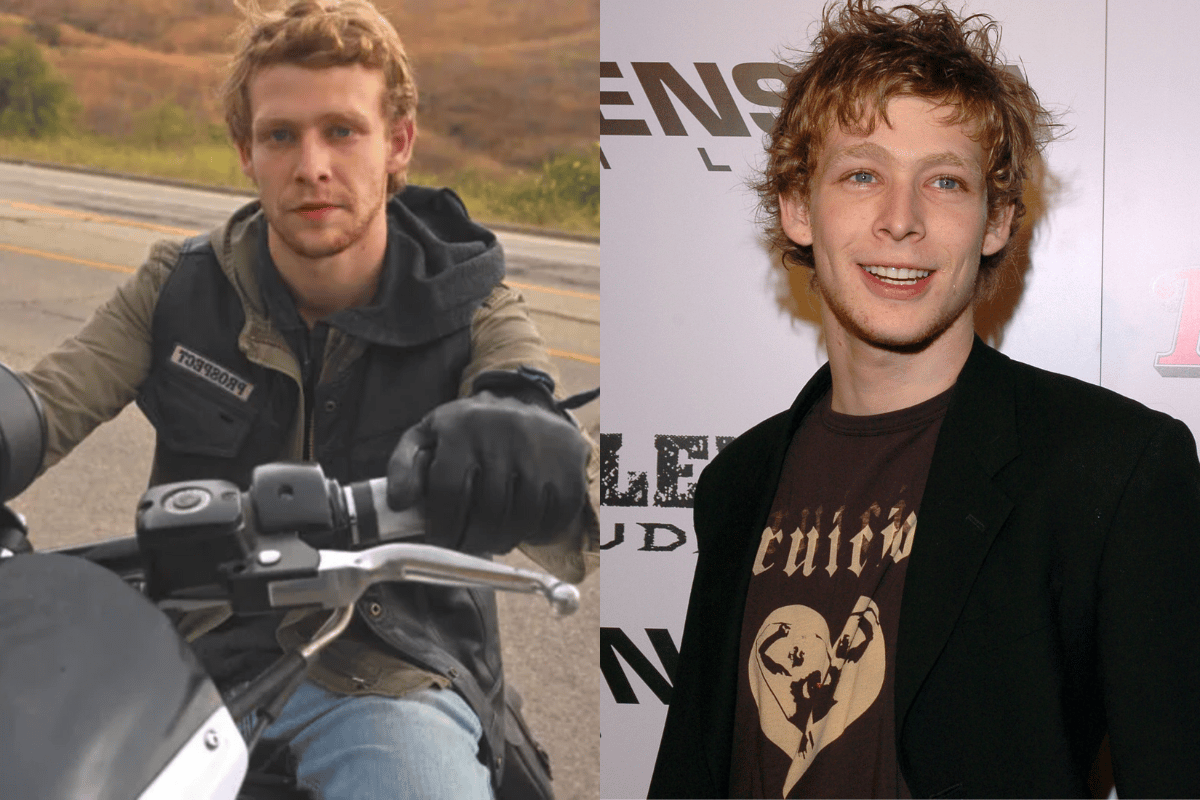
Hollywood has a way of smoothing over the jagged edges of a story once the cameras stop rolling. But the death of Johnny Lewis isn’t something that fits into a neat, scripted narrative. Honestly, it’s one of the most jarring, violent, and genuinely confusing ends to a promising career in recent memory. If you watched him as Kip "Half-Sack" Epps on Sons of Anarchy, you saw a kid with a specific kind of vulnerable energy—the kind of actor who seemed like he was going places. Then, in September 2012, everything shattered in a way that left even seasoned investigators struggling to make sense of the scene in Los Feliz.
Johnny wasn't just another "troubled actor." His downward spiral was fast. It was loud. And it was devastatingly final. When news broke that he had been found dead after an alleged altercation that claimed the life of his 81-year-old landlady, Catherine Davis, the industry went quiet. People didn't know how to react because the Johnny Lewis they knew—the guy who dated Katy Perry and did charity work—didn't match the person in the police report.
The Los Feliz Incident: A Night of Chaos
The details of the death of Johnny Lewis are gritty. On September 26, 2012, police were called to a Mediterranean-style villa on Writer’s Way. What they found was a nightmare. Catherine Davis, a well-known figure in the neighborhood who often rented rooms to actors, was found dead inside. She had been beaten and strangled. Her cat had also been killed.
Witnesses reported seeing Lewis climbing over fences and fighting with neighbors before he ultimately fell—or jumped—from a roof or balcony. He died on impact. The coroner later ruled the death of Johnny Lewis as accidental, citing that there was no evidence he was pushed or that he intended to take his own life. He just fell.
It's a messy, horrifying sequence of events. The most baffling part for the public was the toxicology report. Everyone assumed he was high on "bath salts" or some new designer drug because of the sheer ferocity of the attack on Mrs. Davis. But the labs came back clean. No drugs. No alcohol. Just a shattered psyche and a trail of wreckage.
A Career Cut Short
Lewis started young. You might remember him from Drake & Josh or The O.C. before he landed the role of Half-Sack. He was good. He had this quirky, off-beat charisma that made him stand out in an ensemble cast. But he reportedly asked to be written off Sons of Anarchy because he didn't like the direction of the show’s violence. Think about the irony there for a second.
The creator of the show, Kurt Sutter, didn't mince words after the news broke. He posted on Twitter that while he wasn't surprised by the tragic ending, he was deeply saddened. He mentioned that Lewis had "lost his way." It wasn't a PR-friendly tribute. It was raw. Sutter knew, as many in Lewis’s inner circle did, that the actor had been struggling with his mental health for months.
The Head Injury Theory
If it wasn't drugs, what was it? Many people close to Johnny point to a high-speed motorcycle accident he had in late 2011. He wasn't wearing a helmet.
After that crash, his behavior shifted. He became erratic. He had bouts of semi-consciousness and bizarre outbursts. This isn't just speculation; his father, Michael Lewis, reportedly tried to get him into treatment multiple times, even advocating for a brain scan that Johnny refused.
Traumatic Brain Injury (TBI) can completely rewire a person's personality. It can trigger impulsivity, aggression, and a total loss of emotional regulation. When you look at the timeline, the "old" Johnny Lewis started disappearing right after that wreck. He spent time in and out of jail in the months leading up to his death for various assaults and a burglary. Each time he was released, he seemed further away from reality.
The Scientology Connection
It’s impossible to talk about Johnny without mentioning his upbringing in the Church of Scientology. Both of his parents were high-ranking members. Why does this matter? Because the Church famously has a very complicated, often hostile relationship with psychiatry and psychiatric medication.
Some former friends have suggested that this background might have prevented Johnny from getting the clinical mental health intervention he desperately needed. Instead of seeing a psychiatrist for potential psychosis or brain trauma, he was reportedly steered toward "purification" processes. Whether or not that’s the smoking gun is up for debate, but it adds a layer of complexity to the tragedy. He was a man caught between a failing brain and a belief system that didn't have the tools to fix it.
Why We Still Talk About Him
We're obsessed with the "fall from grace" story, but Johnny Lewis feels different. It wasn't a slow burn of addiction. It was a sudden, violent snap.
The death of Johnny Lewis serves as a grim case study in how the legal system and the medical system often fail people with severe brain injuries. He was in custody multiple times in 2012. He was evaluated by probation officers who noted his mental instability. Yet, he was released back into the world without a safety net.
People often compare him to other tragic young stars, but his story lacks the "glamour" of the 27 Club. There’s no poetic beauty here. It’s just a tragedy that took out an innocent woman, a beloved pet, and a 28-year-old man who seemed to be a passenger in his own body during his final moments.
The Aftermath for the Sons of Anarchy Cast
The cast was shaken. You have to remember, they spent years filming in the trenches of a very intense show. Theo Rossi and Charlie Hunnam have both spoken, at different times, about the shock of the news.
It changed the legacy of the Half-Sack character, too. Now, when fans rewatch those early seasons, they don't just see a comic relief character. They see a ticking clock. It’s hard to separate the art from the reality when the reality is so dark.
Navigating the Legacy
So, what do we do with a story like this? It’s easy to label him a villain because of what happened to Catherine Davis. She was a victim who deserved better. But it’s also possible to see Johnny as a victim of a biological breakdown.
The nuances of the death of Johnny Lewis remind us that mental health isn't always about "feeling sad." Sometimes it’s a physical, catastrophic failure of the brain’s ability to function.
Key Takeaways for Understanding the Incident
If you’re looking to understand the reality behind the headlines, keep these points in mind:
- The Toxicology Factor: Despite the violent nature of the crime, no illicit drugs were found in Lewis's system at the time of his death. This effectively debunked the "bath salts" rumors that dominated the early news cycle.
- The TBI Connection: The 2011 motorcycle accident is considered by many medical experts (and his family) as the catalyst for his psychological decline.
- Systemic Failure: Lewis had been in and out of the legal system shortly before the incident. His probation reports highlighted "mental health concerns," yet no long-term psychiatric hold was successfully implemented.
- Impact on the Industry: His death prompted discussions in Hollywood about the support systems (or lack thereof) for young actors dealing with trauma and sudden fame.
The most practical thing to take away from this tragedy is the importance of early intervention in head injuries. If you or someone you know experiences a significant personality shift after a concussion or accident, don't wait. Neurological evaluations are non-negotiable. The legal and social fallout of the death of Johnny Lewis might have been avoided if the physical injury to his brain had been treated with the same urgency as a broken bone.
Sometimes, the "dark side of Hollywood" isn't about parties or excess. Sometimes, it's just about a guy who hit his head, lost his way, and fell through the cracks of a system that wasn't built to catch him.