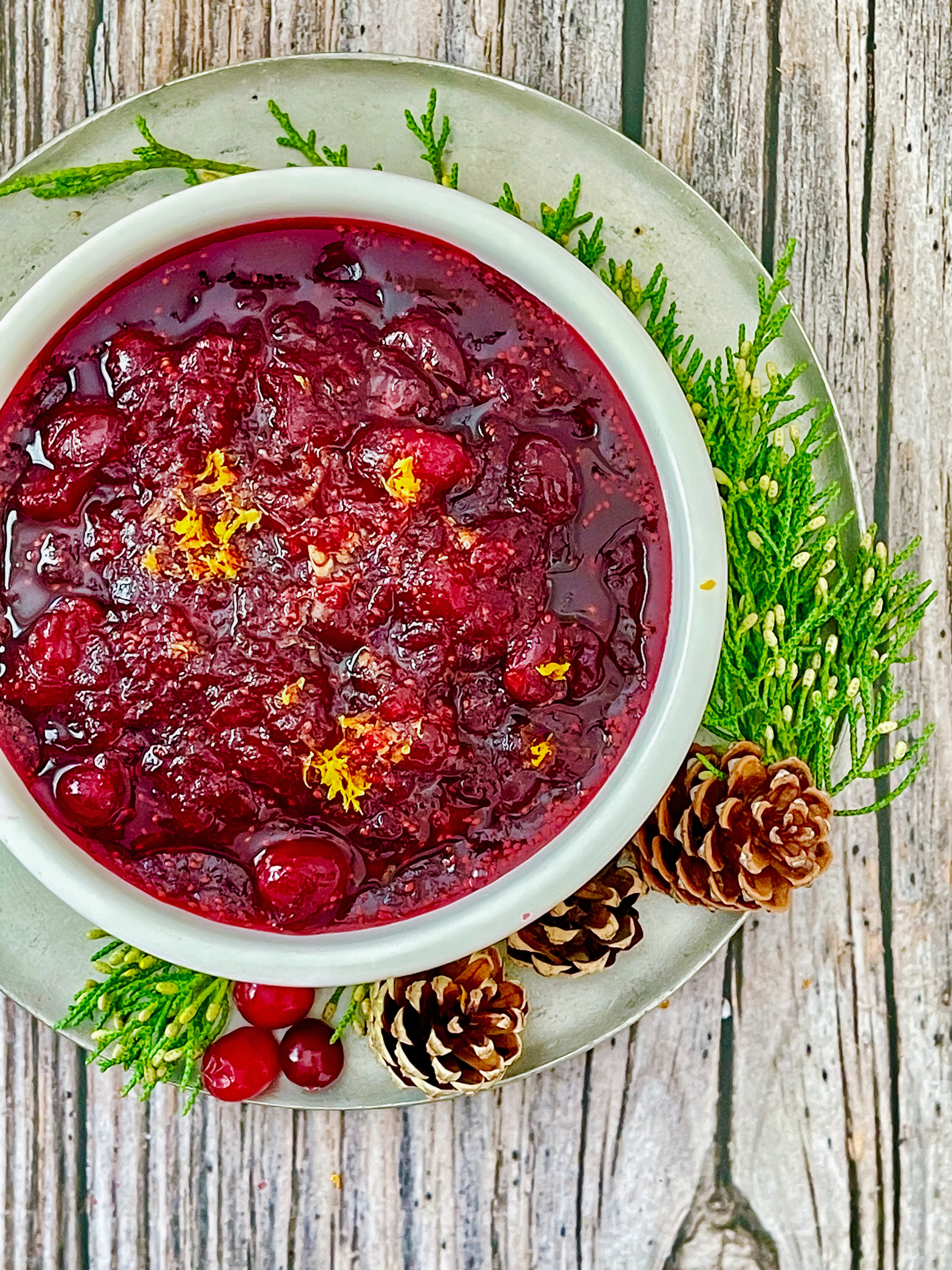
Let’s be honest. Most people treat cranberry sauce as a decorative afterthought. It’s that jiggling, ribbed cylinder sliding out of a tin, or worse, a watery purple puddle that bleeds into the mashed potatoes. But if you’ve ever actually tasted a proper cranberry sauce with orange juice, you know it’s the only thing on the plate that actually fights back against the heavy, fatty onslaught of turkey and stuffing.
It’s about acid.
Without that bright, citrusy punch, you’re just eating sugar-coated berries. The orange juice isn't just a "flavor" addition; it’s a chemical necessity. The citric acid in the juice interacts with the natural pectin in the cranberries to create a better set, while the aromatic oils in the zest cut through the cloying sweetness that ruins most recipes. You need that balance. Otherwise, it's just jam.
Why Cranberry Sauce with Orange Juice is Non-Negotiable
The science is actually pretty cool. Cranberries are packed with pectin. That’s the stuff that makes jelly gel. However, pectin needs a specific pH environment to do its job well. When you make cranberry sauce with orange juice instead of just plain water, you are lowering the pH, which helps those pectin chains bond more effectively. You get a thick, glossy sauce that doesn't require extra thickeners or cornstarch.
Don't use the stuff from a carton. Seriously.
Store-bought orange juice is pasteurized and often stripped of its "flavor packs"—the volatile oils that give juice its soul. If you want the sauce to actually taste like something, you have to squeeze a real orange. You also need the zest. The zest contains the limonene and other essential oils that survive the boiling process. The juice itself provides the liquid base, but the zest provides the punch.
I’ve seen people try to use apple juice. Don’t do that. It’s too sweet and lacks the necessary acidity to balance the bitterness of the skins. Cranberries are famously tart—so tart they are almost inedible raw. You’re trying to find a middle ground where the berry’s natural tannins meet the orange’s bright sweetness.
The Common Mistakes That Ruin the Texture
Most folks overcook it. They wait until every single berry has disintegrated into a mushy pulp. Stop doing that. You want a "burst" texture. You want to hear those little pops as the heat expands the air inside the fruit, but you should pull it off the stove while some berries are still somewhat intact. This provides structural integrity.
A lot of recipes call for a 1:1 ratio of sugar to water. That’s insane.
If you’re using orange juice, you can actually dial back the refined sugar. The natural fructose in the citrus handles some of the heavy lifting. I usually start with about 3/4 cup of sugar for every 12-ounce bag of berries. You can always add more later, but you can't take it out. If it ends up too sweet, it loses its purpose as a palate cleanser.
Fresh vs. Frozen Berries
Does it matter? Not really.
Ocean Spray, which handles a massive chunk of the US cranberry harvest, actually freezes a huge portion of their crop immediately after the wet harvest. Because cranberries have an internal air pocket (which is why they float), they freeze remarkably well without turning into mush. If you find fresh bags in November, grab them. If it’s July and you have a craving, the frozen ones are virtually identical in terms of nutritional profile and pectin content.
The Heat Factor
Medium-high until the boil, then drop it immediately to a simmer. If you keep it at a rolling boil, you risk scorching the sugars and creating a bitter, burnt aftertaste that even the orange juice can't save. It usually takes about 10 to 12 minutes. That’s it. It’s the fastest thing you’ll cook all day, yet people stress about it the most.
Elevating the Profile Without Getting Weird
I’m a purist, but I get the urge to experiment. If you’re going to add things to your cranberry sauce with orange juice, keep them in the same "flavor family."
- Cinnamon sticks: Throw one in while it simmers. It adds a woody warmth that bridges the gap between the fruit and the savory turkey.
- Fresh Ginger: Grate just a tiny bit into the pot. It adds a background heat that works perfectly with the citrus.
- Star Anise: Just one. It gives a faint licorice note that makes people go, "What is that?" in a good way.
Avoid adding walnuts or celery. This isn't a Waldorf salad. Texture is good, but "crunchy" cranberry sauce feels like a mistake in the mouth. You want a jammy, saucy consistency, not a debris field.
The "Make Ahead" Secret
This is the one dish that actually benefits from sitting in the fridge for two or three days. The flavors meld. The pectin continues to set as it chills. When you make it on the day of the feast, it's often still a bit loose and the orange flavor can feel a bit sharp and isolated. After 48 hours, the orange juice has fully permeated the skins of the cranberries, and the whole thing becomes a cohesive, ruby-red masterpiece.
If it comes out of the fridge too stiff, don't panic. Just stir in a tablespoon of warm water or, better yet, another splash of fresh orange juice. It’ll loosen right up.
Real Talk on Health and Antioxidants
We tell ourselves cranberry sauce is healthy because it’s fruit. It's... mostly healthy. Cranberries are powerhouses of proanthocyanidins (PACs), which are great for urinary tract health and have significant antioxidant properties. However, because they are so tart, we add a lot of sugar.
Using orange juice helps.
By using the juice, you’re adding Vitamin C and potassium, and as mentioned, you can reduce the added white sugar. It’s still a treat, but it’s a functional one. Compared to the marshmallow-topped sweet potato casserole, the cranberry sauce is practically a superfood.
Step-by-Step Logic for the Perfect Batch
Get your 12oz bag of cranberries. Wash them. Pick out the ones that look like shriveled raisins—those won't pop.
In a medium saucepan, combine 1 cup of fresh-squeezed orange juice and 3/4 cup of granulated sugar. Bring that to a boil, stirring until the sugar vanishes. Toss in the berries.
Now, wait.
You’ll start to hear them popping. It sounds like tiny kernels of popcorn. Once about half of them have popped, turn the heat down to low. Add a teaspoon of fresh orange zest. Simmer for another 5 minutes. The liquid will look a bit thin—don't worry. It thickens significantly as it cools. Remove it from the heat and let it sit at room temperature for an hour before shoving it in the fridge.
Beyond the Turkey
Don't throw away the leftovers. Cranberry sauce with orange juice is basically a sophisticated marmalade.
- Spread it on sourdough: Toast some bread, add a layer of goat cheese, and top it with the sauce.
- Swirl it into yogurt: It beats the pre-packaged fruit-on-the-bottom stuff any day.
- Glaze for pork: If you're roasting a pork loin, brush some of this on during the last 20 minutes of cooking. The sugars carmelize and the acidity cuts the pork's fat perfectly.
Actionable Takeaways for Your Next Meal
- Always zest before you juice. It is incredibly difficult to zest a squeezed, hollowed-out orange half.
- Watch the sugar. Start low (3/4 cup) and taste the liquid once the berries start popping. If it's too tart for your soul, add a tablespoon at a time.
- Chill it early. Give the sauce at least 24 hours in the refrigerator to let the pectin do its thing and the citrus notes to mellow.
- Use a heavy-bottomed pan. Thin pans create hot spots that will burn the sugar before the berries even get warm.
- Fresh is better. While frozen berries work in a pinch, fresh oranges are a non-negotiable requirement for the best flavor profile.