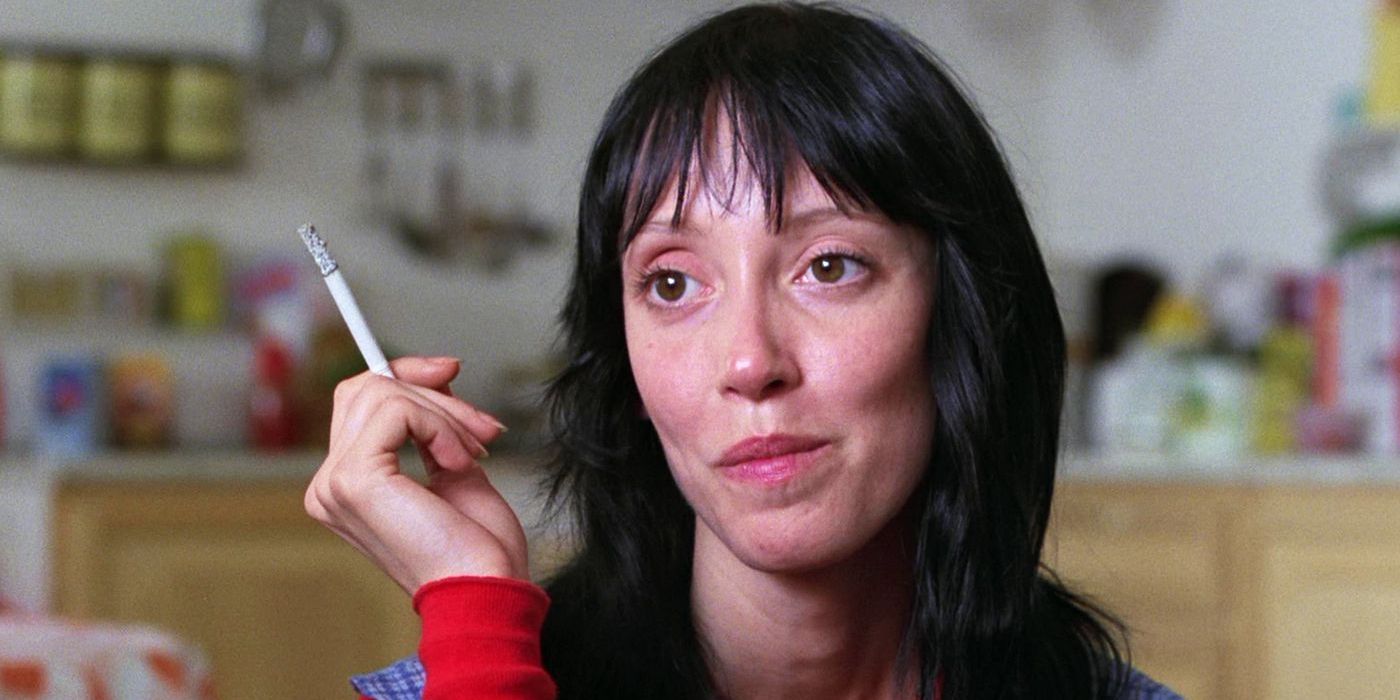
Shelley Duvall didn’t just play Wendy Torrance. She survived her. For decades, if you brought up Wendy from The Shining, people would roll their eyes and talk about the screaming. They’d mimic that trembling, high-pitched "Jack?" or talk about how she seemed "weak" compared to Stephen King's original vision in the book. It’s a bad take. Honestly, it’s a take that misses the entire point of what makes that movie terrifying.
Wendy is the backbone of the Overlook. Without her, Danny doesn't make it past Tuesday.
People love to cite Stephen King’s hatred of Kubrick’s version of Wendy. King famously called her a "screaming dishcloth." He wanted the Wendy from his 1977 novel—a woman who was blonde, confident, and had a backbone made of steel from page one. But Kubrick wasn't making a movie about a confident woman. He was making a movie about the slow-motion car crash of domestic abuse and isolation. In that context, Shelley Duvall’s Wendy is a masterpiece of realistic trauma. She is a woman walking on eggshells in a house made of glass.
The Reality of Wendy Torrance as a Survivor
When we talk about Wendy from The Shining, we have to talk about the physical toll. Kubrick was notoriously brutal on set. He famously made Duvall perform the "bat scene" on the stairs 127 times. Her hands were raw. She was losing hair from stress. You can see it in her eyes; that isn't just "acting" in the traditional sense. It’s a woman pushed to her absolute limit.
Jack is the monster, sure. But Wendy is the one doing the heavy lifting.
Think about the actual logistics of their stay at the Overlook Hotel. Jack spends his days "writing" (we know how that went) or talking to ghosts in the Gold Room. Who is actually maintaining the boiler? Who is cooking the meals? Who is checking on Danny? Wendy. She is the functional adult in a building that is actively trying to swallow her family whole. She’s isolated, gaslit by her husband, and stuck in a mountain resort during a blizzard with a psychic child.
She isn't weak. She's exhausted.
The Book vs. The Movie: A Tale of Two Wendys
The disparity between the two versions of the character often colors how we see her. In the novel, Wendy is much more traditionally "strong." She has a strained relationship with her mother and a much more vocal defiance against Jack’s drinking. She’s a fighter from the jump.
Kubrick’s Wendy is different. She's a woman who has clearly been conditioned by years of Jack’s volatility. When she explains Jack’s "accident" with Danny’s shoulder to the doctor early in the film, she’s doing the classic "protective spouse" dance. She’s nervous. She smokes constantly. She smiles too much to cover for him. It’s heartbreaking.
Critics like Roger Ebert eventually came around to this, but early reviews were unkind. They didn't see a survivor; they saw a caricature. They were wrong. If you look at the way she handles the final act—swinging that bat, locking Jack in the pantry, navigating the hedge maze—she is incredibly resourceful. She does all of this while having a literal nervous breakdown. That’s not weakness. That’s peak human endurance.
Why the "Screaming Dishcloth" Narrative is Sexist
There’s a specific kind of criticism leveled at Wendy from The Shining that feels very dated. The idea that a woman is "annoying" because she’s terrified of a man trying to kill her with an axe is... a choice.
If Wendy were a "badass" in the modern action-movie sense, the horror wouldn't work. The Overlook is a place of overwhelming, patriarchal pressure. Jack represents the history of the hotel—the "white man’s burden," the cycle of violence, the failed provider. Wendy is the victim of that cycle who decides to break it.
- She manages the hotel's massive technical systems with zero training.
- She maintains a sense of normalcy for Danny for as long as humanly possible.
- She actually wins.
Let’s be real. Jack Torrance didn't "lose" because he was outsmarted by a ghost. He lost because Wendy kept her head just enough to get her son into that Snowcat.
The Shelley Duvall Legacy
We can't talk about Wendy without acknowledging the tragic passing of Shelley Duvall in 2024. For years, she was a bit of a recluse, and the narrative around her was often "The Shining broke her." While it's true the filming was traumatic, Duvall herself often spoke about how much she learned from Kubrick. She knew she was delivering something raw.
In the years leading up to her death, there was a massive cultural shift. Gen Z and Millennial horror fans started looking at Wendy through a different lens. They didn't see a "dishcloth." They saw a final girl who didn't have the luxury of being "cool." She was a mother.
The fashion world even got obsessed with her. The turtlenecks, the corduroy pinafores, the messy braids—Wendy’s "overwhelmed librarian" aesthetic became a staple of fall fashion boards on Pinterest and TikTok. It’s funny how time transforms a character from a punchline into an icon.
Key Moments Where Wendy Actually Saved the Day
If you rewatch the film today, keep an eye on these specific moments. They prove Wendy was the most competent person in the Colorado Rockies:
- The Pantry Lock-in: She managed to drag a grown man into a walk-in freezer while injured. That takes incredible physical and mental strength.
- The Bathroom Defense: When Jack is coming through the door with the axe, she doesn't just stand there. She gets Danny out the window first. Her survival is secondary to her son’s.
- The Bat Scene: While people laugh at her crying, look at her footwork. She keeps the distance. She keeps the weapon between her and the threat. She’s terrified, but she’s tactical.
Most people forget that Wendy is the one who realizes something is wrong with the hotel first. She’s the one who sees the "Redrum" reflection. She’s the one who finds the "All work and no play" manuscript. She does the detective work while Jack is losing his mind.
Misconceptions and the "Ghost" Logic
Some fans argue that the hotel "let" Wendy see the ghosts (like the bear/dog costume guy or the man with the head wound) just to torture her. But there’s another theory: Wendy has a bit of "the shining" herself. It’s never explicitly stated like it is with Danny or Hallorann, but she navigates that hotel with an almost supernatural intuition once the "mask" of the Overlook falls.
She sees the blood from the elevators. She sees the skeletons in the lobby. She processes the horror and keeps moving. Jack succumbs to the hotel; Wendy rejects it.
How to Appreciate Wendy Torrance Today
If you’re a horror fan, or just someone who likes a good character study, Wendy Torrance deserves a second look. Forget the Razzie nomination (which the founders eventually admitted they regretted). Look at the performance as a study of a woman in the middle of a mental health crisis triggered by a domestic nightmare.
To truly understand Wendy, you have to look at her as a survivor of the 1970s domestic sphere. She was a woman with limited options, trapped in a marriage with an alcoholic, trying to save her child.
Next Steps for the "Shining" Fan:
- Watch "The Making of The Shining": Directed by Kubrick's daughter, Vivian, this documentary shows the actual behind-the-scenes tension and gives context to Duvall's performance.
- Read the Novel Afterward: Compare the "internal" Wendy of King’s mind with the "external" Wendy of Kubrick’s camera. Both are valid, but they represent different types of strength.
- Analyze the Costume Design: Notice how Wendy’s clothes become more "utilitarian" and layered as the film progresses and the hotel gets colder. It’s a subtle visual metaphor for her hardening shell.
- Listen to the Score: Notice how the music shifts when Wendy is on screen versus Jack. Her themes are often more frantic and discordant, mirroring her internal state.
Wendy Torrance isn't just a character in a horror movie. She is the audience's surrogate. We’d all like to think we’d be cool and collected like a superhero, but in reality? We’d be Wendy. We’d be swinging a bat, crying our eyes out, and doing whatever it took to make sure our kids got out of the maze. And honestly, there’s nothing weak about that at all.