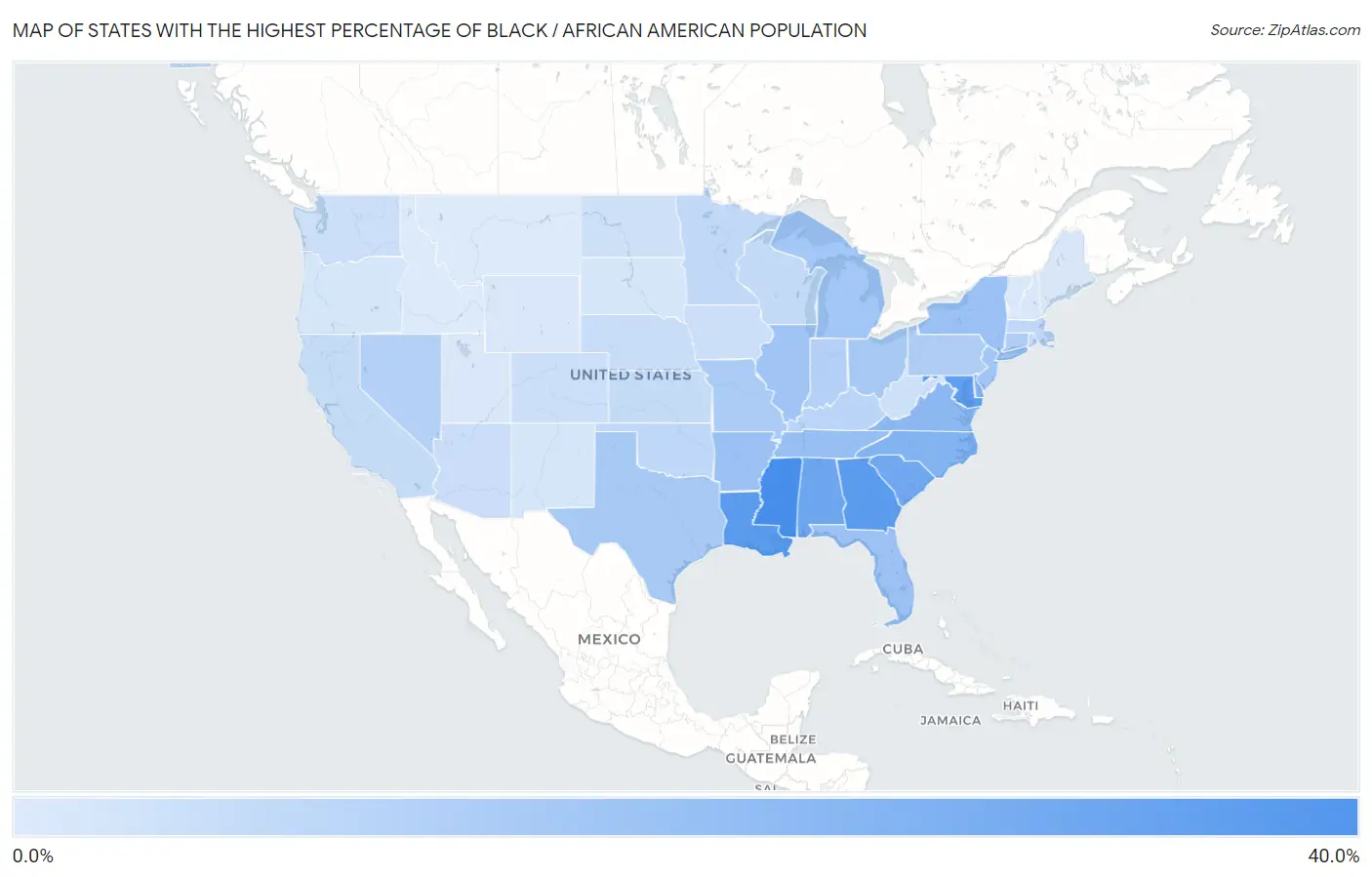
Honestly, if you ask ten different people to guess the current demographics of the country, you'll get ten wild answers. Most people aren't walking around with Census spreadsheets in their heads. But when you look at the hard data for 2026, the answer to what percentage of the us population is african american is more than just a single number on a chart. It's a moving target that tells a story about how we define identity in the modern world.
As of the latest estimates heading into 2026, the Black population in the United States has reached a record high of approximately 51.6 million people. That represents about 15.2% of the total U.S. population.
But wait. If you look at older textbooks or a quick Google snippet from three years ago, you might see 12% or 13%. Why the jump? It’s not just about births and deaths. It’s about how the U.S. Census Bureau has changed the way they let us describe ourselves. We’ve moved away from "check one box" to a much more fluid understanding of heritage.
The Nuance of the Numbers
When we talk about what percentage of the us population is african american, we have to break it down into "Black alone" versus "Black in combination."
The "Black alone" (non-Hispanic) group makes up roughly 12.7% of the country, which is about 43.1 million people. This is the group most people think of when they hear the term. However, the fastest-growing segment isn't this traditional category. It's the multiracial and Black Hispanic populations.
People are owning their full history. The number of Americans identifying as both Black and another race has exploded—up nearly 270% since the turn of the century.
- Multiracial Black population: Approximately 5.6 million people.
- Black Hispanic population: Roughly 4.8 million people.
- Foreign-born Black population: Over 5 million people (mostly from Africa and the Caribbean).
It’s a massive, diverse group. You’ve got second-generation Nigerian immigrants in Houston, multiracial families in Seattle, and deep-rooted communities in the Black Belt of the South. They all count toward that 15.2% figure, but their life experiences are vastly different.
Why What Percentage Of The US Population Is African American Matters Right Now
Demographics aren't just for statisticians. They're the blueprint for everything from political redistricting to where a new hospital gets built.
The Black population is significantly younger than the white population. The median age for Black Americans is roughly 32.6 years, while the national average for non-Black Americans sits around 39.2. That’s a seven-year gap. Basically, the future of the American workforce and the electorate is increasingly Black and Brown.
In places like Atlanta, the numbers are even more striking. About 37% of the Atlanta metro area is Black. In Washington D.C., it’s around 28%. These aren't just "minority" groups in these hubs; they are the cultural and economic engines of the city.
The Great Migration in Reverse?
One of the coolest trends happening right now is what researchers call the "Return Migration." For decades, Black families moved North to escape the Jim Crow South and find factory jobs in Chicago, Detroit, and New York.
Now? The flow has flipped.
States like Texas, Florida, and Georgia are seeing the biggest numerical gains. Texas alone added over 1.2 million Black residents in the last decade and a half. Meanwhile, cities that were once the primary destinations—like Chicago and even the District of Columbia—have seen their Black population percentages dip slightly as people move to the suburbs or head back down South for a lower cost of living and better job prospects.
Education and the "Grown-Up" Stats
We often hear outdated tropes about educational gaps, but the 2025-2026 data shows a significant shift. About 30% of Black women over the age of 25 now hold at least a bachelor’s degree. That’s a massive jump from just 15% in the year 2000. Black men have seen a similar upward trend, hitting about 24%.
Is there still a wealth gap? Absolutely. The median household income for Black families sits around $54,000, which is still well below the national median. But the multiracial Black households are actually seeing higher medians, closer to $65,800, likely due to geographic distribution in higher-cost urban areas.
Real-World Implications of 15.2%
When a group makes up 15% of the population but represents a much higher percentage of "Gen Z" and "Gen Alpha," businesses have to pivot. You see it in marketing, you see it in the "C-suite" diversity pushes, and you definitely see it in the voting booth.
However, the distribution is "clumpy." While the national average is 15%, there are counties in Mississippi like Claiborne or Jefferson where the population is over 85% Black. On the flip side, there are hundreds of counties in the Midwest and Pacific Northwest where that number is less than 1%. This geographic concentration is why Black voters have such an outsized influence in certain states like Georgia or South Carolina, but can feel underrepresented in national policy.
Actionable Insights for 2026
If you're a business owner, a community leader, or just someone trying to understand the neighborhood, here is what you need to take away from these 2026 demographic shifts:
- Stop using 13% as your mental baseline. The "Black in combination" number is the more accurate reflection of modern identity, and it’s over 15%.
- Focus on the South. That’s where the growth, the money, and the political power are concentrating. The "Sun Belt" is the new heart of Black America.
- Acknowledge diversity within the group. A "one size fits all" approach to the Black community fails to account for the millions of Black Hispanics and African immigrants who bring different languages, religions, and traditions to the table.
- Watch the youth. With 27% of the Black population under the age of 18 (compared to 21% of non-Blacks), this demographic will define American culture for the next thirty years.
Understanding what percentage of the us population is african american isn't about checking a box on a form. It's about recognizing the literal face of the country's future. The numbers are growing, the education levels are climbing, and the geographic footprint is shifting back to the South in ways that were unthinkable fifty years ago.
Keep an eye on the June 2026 Census updates. They’ll likely show even higher numbers as more people feel comfortable claiming their full, multiracial heritage.
Next Steps for Accuracy: * Cross-reference your local county data using the Census Bureau’s QuickFacts tool to see how your specific area compares to the 15.2% national average.
- Review the Pew Research Center's detailed breakdown on the "foreign-born" Black population if you are working in markets like Miami, New York, or Minneapolis, where these subgroups are dominant.
- Update any marketing or demographic reports to reflect the "Black in combination" statistics rather than the "Black alone" figure to ensure you aren't undercounting by several million people.