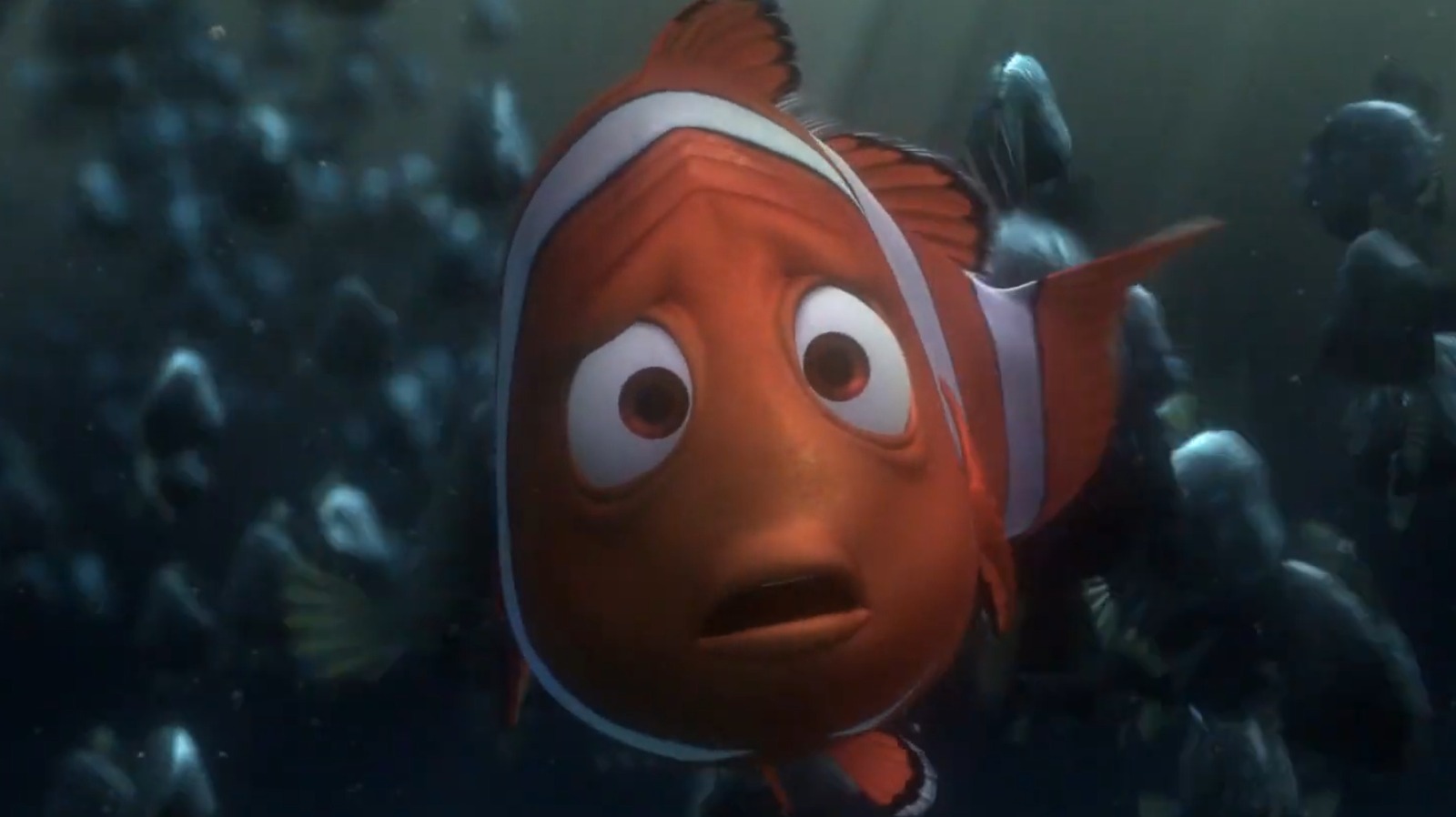
Albert Brooks. That’s the name. If you’ve ever felt that specific, high-strung parental anxiety radiating off a small orange clownfish, you’re hearing the work of a comedy legend. Most people know him as the neurotic marlin from nemo voice, but the story of how he landed that role—and why it almost didn't work—is way more interesting than just a guy in a recording booth.
Finding Nemo came out in 2003. Think about that for a second. It’s been over two decades, yet if you close your eyes and imagine a panicked fish shouting "Nemo!", it’s Brooks’ voice that rings out. It wasn't just a gig. It was a masterclass in "nervous energy."
The comedic genius behind the marlin from nemo voice
Albert Brooks wasn’t exactly a newcomer when Pixar came knocking. He was already a titan of dry, observational humor. He’d written, directed, and starred in classics like Modern Romance and Lost in America. He’s basically the king of the "lovable but deeply stressed middle-aged man."
Andrew Stanton, the director of Finding Nemo, knew he needed someone who could be annoying. That sounds weird, right? But think about Marlin. He’s overprotective. He’s pessimistic. He’s kind of a buzzkill. If you put a generic "hero" voice in that role, the audience would hate him. You need someone who can complain for ninety minutes and still make you want to give them a hug.
Brooks has this specific vocal quality. It’s a mix of a whine and a genuine plea for safety. During the recording sessions, he reportedly did tons of ad-libbing. Pixar animators actually love this because it gives them "mouth shapes" and expressions they never would have thought of on their own. The scene where Marlin tries to tell a joke at the beginning of the movie? That awkward, stumbling delivery? That’s pure Brooks.
Why he almost wasn't Marlin
Here is a bit of trivia that usually shocks people: Danny DeVito was considered. Can you imagine? A totally different vibe. But the real "what if" moment came during the early edits.
The original cut of the movie actually revealed the tragedy of Coral (Marlin's wife) through flashbacks throughout the film. The test audiences didn't like Marlin. They thought he was too grumpy. It wasn't until they moved the tragedy to the very beginning—showing why he was so scared—that the marlin from nemo voice finally clicked with viewers. Suddenly, his neurosis felt earned. We weren't laughing at a jerk; we were rooting for a traumatized dad.
The chemistry with Ellen DeGeneres
You can’t talk about Marlin without talking about Dory. The dynamic between Albert Brooks and Ellen DeGeneres is basically a textbook on comedic foil.
- Brooks is the "straight man."
- Ellen is the "chaos agent."
Usually, in animation, actors record their lines alone. It’s lonely. It’s clinical. But for certain key sequences, Brooks and DeGeneres actually got to work together in the same room. That’s rare. You can hear it in the timing. When Marlin is getting frustrated with Dory’s short-term memory loss, the overlapping dialogue feels organic. It doesn't feel like two files stitched together by a sound engineer in Emeryville. It feels like a real argument between two people who are stuck in the middle of the ocean.
Honestly, it’s the contrast that makes it work. Brooks brings a heavy, grounded, "I’m worried about the mortgage" energy. Ellen brings a light, "bubbles are pretty" energy. Without that balance, Marlin is just a guy yelling at a fish.
Beyond the reef: Brooks’ legacy in animation
The marlin from nemo voice wasn't Brooks’ only foray into the world of cartoons, though it’s definitely his most iconic. The Simpsons fans know him as the voice of some of the best one-off characters in TV history. He was Hank Scorpio. He was Russ Cargill in The Simpsons Movie.
There’s a specific "Albert Brooks Character" trope. It’s a person who is incredibly smart but completely overwhelmed by the world around them. Marlin is the underwater version of that.
Does the voice change in Finding Dory?
When the sequel, Finding Dory, came out in 2016, there was a thirteen-year gap. Thirteen years! Voice actors age. Their registers shift. Brooks was in his late 60s by then.
If you listen closely, Marlin sounds a bit gravelly in the sequel. He’s a little older, a little more settled into his life on the reef. But that frantic, "Oh no, everything is going wrong" pitch is still there. It’s a testament to his vocal control. He didn't just show up and talk; he stepped back into a mindset.
Why we still care about a neurotic clownfish
People keep searching for the marlin from nemo voice because the performance is incredibly human. We live in an era of "perfect" voice acting where everything is polished and heroic. Marlin isn't heroic. He’s scared. He’s a dad who is terrified of the world.
That resonance is what keeps the movie on the "Trending" lists of streaming platforms. Every new generation of parents watches it and thinks, "Yeah, I get it. I’d be stressed too if my kid was taken by a diver."
Technical takeaways for your next watch
If you're a film buff or just someone who likes to notice things, keep an ear out for these specific moments in Brooks' performance next time you sit down with the kids:
- The "Goodnight" Scene: Notice the way his voice drops an octave when he's talking to the eggs at the very beginning. It’s the only time Marlin sounds truly calm.
- The Whale Belly: Brooks does this thing where he mumbles to himself when he's panicking. It’s very fast, very low-volume. It makes the character feel like he has an internal monologue, which is hard to pull off in a kids' movie.
- The Mask Argument: When he’s fighting with Dory over the diver’s mask, listen for the "voice cracks." Those aren't accidents. They are deliberate choices to show that Marlin is at his breaking point.
To really appreciate the craft, look up Albert Brooks' appearances on late-night talk shows from the 70s and 80s. You'll see the exact same facial expressions and hand gestures that the animators gave to Marlin. It’s a total fusion of actor and character.
If you're looking to dive deeper into the world of Pixar’s casting, check out the "Making Of" documentaries on Disney+. They show actual footage of Brooks in the booth, often wearing a sweater and looking just as flustered as the fish he’s portraying. It’s a great reminder that the best characters usually start with a real person standing in front of a microphone, waving their arms around and trying to find the heart in a story about a lost fish.
For those interested in the actual craft of voice acting, compare Marlin’s dialogue to Brooks' role in Broadcast News. You'll find the same DNA—the same desperate need to be heard and the same underlying fear of failure. It's what makes him one of the greatest character actors of his generation, underwater or otherwise.
Practical Steps for Animation Fans
If you want to explore more of this specific vocal style or learn about the industry:
- Watch 'Modern Romance': To see where Brooks' "anxious persona" originated before it was adapted for Marlin.
- Listen to 'The Simpsons' Season 8, Episode 2: Brooks as Hank Scorpio is widely considered the best guest performance in the show's history.
- Check out 'The Art of Finding Nemo': This book details how the character designs were specifically altered to match Brooks' vocal tics.
- Compare the Dubs: If you really want to see how much Brooks brings to the role, watch the French or Spanish dubs. The actors are great, but they often lack that specific, "New York neurotic" edge that Brooks baked into the original English version.
The magic of the marlin from nemo voice isn't just that it’s funny—it’s that it’s honest. And in a movie about talking sharks and surfing turtles, honesty is what makes the whole thing stick.