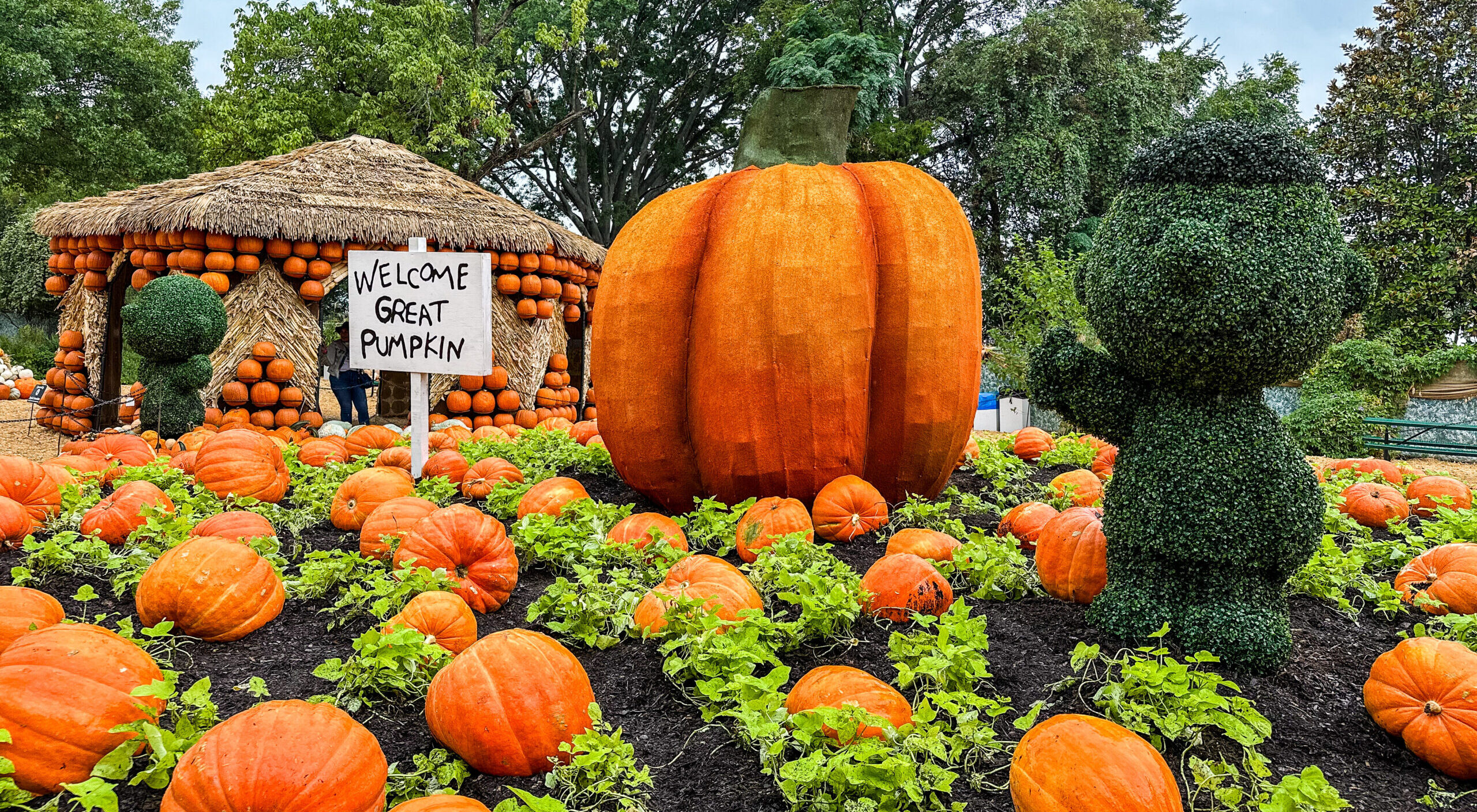
You’ve probably seen the photos. Thousands of pumpkins piled high, kids running through hay mazes, and that specific, golden Texas light filtering through the Pecan Grove. It’s a whole thing. Honestly, autumn at the arboretum dallas tx has become such a massive regional phenomenon that it’s easy to get cynical about it. Is it just a glorified photo op for Instagram? Well, kinda. But also, no.
There’s a reason 100,000 pumpkins end up on a 66-acre lakeside property every single year. It’s not just for the 'gram.
If you’ve lived in North Texas for more than five minutes, you know that fall isn’t a season; it’s a relief. It’s that first morning when the humidity doesn’t feel like a wet wool blanket. The Dallas Arboretum and Botanical Garden taps into that collective sigh of relief with "Autumn at the Arboretum," an event that usually runs from late September through early November. It’s centered around the Pumpkin Village, which isn’t just a few gourds tossed on a lawn. We’re talking full-scale houses built out of pumpkins.
The Reality of the Pumpkin Village
Let’s get real about the logistics. Most people head straight for the Pumpkin Village. It’s located in the Pecan Grove, and if you go on a Saturday at 11:00 AM, you’re going to be shoulder-to-shoulder with every toddler in the DFW metroplex. It’s loud. It’s hectic.
But here’s the thing: the sheer scale is genuinely impressive.
The horticultural team starts planning the theme months in advance. One year it might be "A Fall Fairy Tale," the next it's "Texas Town." They use over 100,000 pumpkins, gourds, and squash. Not just the orange ones. You’ll see Cinderellas (those flat, deeply ribbed ones), Knuckleheads (the warty ones), and Jarrahdales (the spooky blue-grey ones). They source these mostly from Floydada, Texas—the self-proclaimed Pumpkin Capital of the USA.
The "houses" are constructed using metal frames that are then "skinned" with pumpkins. It takes a massive crew weeks to assemble. If you look closely, you can see the engineering involved. It’s a weirdly fascinating mix of agriculture and construction.
Why the Gourd Is King
Why pumpkins? Beyond the obvious seasonal tie-in, pumpkins are incredibly durable for a public display. They can handle the lingering 90-degree days that Dallas often sees in October. Most flowers would wilt under that heat plus the foot traffic, but a Hubbard squash? That thing is a tank.
It’s also about the color palette. While Northern states get fiery maples, Texas foliage is... inconsistent. Some years we get decent reds and yellows; other years everything just turns brown and falls off after a freeze. The Arboretum compensates for this "foliage anxiety" by creating a reliable, artificial landscape of color. You aren't gambling on the weather to see "fall" colors when there are 50 tons of orange fruit at your feet.
Escaping the Main Crowd
If you want to actually enjoy autumn at the arboretum dallas tx without feeling like you’re in a mosh pit of strollers, you have to play the map.
The Arboretum is huge.
While everyone is bottlenecked at the Pumpkin Village, the peripheral gardens are often empty and honestly more beautiful. The A Woman’s Garden section offers these incredible views of White Rock Lake. In the fall, the late afternoon sun hits the water and the tall grasses in a way that feels very "Pacific Northwest," which is a nice break from the concrete reality of Garland Road.
Then there's the Rory Meyers Children's Adventure Garden.
Yes, it costs extra.
Yes, it’s worth it if you have kids or even if you just like science.
They have these elevated walkways through the canopy. During autumn, you get to see the changing leaves of the Texas Pecans and Shumard Oaks from eye level. It’s a different perspective that most visitors skip because they spent two hours trying to get a photo of their kid sitting on a pumpkin.
The Plant Nerd Perspective
For the actual gardeners, the fall bloom is the real draw. Dallas has a "second spring."
- Mexican Bush Sage: These fuzzy purple spikes are everywhere in October.
- Chrysanthemums: Thousands of them. The Arboretum staff swaps out the summer zinnias for mums in a massive overnight logistical feat.
- Marigolds: They use the "Copper Canyon" variety a lot, which smells like a mix of lemons and mint when you brush against it.
It’s a masterclass in high-intensity gardening. If you're looking for inspiration for your own North Texas yard, this is where you see what actually survives the transition from the "Long Heat" to the "First Freeze."
Logistics That Actually Matter
Parking is a nightmare. There, I said it.
If you don't reserve your parking spot online in advance, you’re going to have a bad time. They have a parking garage now (at the main entrance), but it fills up fast. Pro tip: try to get a spot at the Camp House entrance if it’s open; it’s usually quieter.
Also, the food. The Terrace Café is fine, but it’s pricey and the lines are long. A lot of regulars know the secret: you can bring your own cooler. Honestly, packing a picnic and sitting on the Martin Rutchik Concert Stage & Lawn is the veteran move. You get the view of the lake, plenty of space, and you aren't paying $15 for a lukewarm sandwich.
Is It Just a Tourist Trap?
Some people argue that the Arboretum has become too "commercial" with the big displays. And yeah, it’s a huge revenue driver. But that revenue funds serious research and plant trials. The Dallas Arboretum is one of the top trial gardens in the world. They test thousands of plants to see which ones can survive the brutal Texas climate. When you buy a "Texas Superstar" plant at a local nursery, there’s a good chance it was vetted right here.
So, while the pumpkin houses are the bait, the scientific work is the hook. You're supporting a massive conservation and education engine.
Timing Your Visit
If you want the best light, go for the "Golden Hour" (the last two hours before closing). The shadows get long, the pumpkins look more vibrant, and the heat (if it’s a hot day) starts to break.
If you want the least people, go on a Tuesday morning. Avoid the weeks surrounding Halloween if you value your sanity. The first two weeks of November are actually the "sweet spot." The pumpkins are still there, the crowds have thinned out, and the actual tree foliage is usually hitting its peak.
What to Bring
- Comfortable shoes: You will walk at least 2 miles if you do the whole loop.
- Water: Dallas is dry in the fall.
- A camera with a wide-lens: To capture the scale of the displays.
- Patience: Especially in the parking lot.
Practical Next Steps for Your Visit
To get the most out of your trip to the Dallas Arboretum this fall, start by checking their official bloom tracker online. This tells you exactly what’s peaking so you don’t miss the maples or the specific mum displays.
Book your tickets and parking at least three days in advance. Do not try to "wing it" on a weekend; you’ll likely find the lot full and be turned away at the gate.
Once you arrive, head to the back of the garden first—areas like the Lay Family Garden—and work your way forward to the Pumpkin Village around 3:00 PM when the morning crowd starts to head home for nap time. This reverse-route strategy saves you from the worst of the congestion. Lastly, check the weather for "Blue Norther" fronts; a sudden drop in temperature is common in October, so a packable jacket is a must even if it's 80 degrees when you leave the house.