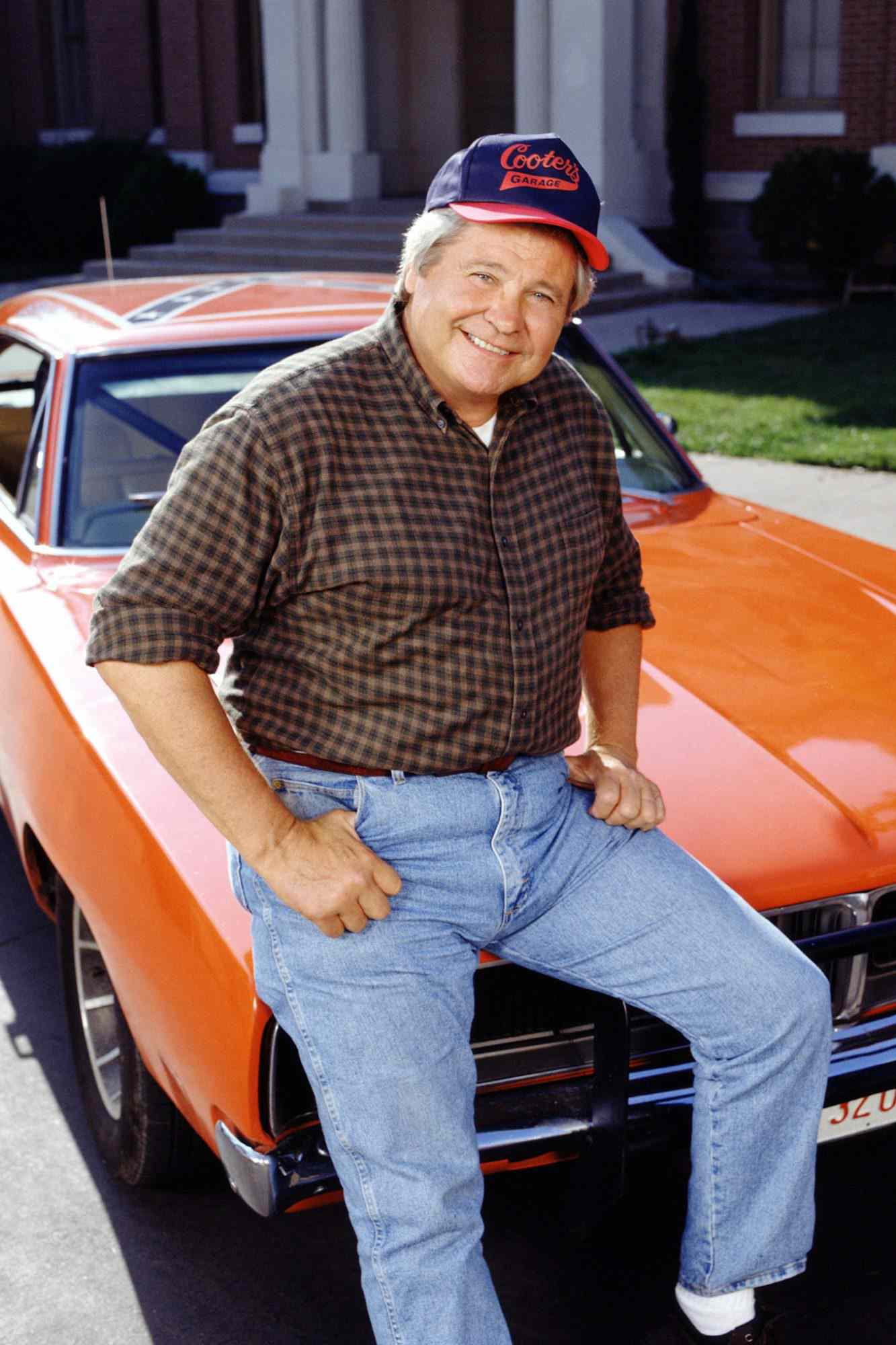
Ben Jones didn't just play a mechanic. He basically lived the role of Cooter Davenport, the greasy-fingered, heart-of-gold backbone of Hazzard County who kept the General Lee flying through the air when it probably should have been in a scrap heap. If you grew up watching The Dukes of Hazzard, you remember Cooter. He was the guy always under a hood, radioing the boys on the CB with a "Crazy Cooter coming atcha, you got a copy on me, Big Ben?"
But here is the thing. Most people think Cooter was just a sidekick. They’re wrong. Without Cooter Davenport, Bo and Luke Duke are just two guys on foot running from Rosco P. Coltrane. He was the logistics manager for every high-speed chase. He was the grease that kept the wheels of rebellion turning against Boss Hogg’s corruption. And honestly, the real-life story of the man behind the wrench is even more wild than the show itself. Ben Jones went from a TV garage to the United States Congress. You can't make that up.
The Man Behind the Wrench: Ben Jones as Cooter
Cooter Davenport wasn't some polished Hollywood creation. He was a scruffy, dependable southern archetype. In the early seasons, especially those filmed in Georgia before the production moved to California, Cooter had a bit more of a "wild man" edge to him. He was a bit disheveled. He was a loner. But he was fiercely loyal to the Duke family. That loyalty wasn't just a script requirement; it felt authentic because Ben Jones brought a massive amount of his own Southern upbringing to the role.
There was a brief period where Cooter actually vanished from the show. If you're a hardcore fan, you remember the "Cooter-less" episodes in season two. Jones had a bit of a dispute with the producers over the direction of the character and some creative differences. During that time, we got "cousins" filling in at the garage. It didn't work. The chemistry was off. When Jones returned, it solidified the idea that Cooter from the Dukes of Hazzard was irreplaceable. He wasn't just a cast member; he was the show's soul.
Keeping the General Lee Airborne
Let’s talk about the cars. The General Lee—that 1969 Dodge Charger—is arguably the most famous car in television history. But it was a mechanical nightmare to maintain. In the world of the show, Cooter was the only person capable of fixing a car that took a 40-foot jump over a creek and somehow didn't have a snapped axle five minutes later.
In reality, the show went through hundreds of Chargers. They were destroying them at a rate of almost one per episode. While the stunt team was doing the dirty work, the character of Cooter gave the whole thing a sense of "Hazzard logic." We believed the car could survive because we believed Cooter was a genius with a blowtorch. He represented the blue-collar expertise that made the Duke boys' lifestyle possible. Without the garage, the rebellion ends.
From Hazzard County to Capitol Hill
This is where the story gets really interesting and moves beyond the 1980s television screen. Ben Jones didn't just retire to a memorabilia shop after the show ended in 1985. He went into politics. And he won.
Jones served as a Democratic member of the U.S. House of Representatives from Georgia's 4th district from 1989 to 1993. Think about that for a second. The guy who played "Crazy Cooter" was suddenly voting on national policy and walking the halls of power in D.C. He was a sharp, articulate advocate for his constituents. He proved that the "good ol' boy" persona was just one layer of a very complex human being. He wasn't playing a character in Congress, but he certainly didn't hide his Hazzard roots either.
The Legacy of Cooter’s Place
After his stint in politics, Jones leaned back into the legacy of the show that made him a household name. He opened "Cooter’s Place," which is part museum, part gift shop, and part shrine to all things Hazzard. With locations in Nashville and Gatlinburg, Tennessee, these spots have become pilgrimage sites for fans.
- You can see the General Lee up close.
- The museum houses original props, costumes, and scripts.
- Jones himself is often there, meeting fans and signing autographs.
- It’s a living testament to the show’s enduring popularity in middle America.
The existence of Cooter’s Place proves that the show wasn't just a flash in the pan. It represented a specific culture and a sense of community that people still crave. Jones has become the unofficial gatekeeper of the Dukes of Hazzard flame, defending the show's history even when it becomes a point of cultural contention.
Why Cooter Still Matters in Pop Culture
There’s a reason people still wear Cooter’s Garage hats. It’s about the "everyman." Bo and Luke were the stars, and Daisy was the icon, but Cooter was the person the audience actually related to. He was the guy working 9 to 5 (or 6 to midnight) who just wanted to help his friends and keep his shop running. He was the unsung hero.
In the modern era of TV, we don't see many characters like him anymore. Characters today are often hyper-glamorized or deeply cynical. Cooter was just... Cooter. He was honest. He was capable. He was a little bit messy. That authenticity is why the character has survived for over forty years. When people think about Cooter from the Dukes of Hazzard, they aren't just thinking about a TV show; they're thinking about a simpler time when a CB radio was the peak of technology and a fast car could solve all your problems.
The Controversies and the Flag
You can’t talk about Cooter or the Dukes today without acknowledging the elephant in the room: the Confederate flag on the roof of the General Lee. In recent years, the show has been pulled from many streaming platforms and networks because of it.
Ben Jones has been one of the most vocal defenders of the show’s imagery. His stance is that the flag, in the context of Hazzard County, represented a spirit of rebellion and Southern pride rather than hate. Whether you agree with him or not, his defense of the show is a huge part of his modern identity. He’s been a fixture on news programs discussing the cultural shift, and he has refused to distance himself from the General Lee. This has made him a polarizing figure for some, but for the core fanbase, it has only deepened their loyalty to him. He stands his ground, much like his character did against the authorities in Hazzard.
The Technical Reality of Hazzard Garage
If you look closely at the background of the scenes in Cooter's garage, the attention to detail for the time was actually pretty decent. They used real tools, real lifts, and real automotive parts. For a kid interested in cars in 1982, Cooter's garage was the ultimate playground. It looked lived-in. It smelled like oil and old tires through the TV screen.
Jones has often remarked that he felt at home in that environment. He understood the rhythm of a small-town mechanic. That's why his performance never felt like a caricature. He wasn't making fun of mechanics; he was honoring them.
To truly understand the impact of this character, you have to look at the fan conventions. Thousands of people still show up to "Hazzard Homecoming" events. They bring their own replica cars. They dress up. And when Ben Jones walks out on stage, the roar from the crowd is often louder than it is for anyone else. He represents a connection to a specific brand of Americana that is rapidly disappearing.
Actionable Insights for Fans and Collectors
If you're looking to dive deeper into the world of Cooter and Hazzard County, here is how you can actually engage with the history today:
1. Visit Cooter’s Place in Nashville: If you want the authentic experience, go to the Nashville location. It’s the most comprehensive collection of show memorabilia in existence. You can sit in a replica General Lee and see the "Daisy" Jeep. It’s worth it for the nostalgia alone.
2. Check the Autograph Circuit: Ben Jones is remarkably active for his age. He frequently appears at fan events and car shows. Unlike some stars who distance themselves from their "cheesy" pasts, Jones embraces it. Following the official Cooter's Place social media accounts is the best way to catch a live appearance.
3. Watch the Georgia Episodes: If you want to see the "real" Cooter, go back to the first five episodes of season one. These were filmed on location in Georgia (Covington and Conyers) before the move to the Warner Bros. lot in California. The lighting is grittier, the dirt is real, and Jones’s performance is a bit more raw.
4. Explore the Congressional Records: For a truly unique look at the man, look up Ben Jones’s speeches in the Congressional Record from the early 90s. It’s fascinating to see the transition from Hazzard logic to legislative debate. It gives you a whole new respect for the intellect behind the character.
Cooter Davenport was more than just a man with a wrench. He was the glue. In a world of corrupt politicians and high-speed chases, he was the one person you could always count on to tell the truth and fix the car. Whether he was on a TV set or on the floor of Congress, Ben Jones carried that same sense of Southern integrity with him. That's why, even in 2026, we're still talking about a mechanic from a fictional county in Georgia.