He knew what was coming. That’s the thing that hits you when you look at the historical and biblical record of that final trip. When we ask why did Jesus go to Jerusalem, we aren't just talking about a casual pilgrimage or a vacation to the big city. It was a calculated, high-stakes move that flipped the entire religious and political landscape of the first century on its head.
Jerusalem was a powder keg.
Roman soldiers were everywhere, their boots crunching on the stone streets, eyes peeled for the slightest hint of a riot. It was Passover, after all. The city’s population swelled from maybe 50,000 to hundreds of thousands. Imagine a modern-day music festival mixed with a high-intensity political protest, all wrapped in a deeply religious ceremony. That’s the vibe. Jesus didn't just stumble into this. He walked right into the center of the storm.
The Passover Timing Wasn't an Accident
If you want to understand the "why," you have to look at the "when." Passover celebrated the liberation of the Israelites from Egyptian slavery. It’s the ultimate "freedom" holiday. By choosing this specific window, Jesus was making a massive statement about a new kind of exodus.
The religious elites, specifically the Sadducees who ran the Temple, were terrified of anything that might tick off the Roman governor, Pontius Pilate. They had a "don't rock the boat" policy because they liked their power and didn't want the legions coming in to crack skulls. Then comes this teacher from Galilee.
He wasn't just there to pray. He was there to confront the very heart of the establishment. Some historians, like E.P. Sanders, point out that Jesus’s actions in the Temple—overturning those tables—weren't just a fit of temper. It was a prophetic "symbolic action." He was basically saying the whole system was about to be overhauled. Honestly, it's one of the gutsiest moves in history. You don't walk into the most guarded, sacred site in your culture and start throwing furniture unless you're trying to send a message that you know will likely get you killed.
A Public Claim to the Throne
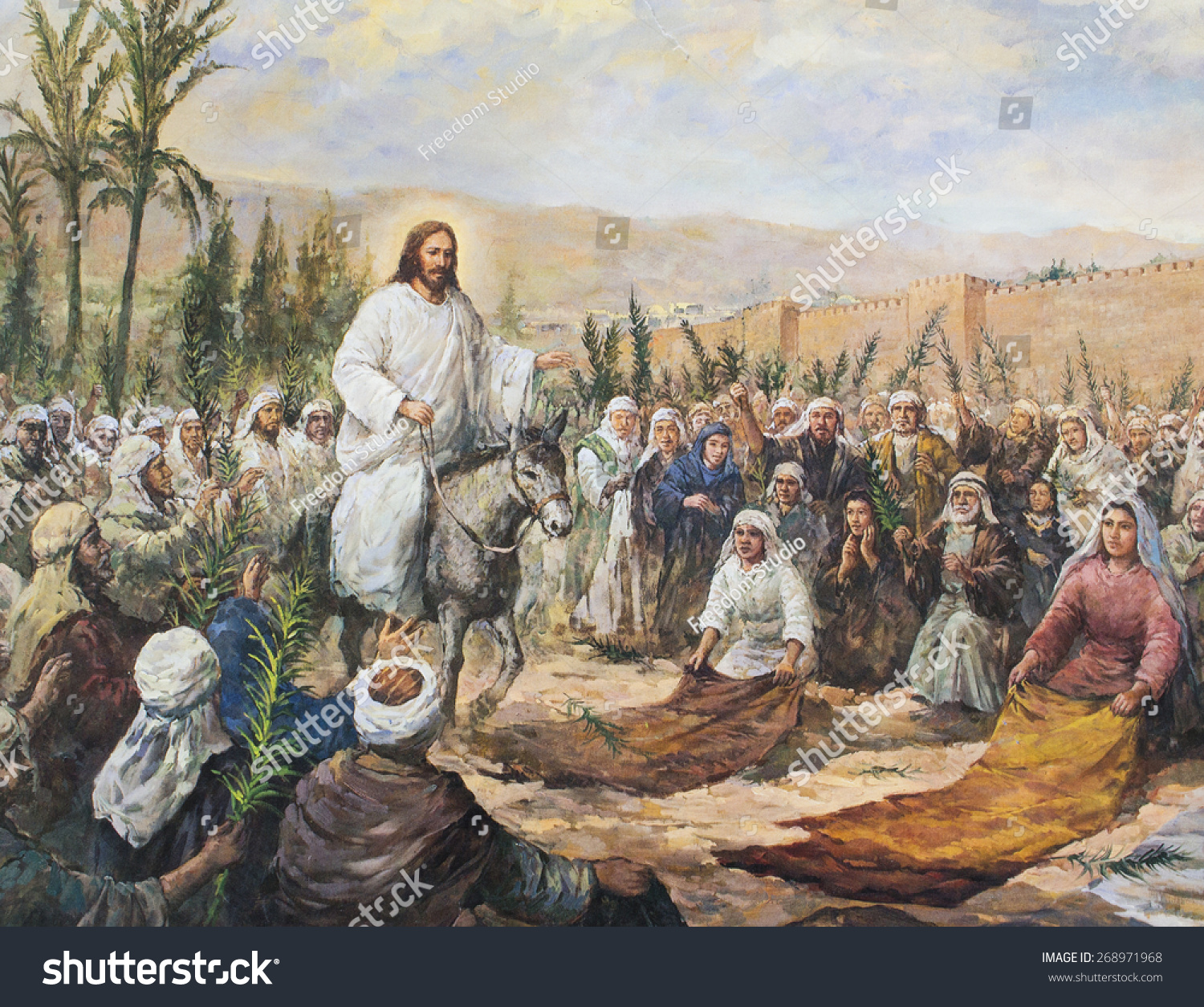
The entrance itself is a huge piece of the puzzle regarding why did Jesus go to Jerusalem. We call it Palm Sunday now, but at the time, it was a political lightning bolt.
By riding in on a donkey, he was specifically acting out a prophecy from Zechariah 9:9. It wasn't just a humble way to travel; it was a kingly entrance, but a specific kind of king. He wasn't on a warhorse. He was basically trolling the Roman concept of "Pax Romana" (Roman Peace) with a "Prince of Peace" alternative.
The crowds went wild. They were shouting "Hosanna," which literally translates to "Save us, now!" They weren't asking for a spiritual hug; they wanted the Romans out. Jesus knew the crowd's expectations were mismatched with his actual mission, but he went anyway. He had to show them what the "Kingdom of God" actually looked like, even if they didn't get it yet.
The Conflict with the Sanhedrin
You’ve gotta realize the tension was thick enough to cut with a knife. The Sanhedrin, the local Jewish council, was in a bind. If they ignored him, he might start a revolt. If they killed him, the people might revolt because they loved him.
Jesus went to Jerusalem to force a decision. He didn't stay safe in the hills of Galilee. He brought the light to the darkest, most complicated corner of his world. He challenged their interpretation of the Law and their stewardship of the people’s faith.
- He exposed the corruption of the Temple tax system.
- He challenged the authority of the high priests.
- He claimed a direct connection to God that the elites found blasphemous.
Fulfilling a Scriptural Blueprint
For the writers of the New Testament, the answer to why did Jesus go to Jerusalem is found in the concept of "necessity." In the Gospel of Luke, Jesus says he "must" go. This wasn't a "must" because his calendar was booked. It was a divine "must."
He saw himself as the "Suffering Servant" described in the book of Isaiah. In that worldview, redemption required a sacrifice. He believed his death would do something that his teaching alone couldn't. It’s a wild concept to wrap your head around—choosing to die to win. But from his perspective, Jerusalem was the only place where that specific "victory" could happen. It was the "City of the Great King," and he believed the King had finally arrived to settle the debt.
The Practical Realities of the Trip
Let’s be real: traveling to Jerusalem wasn't easy. It was a hot, dusty, uphill trek. Most people from Galilee would take the route through the Jordan Valley to avoid Samaria, then climb the steep road from Jericho. It’s a brutal hike.
Jesus used this journey to teach. Every step toward the city was a lesson in commitment. He wasn't hiding. He was teaching in the villages along the way, healing people, and gathering a following that would eventually follow him right to the gates of the city.
The fact that he didn't sneak in under the cover of night tells us everything. He wanted to be seen. He wanted the confrontation. He was essentially forcing the hand of the authorities to either accept his message or deal with him once and for all.
Different Perspectives on the Intent
Not everyone agrees on his exact mindset, obviously.
- The Secular Historian View: Many see him as a social reformer who underestimated the Roman response. They argue he went to Jerusalem to spark a peaceful religious revolution but was caught in the gears of the Roman judicial machine.
- The Theological View: Most Christians believe he went with the express purpose of being the "Lamb of God." Every move was a step toward the cross.
- The Political View: Some scholars suggest he was a revolutionary whose followers hoped for a literal takeover, and his trip to Jerusalem was the failed "D-Day" of that movement.
Regardless of which lens you use, the result was the same: the world changed.
Facing the Garden and the Cross
The final reason why did Jesus go to Jerusalem becomes clear in Gethsemane. On the Mount of Olives, looking across the Kidron Valley at the city walls, he wrestled with what was about to happen.
He didn't want to die. The accounts show him in deep agony. But he stayed. He could have slipped out of the garden and disappeared into the Judean wilderness in minutes. No one would have found him. But he stayed because he believed his presence in Jerusalem was the culmination of everything he had lived for.
He went to Jerusalem to be the bridge. In his mind, the gap between a holy God and a broken humanity could only be closed in the city where the Temple stood, but through a new temple—his own body.
What You Can Take Away from This
Knowing the historical and spiritual "why" behind this journey changes how you look at the stories. It wasn't a series of unfortunate events. It was a deliberate, courageous act of a man who believed his life was a ransom for others.
If you’re looking to explore this further, here is how you can actually engage with this history:
Trace the geography. Get a map of the "Last Week of Jesus." Look at the distance between Bethany (where he stayed) and the Temple Mount. Understanding the physical space makes the "why" much more tangible. You see how he was constantly moving in and out of the danger zone.
Read the "Trial" accounts back-to-back. Compare how Matthew, Mark, Luke, and John describe the interaction between Jesus and the authorities in Jerusalem. You'll notice that while the details vary, the central theme is always his unwavering resolve. He doesn't defend himself much. He just stands his ground.
Visit or virtually tour the City of David. Modern archaeology in Jerusalem has uncovered the actual steps Jesus likely walked on his way to the Pool of Siloam. Seeing the scale of the stones helps you realize why people were so impressed by the city—and why Jesus’s prediction of its destruction was so shocking.
Ultimately, Jesus went to Jerusalem because he believed that’s where the story of the world reached its turning point. He wasn't a victim of circumstance; he was the architect of the moment. Whether you see him as a prophet, a savior, or a historical figure, his trip to the city remains one of the most consequential journeys ever taken.
Practical Next Steps for Deepening Your Understanding:
- Read the primary sources: Focus on the "Passion Narratives" in the Gospels (e.g., Mark 11-16 or Luke 19-24) to see the progression of his final days.
- Explore First-Century Jewish Culture: Look into the works of historians like Flavius Josephus to understand the political tension between the Jewish people and the Roman Empire during that exact era.
- Examine the Archeology: Research the "Southern Steps" of the Temple Mount. These are the actual ruins where Jesus would have taught during his final week in Jerusalem.