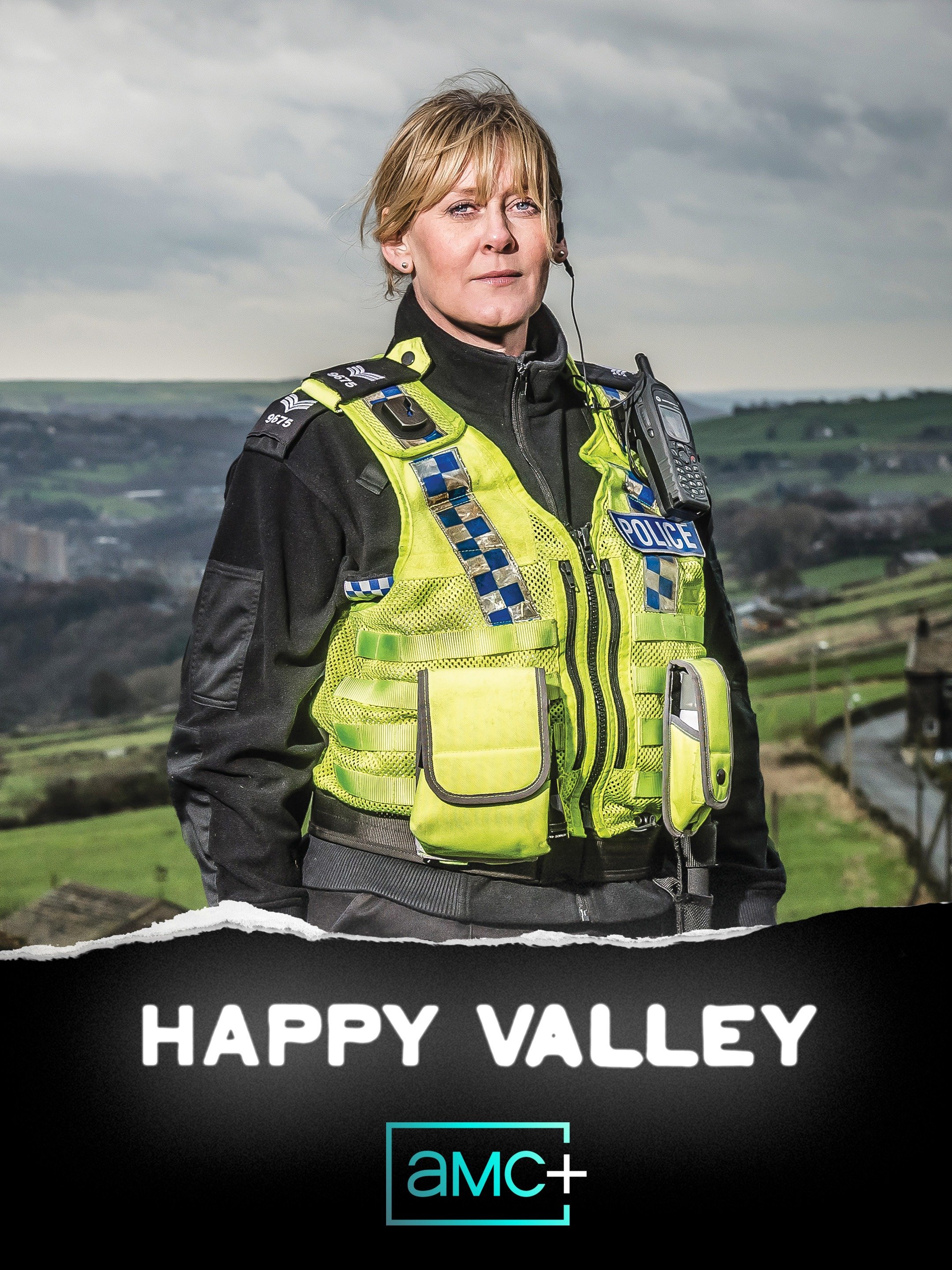
It isn't just the rain. People always talk about the gray skies of West Yorkshire, but the Happy Valley TV programme isn't a weather report. It is a gut punch that lasts for three seasons. When Sally Wainwright first introduced us to Catherine Cawood in 2014, nobody really expected a police procedural to feel this... personal. Usually, these shows are about the "case of the week." You get a body, you get a clue, you get a conviction, and you go to bed feeling safe. Happy Valley doesn't do that. It makes you feel everything. It makes you feel the cold wind in the Calder Valley and the specific, vibrating exhaustion of a woman who is trying to raise a grandson born of a tragedy she can't outrun.
Sarah Lancashire. Honestly, we have to start there. Without her, this show is just another gritty northern drama. But with her? It becomes something Shakespearean. She plays Catherine with this incredible mix of "I’ve seen it all" cynicism and a raw, bleeding heart that she hides under a neon yellow high-vis jacket. It’s brilliant.
What Most People Get Wrong About the Happy Valley TV Programme
A lot of folks think this is a show about Tommy Lee Royce. It isn't. Sure, James Norton plays one of the most terrifying, manipulative villains in the history of British television, but he’s the shadow, not the sun. The show is about Catherine. It’s about the ripple effects of violence. If you look at the way Sally Wainwright writes, she isn't interested in the "cool" factor of crime. There are no slick heists here. Instead, you see the messy, panicked, stupid decisions that desperate people make. Think about Kevin Weatherill in Season 1. He isn't a criminal mastermind. He's a frustrated accountant who thinks kidnapping is a viable way to pay for private school fees. It’s pathetic, and that’s why it’s so realistic.
The violence in the Happy Valley TV programme is never stylized. It’s ugly. It’s clumsy. When Catherine gets into a fight, she doesn't do some choreographed martial arts move. She gets hurt. She gets bruised. In that famous Season 1 scene in the garage, it isn't "cinematic" in the Hollywood sense; it’s terrifying because it feels like you're watching someone actually struggle for their life. This realism is why it stays with you. You aren't watching a superhero; you're watching a grandmother who happens to be a Sergeant.
The Calder Valley as a Character
Location matters. The steep hills of Hebden Bridge and Sowerby Bridge aren't just pretty backdrops for the drone shots. They create a sense of claustrophobia. Everyone knows everyone. You can't escape your past because you’ll probably bump into it at the local Co-op. The "Happy Valley" nickname itself is a bit of dark irony used by local police to describe the drug problems in the area. It’s a beautiful place with a jagged edge.
The Long Game of Season 3
We waited seven years. Seven. That’s a lifetime in TV years. Usually, when a show takes a massive break, it loses the thread. It gets bloated or forgets what made it special. But Wainwright waited for a very specific reason: she needed Rhys Connah, the actor who plays Ryan, to grow up. She wanted to show the reality of a boy becoming a man while carrying the DNA of a monster.
That final season, which aired in early 2023, was a masterclass in tension. It didn't rely on massive explosions. It relied on a kitchen table. The final confrontation between Catherine and Tommy Lee Royce wasn't a shootout. It was a conversation. Two people sitting across from each other, airing out a decade of trauma and hatred. It was quiet. It was devastating. It was perfect.
Honestly, the way the show handled Ryan's journey was so nuanced. It would have been easy to make him "evil" or "perfect." Instead, he’s just a kid trying to figure out if he can love a father who is objectively a piece of work without becoming him. That’s the kind of writing that gets you 11 million viewers for a finale.
Key Themes That Define the Series
- Generational Trauma: It’s not just about what Tommy did to Becky; it’s about how that trauma filters down to Ryan and how Catherine tries to filter it out.
- The Failure of Systems: Whether it's the police hierarchy or social services, the show often highlights how individuals have to work around the rules to actually do what’s right.
- Female Resilience: The show is anchored by women. Catherine, her sister Clare (the brilliant Siobhan Finneran), and the various victims and survivors. The men are often the catalysts for chaos, while the women are the ones left to clean up the mess.
- Addiction: From Clare’s recovery to the wider drug epidemic in the valley, addiction is a constant, humming background noise that drives a lot of the plot's desperation.
Why Sarah Lancashire’s Performance Changed Television
You can't talk about the Happy Valley TV programme without acknowledging that Sarah Lancashire changed the game for actresses over 40. She isn't playing a "love interest" or a "mother figure" in the traditional sense. She is a powerhouse. She’s funny, too. That’s the thing people forget. Catherine Cawood has a biting, dry wit that provides the only oxygen in some of the show's darkest moments.
Her performance in Season 3 was so good it felt like she wasn't even acting. When she discovers Clare has been helping Ryan see Tommy in prison? The betrayal in her eyes wasn't just "scripted" anger. It felt like a family member actually lying to you. That scene in the cafe where they finally talk about it? Pure gold. No music, no fancy editing, just two incredible actors at the top of their game.
The Supporting Cast You Might Forget
While Lancashire and Norton get the headlines, the show is built on its ensemble. Siobhan Finneran as Clare is the perfect foil for Catherine. She’s softer, more vulnerable, but has a spine of steel when it counts. Then there’s the rotating cast of "ordinary" people who get caught up in crime. Think about Faisal, the pharmacist in Season 3. His descent from a nervous man trying to help a neighbor to... well, something much worse, is a perfect example of how the show explores the "banality of evil." It shows how easy it is to slide into darkness when you’re scared.
Why It Works Better Than Most Crime Dramas
Most crime shows are "whodunnits." Happy Valley is a "whydunnit" or, more accurately, a "how-the-hell-do-we-live-with-this-dunnit." We usually know who the killer is pretty early on. The tension doesn't come from a mystery; it comes from the inevitable collision. You know Catherine and Tommy are going to hit each other eventually. You just don't know who is going to be left standing.
The pacing is also wild. One minute you're watching Catherine deal with a mundane complaint about a noisy neighbor, and the next, you're in the middle of a high-stakes human trafficking investigation. It mimics the actual life of a police officer. It’s 90% boredom and paperwork, and 10% pure, unadulterated terror.
Surprising Facts About the Production
- Sally Wainwright is from there: She grew up in Sowerby Bridge. That’s why the dialogue feels so authentic. People in the show talk like people in the North. They don't use "TV talk."
- The Sarah Lancashire Input: Sarah actually had a lot of say in how Catherine evolved. She pushed for the character to be more rugged and less "polished."
- Real Police Consultants: The show used actual police officers to ensure the procedures—and the way they talk over the radio—were spot on.
- The Wait for Season 3: It wasn't just about the kid growing up; Wainwright was busy with Gentleman Jack, but she refused to let anyone else write Happy Valley. It was her baby.
How to Watch and What to Look For
If you’re revisiting it or watching for the first time, pay attention to the silence. Some of the most important moments happen when nobody is talking. Look at the way Catherine looks at Ryan when she thinks he isn't looking. There’s a world of fear and love in those five-second shots.
Also, watch the subplots. Wainwright is a master of the B-story. Things that seem like "flavor" in episode two often become the main engine of the plot by episode six. Nothing is wasted. Every character, no matter how small, has a life and a motivation.
Actionable Takeaways for Fans and Writers
If you want to truly appreciate the craft behind the Happy Valley TV programme, or if you're a storyteller yourself, look at these specific elements:
- Study the Dialogue: Notice how Catherine uses humor as a defense mechanism. It’s a great lesson in character building.
- Analyze the Stakes: The show works because the stakes are personal. It’s not about "saving the world"; it’s about saving a grandson. High personal stakes always beat high global stakes in drama.
- Observe the "Ordinary": See how the show turns domestic settings (kitchens, back gardens, cars) into arenas of high drama. You don't need a volcano to have a climax.
- Patience is a Virtue: The seven-year gap between seasons 2 and 3 proved that audiences will wait for quality. Don't rush a story if it isn't ready to be told.
The Happy Valley TV programme ended exactly when it needed to. It didn't overstay its welcome. It didn't turn Catherine into a caricature. It left us in that final scene, with the sun finally coming out over the valley, and a sense that while the world is broken, some people are strong enough to hold the pieces together. It’s a rare piece of television that feels like it has a soul.
If you haven't seen it, go in prepared. It’s heavy. It’s dark. But it’s also one of the most human things you’ll ever watch.
To get the most out of your viewing experience, start from Season 1, Episode 1. Do not skip around. The emotional payoff of the series finale relies entirely on your knowledge of the history between these characters. Pay close attention to the development of Ryan; seeing his growth in real-time is one of the most unique experiences in modern television history.