It was 8:32 a.m. on a Sunday. Most people in Washington state were just waking up, pouring coffee, or heading to church. Then the ground shook. But it wasn't just a shake. The entire north face of the mountain literally slid away. When Mount St Helens erupted in 1980, it didn't just blow its top like a cartoon volcano. It exploded sideways.
Imagine a stone wall hitting you at 300 miles per hour. Except the wall is made of 1,000-degree ash and pulverized rock.
People often think of volcanoes as simple cones that leak lava. Mount St Helens proved that wrong in the most violent way possible. It remains the deadliest and most economically destructive volcanic event in U.S. history. But the numbers—57 people dead, 250 homes destroyed, 185 miles of highway gone—don't really capture the sheer weirdness of what happened that morning.
The Bulge That Nobody Could Stop
For months, the mountain had been acting out. Starting in March 1980, small earthquakes started rattling the area. Then, a "bulge" began growing on the north flank. It was growing fast. We’re talking five feet a day. Geologists like David Johnston were watching it, knowing something was coming, but the scale was unimaginable.
The pressure inside was basically a shaken soda bottle with a weak cork.
When the 5.1 magnitude earthquake hit that Sunday morning, the cork didn't just pop. The whole bottle shattered. That massive landslide—the largest in recorded history—released the pressure on the magma inside. This triggered a lateral blast. Because the mountain exploded sideways instead of straight up, the devastation was focused and terrifyingly efficient.
What Actually Happened During the Blast
If you were standing within eight miles of the crater, you didn't have a chance. This area is now called the "Direct Blast Zone." Everything was simply gone. Soil was stripped down to bedrock. Massive Douglas fir trees, some hundreds of years old, were snapped like toothpicks or simply vaporized.
Further out, in the "Channelized Blast Zone," the hot gases were still moving fast enough to level every single tree. If you look at photos from 1980, it looks like a box of matches spilled across the hills. Millions of logs all pointing in the same direction: away from the blast.
Then there were the lahars.
These are essentially volcanic mudslides. When the heat hit the ice and snow on the peak, it melted instantly. This water mixed with ash and debris to create a slurry with the consistency of wet concrete. It moved down the Toutle and Cowlitz rivers, swallowing bridges and houses. Honestly, if you've ever seen footage of the logging trucks being tossed around like toys in that gray sludge, you realize how lucky the death toll wasn't higher.
The Day the Sun Went Out
The ash was its own beast. It didn't just stay in Washington.
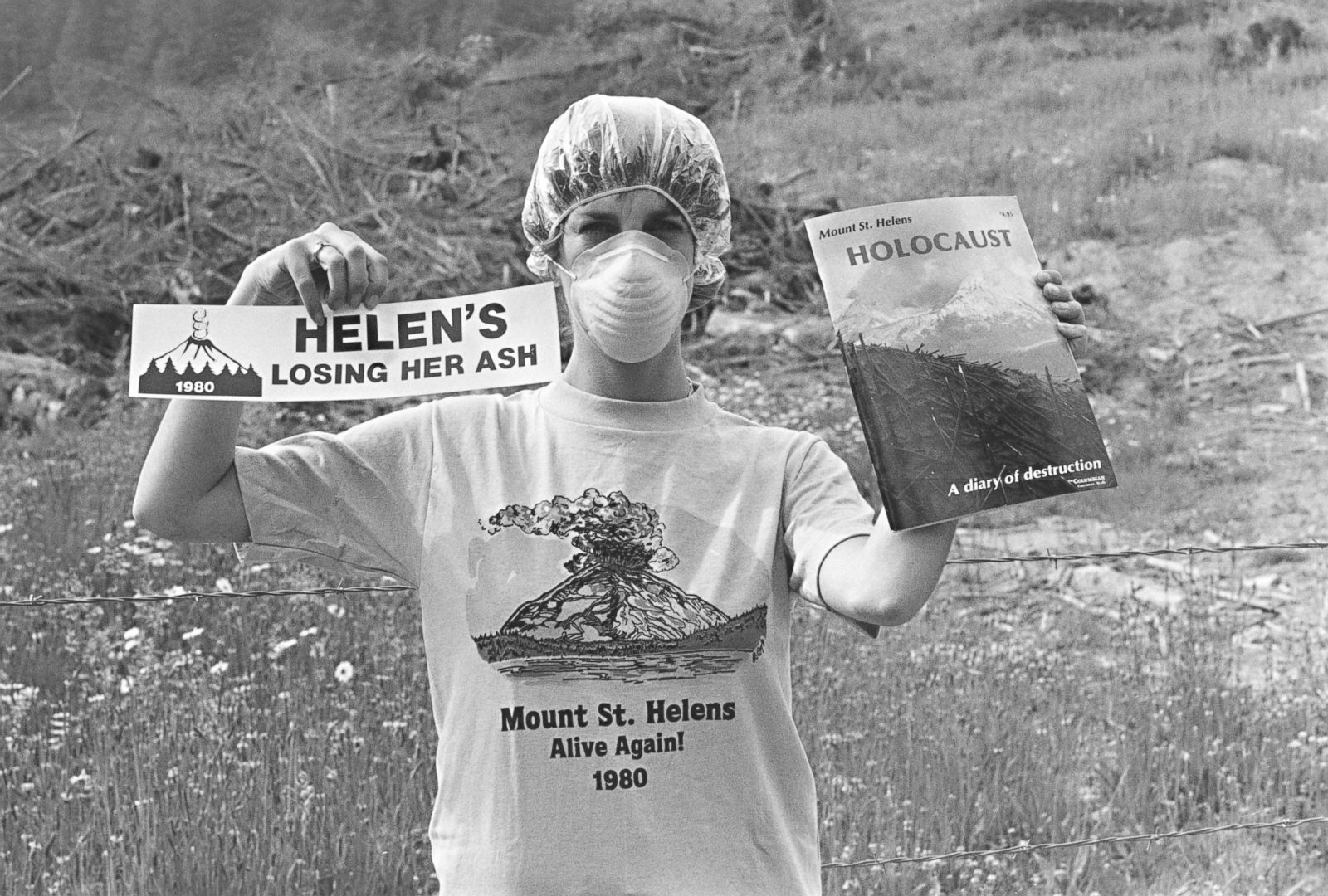
By noon, it was pitch black in Yakima, over 80 miles away. Streetlights turned on. People wore masks to breathe. The ash wasn't soft like wood ash; it was microscopic shards of glass and rock. It wrecked car engines, clogged filters, and grounded planes. Eventually, that plume circled the entire globe in about two weeks.
It's easy to forget that while the mountain was falling apart, it was also shooting a column of ash 15 miles into the atmosphere. For the people living in Eastern Washington and Idaho, Mount St Helens erupted in 1980 meant shoveling gray "snow" off their driveways for weeks. It was heavy, abrasive, and ruined everything it touched.
Surprising Resilience: Life Finds a Way
You’d think a blast that hot and fast would sterilize the earth forever. Scientists thought so too. They called the area a "moonscape."
But nature is stubborn.
Surprisingly, life started returning much faster than anyone predicted. A single northern pocket gopher survived the blast because it was underground. By tunneling through the ash, these gophers brought fresh soil to the surface and helped seeds germinate. Then there was the prairie lupine—a hardy little purple flower. It was the first plant to really take hold in the pumice plain. It fixed nitrogen into the nutrient-poor ash, basically prepping the ground for everything else to follow.
Today, if you visit the Mount St. Helens National Volcanic Monument, you’ll see a vibrant, albeit strange, ecosystem. The "Spirit Lake" is still covered in a floating log mat from the trees knocked down 46 years ago. It’s a massive, rotting, living laboratory.
Why We Still Study This Today
Before May 18, 1980, volcanology was a bit more theoretical in the United States. This event changed the game. It’s why we have the Cascades Volcano Observatory now. We learned that volcanoes don't always give you a polite warning by smoking from the top; sometimes they bulge and collapse.
It also taught us about "lateral blasts," a term that wasn't really at the forefront of hazard planning before this. Now, when we look at Mount Rainier or Mount Hood, we aren't just looking at the peaks. We're looking at the flanks. We're looking at the river valleys where lahars would inevitably flow.
Planning Your Visit: What to Actually Do
If you're heading out to see the aftermath, don't just go to a random gift shop.
- Johnston Ridge Observatory: This is the closest you can get to the crater without a hiking permit. It’s named after David Johnston, the geologist who famously radioed "Vancouver! Vancouver! This is it!" seconds before he was killed by the blast. The view of the "crater glacier"—the youngest glacier on Earth—is wild.
- Ape Cave: This is on the south side of the mountain. It wasn't destroyed by the 1980 blast because it was shielded. It’s a massive lava tube from an eruption nearly 2,000 years ago. It gives you a sense of how long this mountain has been active.
- The Hummocks Trail: This is a short, weird hike through the debris avalanche. You're basically walking over chunks of the old mountain that settled in the valley.
Practical Next Steps for the Curious
If you really want to understand the scale of what happened when Mount St Helens erupted in 1980, start by looking at the USGS (United States Geological Survey) photographic archives. The "before and after" shots of Spirit Lake are particularly haunting.
Check the current volcanic activity reports before you go. While the mountain is "quiet" right now, it had a period of dome-building and minor eruptions between 2004 and 2008. It is still very much an active volcano.
Finally, if you plan on climbing to the summit, remember that permits are required and they sell out months in advance. It's a grueling hike through loose ash—essentially like climbing a giant sand dune—but standing on the rim and looking into the horseshoe-shaped crater is a perspective you can't get anywhere else on the planet. Keep your eyes on the weather; the mountain makes its own systems, and things turn south fast at 8,000 feet.