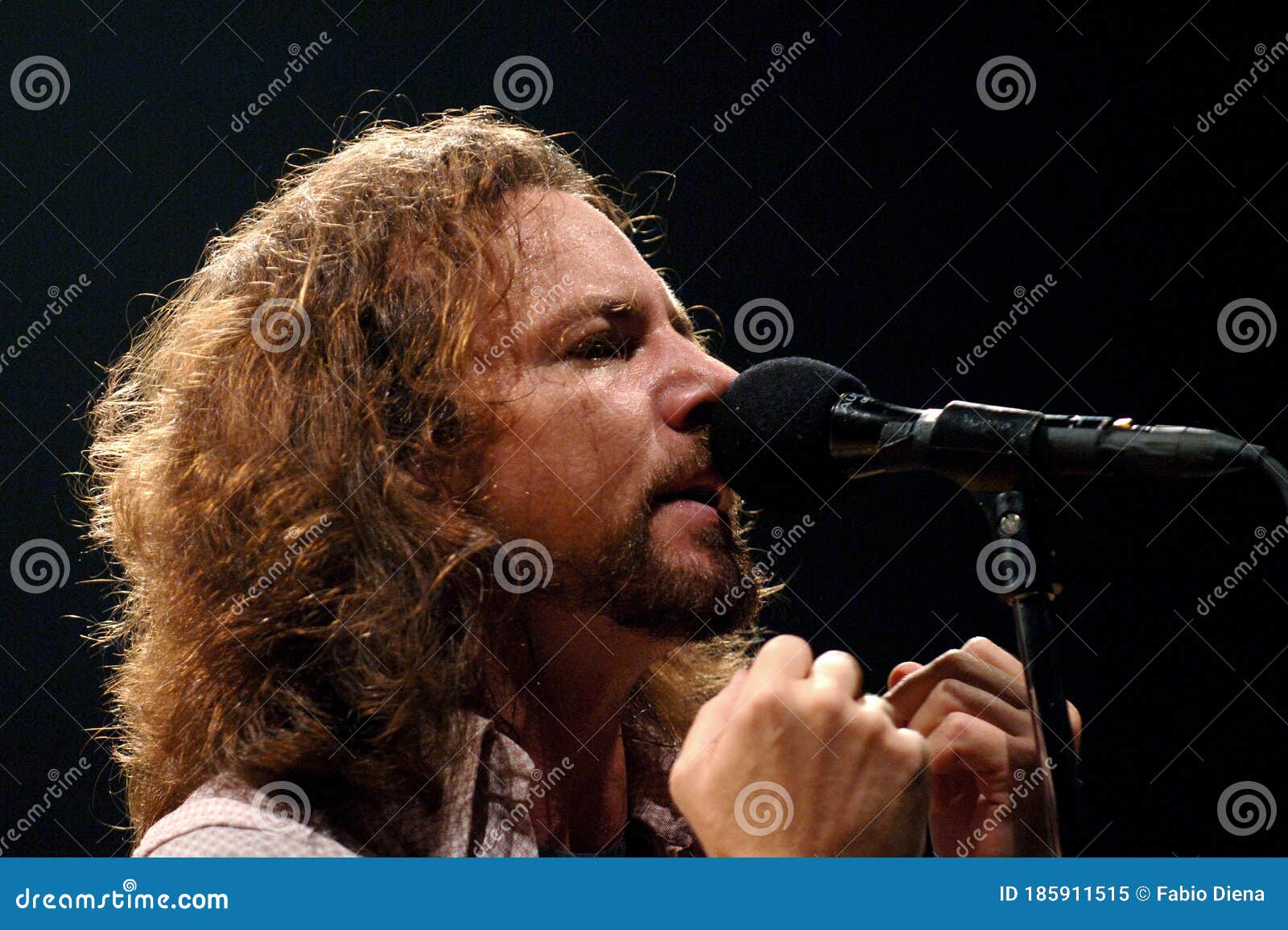
In the early nineties, Seattle was basically the center of the universe. If you weren't wearing flannel and looking moody, you were doing it wrong. But while everyone was focused on the "grunge" label, a guy named Eddie Vedder was busy rewriting the script on what a rock star actually looks like. It’s wild to think about now, but the Pearl Jam singer Eddie Vedder wasn't even from Seattle. He was a surfer from San Diego who happened to get a demo tape. That tape changed everything.
Most people see the stage diving and the intense stare and think they know the guy. They don't. He’s a contradiction. A shy kid who became a global icon. A millionaire who fought Ticketmaster to keep prices low for the fans. A man who survived the brutal fallout of the nineties while so many of his peers—Kurt Cobain, Layne Staley, Chris Cornell—didn't. He’s still here. That’s the thing that hits you when you see him live today. He’s the survivor.
The San Diego Roots and the Demo Tape That Sparked a Revolution
Before the stadiums, there was a gas station. Eddie worked the night shift. He’d surf all day and record vocals in his bedroom at night. When Jack Irons (the original drummer for the Red Hot Chili Peppers) handed him a demo from a group of guys in Seattle looking for a singer, Eddie didn't just listen. He went surfing, came back with the salt still in his hair, and recorded what would become "Alive," "Once," and "Footsteps." He called it the "Mamasan" trilogy. It was raw. It was painful. It was exactly what Stone Gossard and Jeff Ament needed to hear after the tragic death of their previous singer, Andrew Wood.
Pearl Jam singer Eddie Vedder arrived in Seattle as an outsider. That’s probably why he felt so relatable to the fans. He wasn't part of the "cool" inner circle initially; he was just a guy with a voice that sounded like it was being pulled from the bottom of a well.
When Ten dropped in 1991, the world shifted. Songs like "Jeremy" and "Black" weren't just hits; they were cultural touchstones. But the fame was suffocating. Vedder hated the spotlight. Honestly, he spent most of the mid-nineties trying to dismantle the very machine that made him famous. He refused to make music videos for a long time. He fought the corporate giants. He became the face of a generation that didn't want a face.
The Ticketmaster War: A Masterclass in Integrity
You’ve gotta respect the guts it took to take on Ticketmaster in 1994. While other bands were happy to take the check, Pearl Jam said no. They tried to tour without using the ticketing giant to keep service fees down for the fans. It was a mess. It was a logistical nightmare that almost broke the band. They had to play in random fields and non-traditional venues.
The Department of Justice eventually dropped the investigation, and Pearl Jam "lost" the battle in a literal sense. But they won the war of public opinion. It solidified the Pearl Jam singer Eddie Vedder as a man of principle. He wasn't just singing about angst; he was acting on it. He actually cared about the kid in the front row who couldn't afford a fifty-dollar ticket. In 2026, looking back at current concert prices, his crusade feels more prophetic than ever.
The Voice: More Than Just a "Grunge" Growl
Everyone tried to sound like him in 1996. Every post-grunge band on the radio had a singer doing that deep, vibrato-heavy "yarling" sound. It became a parody. But the original? There’s a texture there that nobody could actually replicate. It’s the way his voice breaks during "Black" or the frantic energy of "Lukinh."
He’s moved beyond the growl. If you listen to his solo work, like the Into the Wild soundtrack, you hear a folk singer. You hear a man who loves Pete Seeger and Neil Young. He’s played the ukulele on an entire album—literally titled Ukulele Songs. Who does that? A rock god who doesn't care about being a rock god anymore.
The Roskilde Tragedy and the Shift in Perspective
Life changed for the band on June 30, 2000. During their set at the Roskilde Festival in Denmark, nine people were crushed to death in the crowd. It’s a moment that would have ended most bands. For Vedder, it was a profound trauma. He almost walked away from music entirely.
If you look at the lyrics of their later albums, there’s a distinct shift. The focus moved from internal pain to external connection and safety. He started looking out for the crowd differently. If you go to a Pearl Jam show now, you'll see him stop the music the second someone looks like they're in trouble. He’s become a sort of guardian for his audience. It’s a level of responsibility you don't see often in the ego-driven world of rock and roll.
Why He Still Matters in a Digital Age
We live in a world of 15-second TikTok clips and manufactured personas. Eddie Vedder is the antithesis of that. He’s messy. He forgets lyrics. He drinks wine from the bottle on stage and tells long, rambling stories about his heroes. People don't go to see him because he's perfect. They go because he’s real.
The Pearl Jam singer Eddie Vedder has managed to age gracefully in a genre that usually demands you either die young or become a caricature of yourself. He’s a dad now. He’s an activist. He’s a guy who still gets excited about a good wave or a Cubs game. That groundedness is his secret weapon. He never let the "Rock Star" version of himself kill the "Human" version.
A Legacy Built on Connection, Not Just Hits
Let’s be real: Pearl Jam hasn't had a "Top 40" radio hit in decades. And they don't care. They have one of the most loyal fanbases in history because they’ve cultivated a community. The "Ten Club" isn't just a mailing list; it’s a lifestyle for people who found a home in Vedder’s lyrics.
- The Activism: From the West Memphis Three to environmental causes, he puts his money where his mouth is.
- The Collaborations: He’s played with everyone from The Who to Beyoncé. He’s a bridge between generations.
- The Solo Path: His Earthling project showed he can still write a catchy rock hook without the safety net of his main band.
- The Live Experience: No two setlists are ever the same. He treats every night like a unique conversation.
What You Can Learn from the Vedder Philosophy
If you’re looking for a takeaway from the career of the Pearl Jam singer Eddie Vedder, it’s not about how to sing in a low register. It’s about longevity. It’s about how to stay relevant without selling your soul.
First, protect your integrity. People can smell a fraud from a mile away. Vedder’s fans stayed because they knew he wasn't lying to them. Second, evolve. You can't be the angry 20-year-old forever. You have to find new things to care about, whether that's social justice, fatherhood, or just a different style of music. Finally, remember your roots. He still carries the spirit of that San Diego surfer, even when he's playing to 80,000 people at Hyde Park.
To truly understand his impact, stop reading and go listen to the live version of "Release." Listen to the way his voice interacts with the crowd. It’s not a performance; it’s an exorcism. That’s why he’s still here. That’s why he still matters.
Practical Next Steps for Fans and Creators:
- Study the Discography Beyond the Hits: Listen to No Code or Yield. These albums are where the band truly found their identity away from the "grunge" hype. It teaches you the value of experimentation.
- Prioritize the Audience: Whether you're a writer, a musician, or a business owner, Vedder’s career shows that a direct, honest relationship with your community is more valuable than any marketing campaign.
- Embrace the Pivot: Don't be afraid to change your "sound." Vedder’s transition from stadium rocker to folk-inspired soloist allowed him to keep his passion alive when the initial fire of the nineties burned out.
- Watch a Full Concert Film: Check out Let's Play Two or Immagine in Cornice. Seeing the physical toll and the emotional investment he puts into a three-hour set is the best way to understand his work ethic.
- Support Local Venues: Much of the Pearl Jam ethos is built on the importance of independent spaces. To honor that legacy, seek out and support the small clubs where the next generation of voices is currently developing.