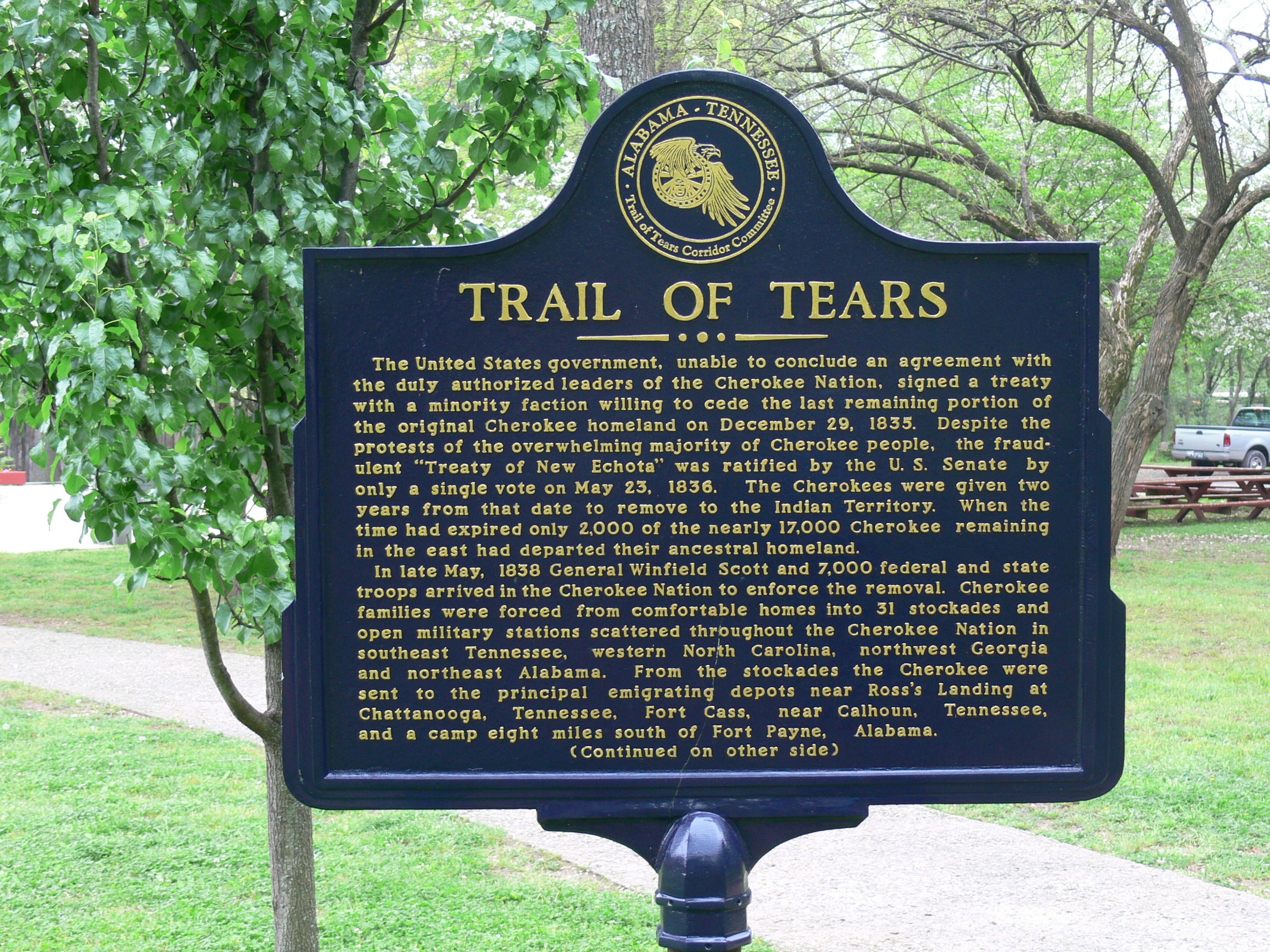
If you hop onto a search engine and type in pictures from the Trail of Tears, you’re going to see a lot of grainy, black-and-white images. You’ll see tired people in blankets. You’ll see wagons slumped in the mud. You’ll see heartbreak captured in silver nitrate.
But there’s a massive catch.
None of those are actually photos of the forced relocation of the Cherokee, Muscogee, Seminole, Chickasaw, or Choctaw nations. Not a single one.
History is messy like that. The Indian Removal Act was signed by Andrew Jackson in 1830. The primary "trails" happened between 1831 and 1850. Now, think about your camera history. Louis Daguerre didn't even reveal his daguerreotype process to the world until 1839. Even then, cameras were massive, finicky wooden boxes that required people to sit still for minutes at a time in a studio. They weren't exactly hauling them into the wilderness to document a forced march through the winter of 1838.
So, why does everyone think they’ve seen these photos? It’s because our brains crave a visual anchor for trauma. We want to see the faces of the 4,000 Cherokee who died. Since we can’t, we’ve spent a century filling the gap with paintings, sketches, and—most commonly—misidentified photos from forty years after the fact.
The Photography Timeline Problem
It’s kinda wild when you look at the dates. The most intense period of the Cherokee removal was 1838 and 1839. During those years, photography was literally a secret experiment happening in French laboratories. It hadn’t reached the American South. It certainly wasn't being used by the U.S. Army to record their own logistics, and the victims of the removal were stripped of almost everything, let alone cutting-edge European technology.
Most of the "historical" photos you see online labeled as the Trail of Tears are actually from the 1870s or 1880s. Many are images of the Navajo Long Walk (1864) or later displacements in the American West. By the time the camera became portable enough to go "into the field," the Trail of Tears was already a generation in the past.
Honestly, it’s a bit of a historical "Mandela Effect." We see a black-and-white photo of a Native American person looking sad near a wagon, and our modern brains immediately categorize it as the Trail of Tears. But if you look at the clothing—the hats, the specific beadwork patterns, or the presence of certain trade goods—you'll realize you're looking at a different era entirely.
What Real Visual Evidence Actually Exists?
If there are no pictures from the Trail of Tears, how do we know what it looked like? We have to rely on the "sketch artists" of the day. But even those are rarer than you’d think.
One of the most famous visual records we have isn't a photo, but the artwork of Robert Lindneux. You've seen it. It shows the Cherokee in heavy coats, some on horseback, some in wagons, stretched across a snowy landscape. It’s haunting. It’s iconic. It’s also from 1942.
Lindneux painted it over a hundred years after the event. He did his homework, sure. He talked to descendants and looked at historical records. But it’s an interpretation.
Then there are the eyewitness accounts that act as "word pictures." A traveler from Maine named "Native" wrote in a letter to the New York Observer in 1839 about seeing the Cherokee crossing the Mississippi. He described the "heavy, slow step" of the elderly and the "cry of the distressed." These letters provide a more accurate "image" than any mislabeled photo from 1890 ever could.
Why the Mislabeling Matters
You might think, "Who cares? The tragedy happened regardless of whether the photo is from 1838 or 1888."
But details matter. When we use the wrong images, we blur the distinct histories of different Indigenous nations. The Trail of Tears wasn't a single event; it was a series of forced migrations over decades. Each nation had a unique experience. By slapping a generic photo of a 1890s reservation onto a story about the 1830s removal, we’re basically saying all Native history is the same "sad blur." It’s not.
The Cherokee removal, specifically, involved a high level of literacy and documentation. They had their own newspaper, the Cherokee Phoenix. They had a constitution. They were fighting in the Supreme Court (Worcester v. Georgia). When we ignore the actual records they left behind in favor of fake photos, we lose the reality of who they were: a sophisticated, sovereign nation being legally and physically dismantled.
How to Spot a "Fake" Trail of Tears Photo
If you’re looking at an image and trying to figure out if it’s legitimate, here are a few red flags.
- The "Look" of the Image: If it looks like a clear photograph with a decent depth of field, it’s not from the 1830s.
- The Clothing: Look for Victorian-era coats or specific styles of Stetson-style hats. Those didn't exist in the 1830s Southeast.
- The Terrain: Many mislabeled photos show desert landscapes. The Trail of Tears mostly moved through the lush, wooded hills of Georgia, Tennessee, Kentucky, Illinois, and Missouri.
- The Source: If the image comes from the Library of Congress, check the "Created/Published" date. It’ll almost always say 1880-1910.
The Power of Modern Indigenous Art
Since we don't have pictures from the Trail of Tears, modern Indigenous artists have stepped up to reclaim the narrative. They aren't trying to trick anyone into thinking their work is from 1838. They’re using art to process intergenerational trauma.
Artists like Kay WalkingStick or Martha Berry (a Cherokee beadwork artist) use their mediums to reflect on the geography and the loss. Berry, for example, creates intricate beadwork that uses patterns from the removal era. It’s a way of "seeing" the history through the materials that actually existed at the time.
Researching the Real Story
To get the real picture, you have to go to the archives. The National Park Service (NPS) maintains the Trail of Tears National Historic Trail. They don't use fake photos. They use maps.
Maps are probably the most accurate "pictures" we have. When you see the northern route that crossed the Ohio and Mississippi rivers during one of the coldest winters on record, the scale of the disaster becomes clear. You see the "detachments"—groups of about 1,000 people each—led by figures like John Ross or Evan Jones.
We also have the "Claims" records. After the removal, many Cherokee filed claims for property lost. These documents describe their homes, their orchards, their livestock, and their furniture. These descriptions allow you to "see" the life they were forced to leave behind more vividly than a grainy photo ever could.
Moving Forward with Accurate History
Stop looking for a photograph that doesn't exist. Instead, look for the evidence that does. The "Trail of Tears" is burned into the soil of half a dozen states. You can still see the ruts in the ground in places like Mantle Rock, Kentucky, where the Cherokee waited for the ice on the Ohio River to clear.
Actionable Insights for History Enthusiasts:
- Check the Smithsonian: Use the National Museum of the American Indian (NMAI) digital archives. They are incredibly careful about dating their images.
- Visit the Actual Sites: Places like New Echota in Georgia or the Cherokee Heritage Center in Oklahoma offer visual reconstructions based on archeological evidence rather than artistic guesswork.
- Read the Primary Sources: Look up the "Memorial of the Cherokee Nation" from 1830. It’s a document, but the language is so vivid it creates a clearer image of their resolve than any camera could.
- Support Tribal Museums: The Choctaw Cultural Center and the Chickasaw Cultural Center have world-class exhibits that use modern technology to visualize their specific "trails" accurately.
The lack of photos doesn't make the history less real. If anything, the fact that this happened just at the dawn of the photographic age makes it more haunting. We arrived just too late to see it, which means we have to work twice as hard to remember it correctly. Don't let a mislabeled jpeg be the limit of your understanding.