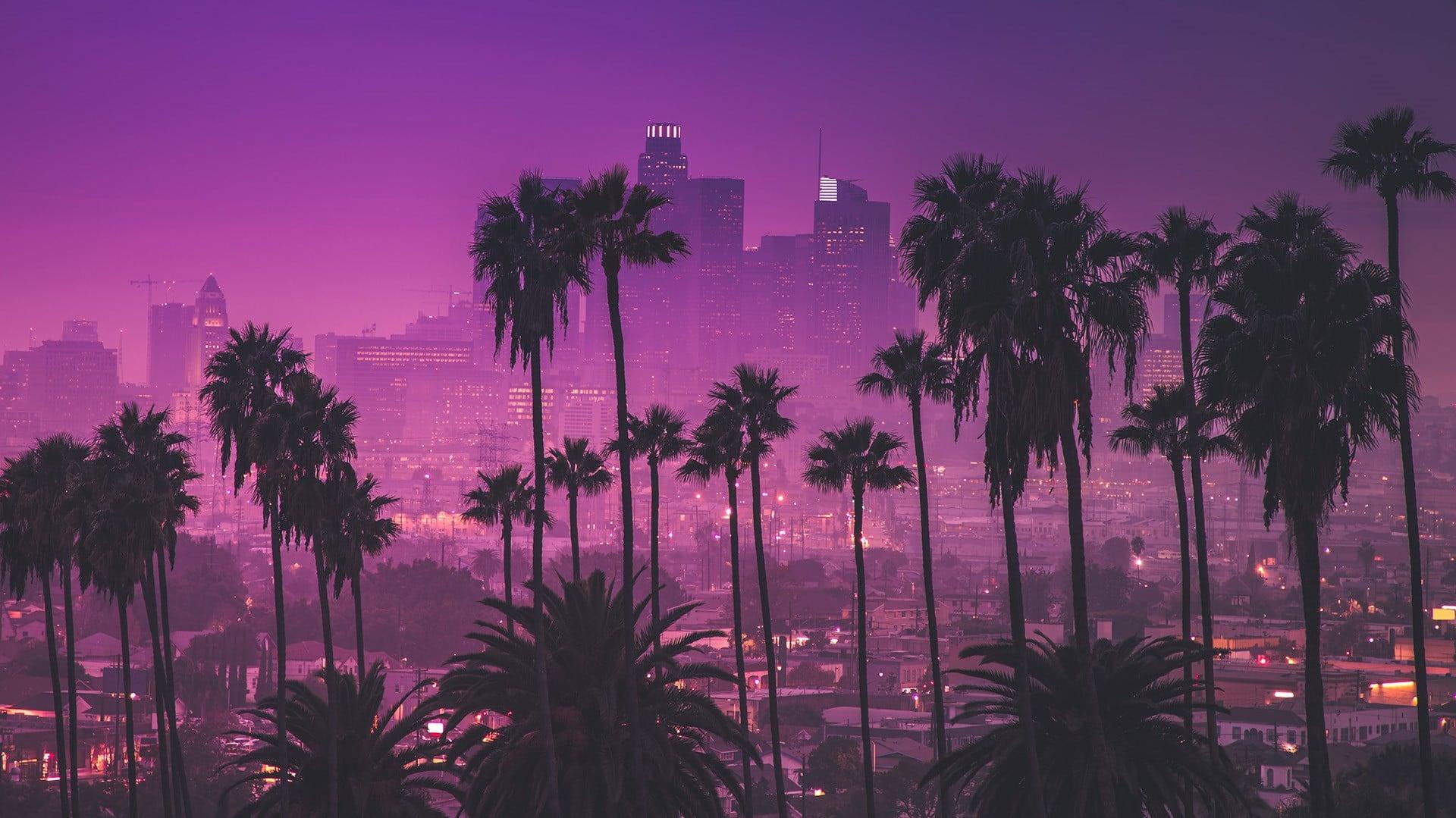
You're standing on the Santa Monica Pier, phone out, waiting for that perfect purple-to-orange gradient. You checked your weather app earlier. It said 5:14 PM. But now it’s 5:10 PM and the sun is already dipped behind a thick layer of marine layer "gray-on-gray" clouds. Or maybe you're in Echo Park, and the sun vanished behind a hill twenty minutes ago.
Getting the timing right for what time is sunset Los Angeles locals and tourists alike obsess over isn't just about a single number on a screen. It’s actually a complex dance of geography, atmospheric refraction, and the specific topography of the L.A. Basin.
Honestly, the "official" time is just the start.
The Math Behind the Golden Hour
In mid-January, specifically today, January 14, 2026, the sun is scheduled to set at approximately 5:04 PM PST. But that's the center of the solar disk hitting the horizon. If you want the real "Golden Hour"—that soft, diffused light that makes everyone look like a movie star—you need to be in position at least 45 minutes before that.
The earth’s tilt is the real driver here. During the winter solstice in December, L.A. sees its earliest sunset around 4:43 PM. By the time we hit the summer solstice in June, that gets pushed all the way back to nearly 8:08 PM. It’s a massive swing. You’ve basically got a four-hour window of variance depending on the month.
Physics plays a weird trick on us, too. Atmospheric refraction actually bends the light of the sun over the horizon. This means when you see the sun "touching" the Pacific Ocean, it has technically already set geometrically. You’re looking at a ghost. A light-mirage. The atmosphere is literally acting like a lens, lifting the image of the sun upward so you can enjoy it for an extra couple of minutes.
Why Your Neighborhood Changes Everything
Los Angeles isn't a flat pancake. This is the biggest mistake people make when looking up the sunset.
If you are in Malibu, you get the "true" horizon. The sun hits the water. It’s clean. But if you are in Silver Lake or the Hollywood Hills, the topography of the Santa Monica Mountains or even just a steep street can cut your daylight short by 15 to 30 minutes.
Take the Griffith Observatory. It’s the iconic spot. Because it sits at an elevation of 1,134 feet, you’re seeing "further" around the curve of the Earth than someone standing at the Port of Long Beach. However, because you’re looking over the city toward the Westside, the haze and smog—yes, the literal particulates in the air—actually change the color of the sunset.
Air quality matters. We used to think smog was the only reason L.A. had red sunsets. That’s a bit of a myth, or at least an oversimplification. While large particles from fires or heavy pollution can dull a sunset into a murky brown, smaller volcanic aerosols or clean salt air often produce those vivid, electric pinks and violets.
The Marine Layer Factor
You’ve probably heard of "June Gloom" or "May Gray."
In Los Angeles, the Pacific Ocean stays relatively cold while the land heats up. This creates a temperature inversion that traps moisture near the surface. You can check the "official" sunset time all you want, but if the marine layer has rolled in, the sun will effectively "set" into a wall of white mist at 3:00 PM and you’ll never see a glow.
Pro tip: If you see the marine layer hugging the coast, drive up. Head to Topanga Canyon or the Angeles National Forest. Getting above 1,500 feet often puts you "on top" of the clouds, where the sunset looks like a burning ocean of cotton candy. It’s a completely different world up there.
Best Places to Catch the Light
Don't just go to the beach. Everybody goes to the beach.
- Ascot Hills Park: This is the local secret for the best view of the Downtown L.A. skyline. The sun sets behind the skyscrapers, giving you a silhouette that looks like a movie poster.
- The Getty Center: The architecture here is designed to play with light. The travertine stone turns a deep honey gold right before the sun dips.
- Point Dume: If you want the dramatic cliffs and the feeling of being at the edge of the world, this is it.
- Hermosa Beach Pier: It’s less crowded than Santa Monica and gives you a straight shot west.
The Civil, Nautical, and Astronomical Phases
Twilight isn't just one thing. Scientists at the U.S. Naval Observatory break it down into three distinct stages, and if you're a photographer or just a romantic, you should care about the difference.
Civil Twilight starts the moment the sun sets and lasts until it is 6 degrees below the horizon. In L.A., this lasts about 25 to 30 minutes. This is when there’s still enough light to see objects clearly without streetlights.
Nautical Twilight is when the sun is 6 to 12 degrees below. The horizon becomes blurry. Sailors used to use this time to navigate via the stars while still seeing the "edge" of the sea.
Astronomical Twilight is the final stage. The sun is 12 to 18 degrees below. To the naked eye, it looks like night, but for astronomers, there’s still a tiny bit of solar interference in the sky. Once this ends, you have "True Night."
Planning Your Evening
If you are trying to coordinate a dinner or a photo shoot, don't just search for what time is sunset Los Angeles on the day of. Look at the "Civil Twilight" end time. That’s your hard cutoff for outdoor activities without artificial lighting.
Also, keep an eye on the humidity levels. Higher humidity usually means more vibrant scattering of light, leading to those deep oranges. Low humidity and high winds (like our Santa Ana winds) often result in very clear, but less "colorful" sunsets—though the visibility is insane, sometimes letting you see all the way to Catalina Island with startling clarity.
Actionable Steps for the Perfect View
To get the most out of an L.A. sunset, follow these specific steps:
- Check the "Air Quality Index" (AQI): A moderate AQI (50-100) often yields more dramatic colors than a "Perfect" AQI (0-20), as the light has more particles to bounce off of.
- Arrive 45 minutes early: The best colors usually happen during the "burn-off" just before the sun touches the horizon and during the "afterglow" about 15 minutes after it disappears.
- Account for "False Sunset": If you are in a valley or behind a mountain range (like in parts of Burbank or Pasadena), subtract 20 minutes from the official time.
- Use a live beach cam: Websites like Surfline offer live feeds of the coast. Check the Malibu or Zuma cams at 3:00 PM to see if the marine layer is going to ruin your plans.
- Look East: Sometimes the best part of an L.A. sunset isn't the sun itself, but the "Belt of Venus"—the pinkish glow on the eastern horizon and the shadow of the Earth rising behind the San Gabriel Mountains.
The "official" time is a suggestion. The geography is the reality. Plan for the terrain, watch the clouds, and always stay for the afterglow.