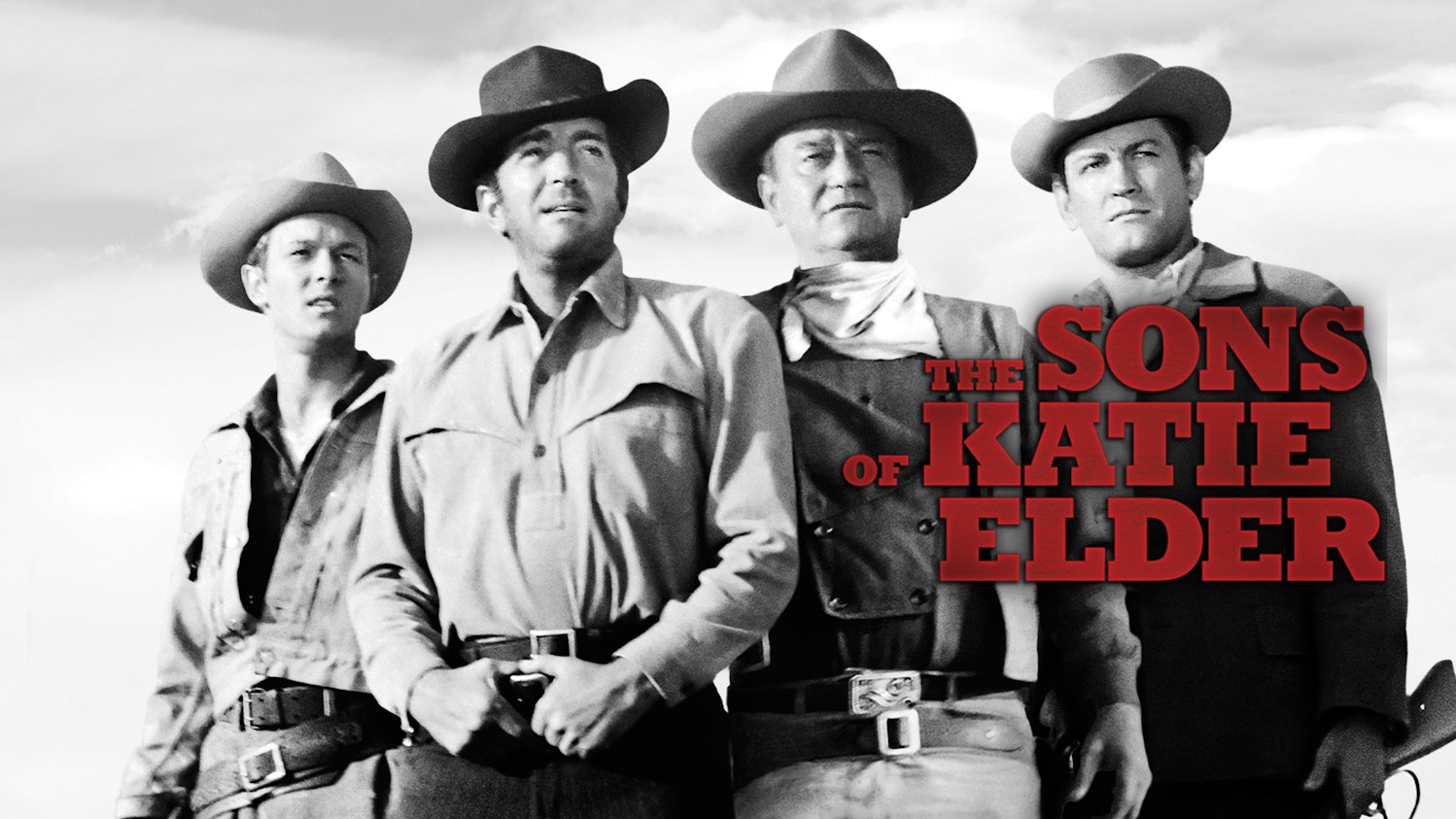
John Wayne was hurting. That’s the first thing you have to understand about the cast of the sons of Katie Elder. When production kicked off in 1965, the man everyone called "Duke" was barely a few months out of a massive surgery to remove his left lung and two ribs. He was sixty years old. He was coughing. He was struggling for breath in the thin air of Durango, Mexico. Yet, he was there, playing the eldest brother, John Elder, with a grit that wasn't just acting—it was survival.
The movie basically saved the Western genre during a decade when people were starting to get bored of white-hat-versus-black-hat tropes. It wasn't just a shoot-'em-up. It was a family drama wrapped in a holster. The chemistry between the four leads—John Wayne, Dean Martin, Earl Holliman, and Michael Anderson Jr.—is why we still talk about this film sixty years later. They felt like brothers. They fought like brothers. Honestly, the off-screen antics were probably just as chaotic as the plot itself.
The Big Four: Breaking Down the Cast of The Sons of Katie Elder
You’ve got John Wayne as the stoic, lethal eldest brother. Then you’ve got Dean Martin. Dino was at the height of his "Coolest Man on Earth" phase. Playing Tom Elder, the gambler and "black sheep" of the family, Martin brought a level of relaxed charisma that perfectly offset Wayne’s rigid intensity. It’s well-documented that Wayne and Martin became genuine friends during the shoot. Wayne respected Martin’s work ethic, which is saying something because Duke didn't suffer fools.
- John Wayne (John Elder): The gunfighter. This was his "comeback" after the cancer diagnosis. He insisted on doing many of his own stunts, including a scene where he jumps into a freezing river, just to prove to the industry that he wasn't finished.
- Dean Martin (Tom Elder): The middle brother with the deck of cards. Martin’s performance is underrated here; he plays the comedy well but nails the moments of desperation.
- Earl Holliman (Matt Elder): The quiet, failed businessman. Holliman was a veteran character actor who provided the emotional ballast the movie needed.
- Michael Anderson Jr. (Bud Elder): The kid. The one Katie wanted to be "something better" than a gunman. Anderson had to play the innocent, and he did it without being annoying, which is a rare feat for "the kid" in a 60s Western.
The plot is simple enough. The brothers return to Clearwater, Texas, for their mother’s funeral, only to find their father was murdered and their ranch was swindled away. But the cast of the sons of Katie Elder elevates this from a revenge flick to a study on legacy. They aren't "good" men. They are flawed, violent men trying to honor a woman who was much better than they were.
Henry Hathaway’s Vision and the Supporting Players
Director Henry Hathaway was a notorious grump. He was known for screaming at actors and demanding perfection. But he knew how to frame a shot. He didn't want the movie to look pretty; he wanted it to look dusty and lived-in. To achieve that, he filled the supporting cast with some of the most recognizable faces in the business.
James Gregory played Morgan Hastings, the primary antagonist. He’s oily and terrifying. You might recognize him from The Manchurian Candidate or later as Inspector Luger on Barney Miller. Then there’s George Kennedy as Curley, the hired muscle. This was before Kennedy won his Oscar for Cool Hand Luke, and he plays the villainous heavy with a terrifying physical presence.
And we can't forget Martha Hyer. She plays Mary Gordon, the neighbor who serves as the moral compass of the film. In a movie dominated by testosterone and gunpowder, Hyer had the thankless job of being the "voice of reason." She pulls it off by being tough rather than just being a damsel. She represents the civilizing influence that Katie Elder tried to instill in her boys.
Why the Chemistry Worked (And Why It Almost Didn't)
There’s this famous story from the set. Dean Martin, being Dean Martin, liked to keep things light. Wayne was more serious. During the scene where the brothers are arrested and shackled together, they actually had to spend hours physically tied to one another.
Imagine being chained to John Wayne for eight hours in the Mexican heat.
Holliman once mentioned in an interview that the camaraderie you see on screen was forged in that discomfort. They ate together, complained about Hathaway together, and drank together. That’s why the dialogue feels snappy. When Tom and John bicker, it doesn’t feel like a script. It feels like two guys who have known each other’s worst habits for thirty years.
The movie also benefited from a script that underwent several iterations. Originally, it was based on the true story of the Marlow brothers, but by the time it reached the screen, it was its own beast. The cast of the sons of Katie Elder had to navigate a tonal shift from the lighthearted "brotherly" moments at the beginning to the grim, high-stakes shootout at the bridge toward the end.
The Impact of the Film’s Success
When the movie hit theaters, it was a smash. It grossed over $13 million—a massive number for 1965. But more importantly, it solidified John Wayne’s status as an indestructible icon. If he could survive a lung removal and still beat up George Kennedy on screen, he was a god.
For Dean Martin, it proved he didn't need Jerry Lewis or even Frank Sinatra to be a box-office draw. He was a legitimate actor. The film also served as a bridge between the classic Westerns of the 1940s and the "grittier" revisionist Westerns that would come later with directors like Sam Peckinpah. It’s got the morality of the old guard but the violence and cynicism of the new.
Key Production Facts You Might Not Know
- Location: Filmed primarily in Durango, Mexico. The altitude was a serious health risk for Wayne.
- Music: Elmer Bernstein composed the score. It’s one of the most iconic Western themes ever written, right up there with The Magnificent Seven.
- The "Real" Katie: The story is loosely—and I mean loosely—inspired by the life of a woman named Katie Elder, but the cinematic version is pure Hollywood myth-making.
Legacy of the 1965 Cast
It's weird to think that almost everyone from that main cast is gone now. Michael Anderson Jr. is the last surviving "brother." When we look back at the cast of the sons of Katie Elder, we’re looking at the end of an era. This was one of the last "Big" Westerns before the genre started to fade into the background of Hollywood’s priority list.
The film deals with a theme that is still relevant: the weight of parental expectations. Katie Elder wanted her sons to be doctors, lawyers, and honest men. Instead, they were brawlers. The tragedy of the film isn't just the death of the parents; it’s the realization that the brothers will never be the men their mother hoped they would be. That’s heavy stuff for a "cowboy movie."
How to Appreciate the Film Today
If you’re going to rewatch it, don’t just look at the gunfights. Watch the eyes. Look at the way John Wayne looks at Bud (the youngest). There’s a paternal softness there that Wayne rarely showed in his earlier roles. He knew he was getting older. He knew the world was changing.
You can see the influence of this cast in modern shows like Yellowstone. The idea of the "tough patriarch" and the warring brothers is a direct descendant of the Elder family tree.
To truly understand the impact of this film, one should look at the career trajectories of the secondary cast. Many of them, like Dennis Hopper (who has a small, early role as Dave Hastings), went on to redefine cinema in the 70s. Seeing a young, nervous Hopper share a scene with a seasoned John Wayne is like watching two different eras of Hollywood collide in a single frame.
Actionable Insights for Western Fans:
- Watch for the Bridge Scene: Pay attention to the choreography of the bridge explosion. It was a massive practical effect for the time and remains one of the best-executed action sequences of the 60s.
- Compare the "Brothers": Watch The Sons of Katie Elder back-to-back with Rio Bravo. You’ll see how Wayne and Martin’s dynamic shifted from "Sheriff and Drunk" to "Equal Partners."
- Explore the Score: Listen to Elmer Bernstein’s soundtrack separately. Notice how he uses brass to signify "John Elder" and lighter strings for the memory of Katie.
- Check the Credits: Look for the "Wayne Regulars" in the background. Duke liked to hire his friends, and you’ll see many familiar faces from the Batjac production family if you look closely at the townspeople.