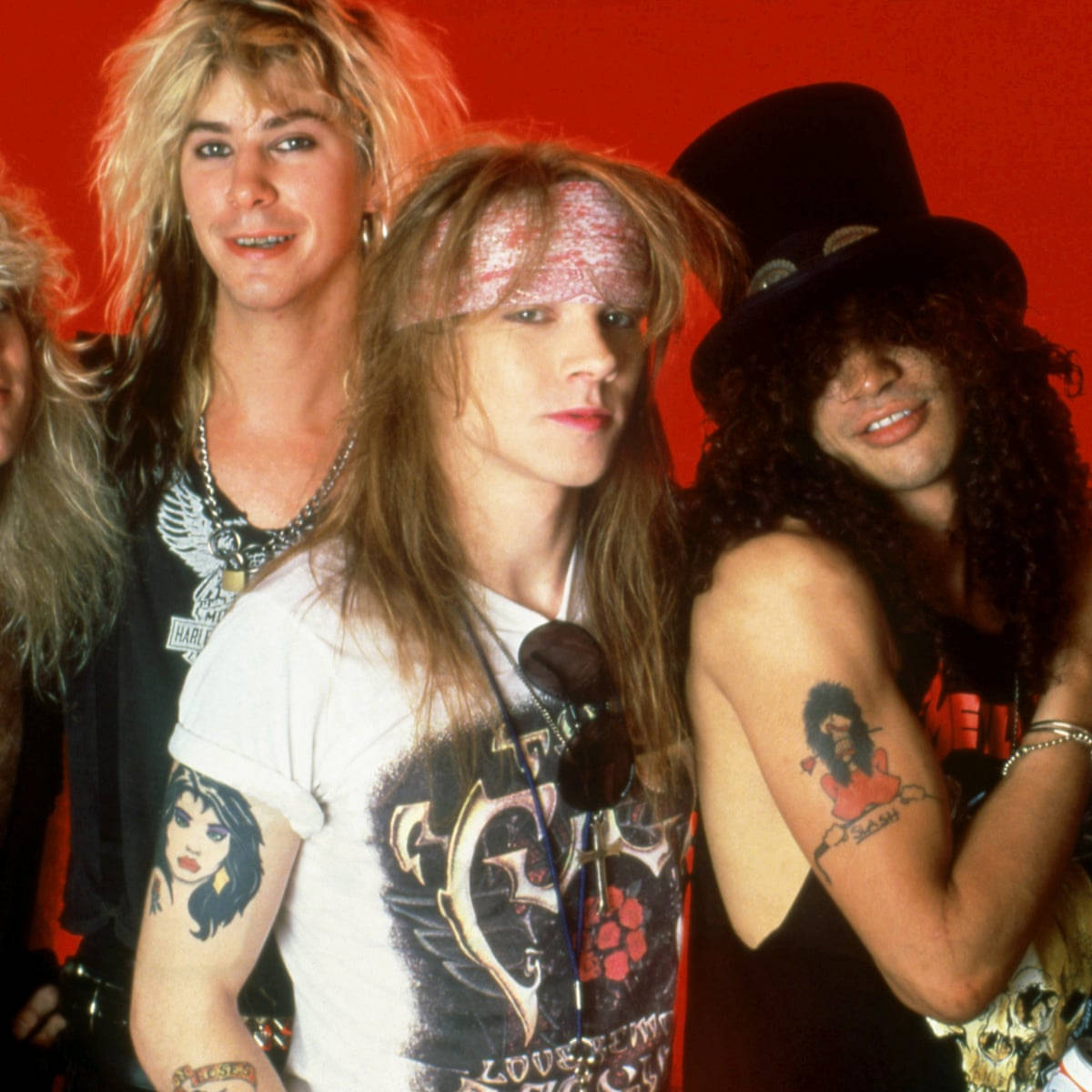
It was 1992. The biggest band in the world was arguably a tie, so they decided to share a stage. It sounded perfect on paper. Honestly, though? It was a disaster waiting to happen. The Guns N Roses Metallica co-headlining stadium tour is now the stuff of rock and roll legend, but not always for the reasons the promoters wanted. You had two behemoths at the absolute peak of their powers. Metallica was riding the massive wave of the Black Album, turning from thrash icons into global superstars. Meanwhile, Guns N' Roses was deep into the Use Your Illusion era, which was basically a traveling circus of ego, brilliance, and pure chaos.
They were different. Metallica was a machine. They showed up on time, played with surgical precision, and went home. Axl Rose and company? They were the exact opposite. They were unpredictable. Sometimes they were the greatest live act on the planet, and sometimes they didn't show up until two hours after the scheduled start time. This friction didn't just happen behind the scenes; it spilled out into the crowd, leading to one of the most infamous nights in music history.
The Night Montreal Burned
If you want to understand why people still talk about the Guns N Roses Metallica pairing thirty years later, you have to look at August 8, 1992. It’s the focal point. It’s the mess.
Metallica took the stage first at the Olympic Stadium. During "Fade to Black," James Hetfield stepped into a 12-foot pyrotechnic flame. He didn't know the tech had changed the setup. It was a mistake that could have been fatal. He suffered second and third-degree burns across his left side. The show stopped. Obviously. The crowd was stunned, waiting, worried about Hetfield's life.
Then came the wait.
The audience sat there for over two hours. They were already on edge. When Guns N' Roses finally took the stage, Axl Rose complained about the sound quality and his throat hurting. They played a shortened set and walked off. That was it. The stadium erupted, but not with cheers. A full-scale riot broke out. Windows were smashed. Fires were set. A police cruiser was overturned. It was a literal war zone because two of the biggest bands in the world couldn't—or wouldn't—keep the momentum going.
Why the Contrast Mattered
Lars Ulrich has talked about this a lot in interviews over the years. He basically said that watching the GNR camp was like watching a different species. Metallica was all about the "us against the world" gang mentality. They had a schedule. They had a rhythm.
Guns N' Roses was built on the volatile energy of Axl Rose. It’s what made them dangerous and exciting, sure, but on a massive stadium tour with hundreds of crew members and millions of dollars on the line, that volatility is a nightmare.
- Metallica: Professional, punctual, loud.
- GNR: Theatrical, late, legendary.
The crew members from that tour often tell stories of the "no-fly zones" backstage. There were literal walls built to keep the two camps separate. It wasn't just a difference in musical style; it was a fundamental clash of work ethics. You had the Bay Area thrashers who treated it like a job they loved, and the Hollywood rebels who treated it like a lifestyle they were surviving.
The Setlists That Defined an Era
Despite the drama, the music was undeniable. This wasn't just a concert; it was a cultural shift. Metallica was proving that "Enter Sandman" could fill a football stadium just as well as any pop song. They were stripping back the complexity of ...And Justice for All for something heavier and more direct.
Guns N' Roses, on the other hand, was getting more complex. They had horn sections. They had backup singers. They had Axl changing outfits every three songs.
Think about the sheer weight of the songs being played night after night. You'd get "Master of Puppets" and "One," followed by "Welcome to the Jungle" and "November Rain." It’s an embarrassment of riches. Fans who were there—the ones who didn't get caught in a riot—describe it as the loudest summer of their lives.
The Financials and the Fallout
The tour was a massive moneymaker, but the overhead was insane. Axl's late starts alone cost the tour thousands of dollars in city fines for breaking curfews. When you're paying a full stadium staff for an extra two hours of overtime every night, the profit margins start to look a little slim.
Slash mentioned in his autobiography that the tour felt like the beginning of the end for the classic GNR lineup. The scale was too big. The tension was too high. While Metallica used the tour to cement their status as the new kings of rock, Guns N' Roses seemed to be buckling under the weight of their own fame.
What We Get Wrong About the Rivalry
People love to frame this as a "Metallica vs. Guns N' Roses" thing. Like it was a competition. In reality, it was more like two planets with completely different atmospheres trying to share the same orbit.
Metallica actually respected GNR's music. They just couldn't wrap their heads around the lifestyle. Kirk Hammett has been quoted saying he enjoyed the shows, but the waiting was soul-crushing. On the flip side, the GNR guys often felt Metallica was too rigid. Too corporate.
It’s easy to look back and point fingers at Axl Rose for the Montreal riot or the late starts. But you have to remember the pressure. He was trying to be the greatest frontman in the world while his band was slowly vibrating apart. Izzy Stradlin was already gone. The "gang" feeling of the Appetite for Destruction days was replaced by a massive corporate machine.
The Legacy of the 1992 Tour
This tour was the last time rock music felt like the absolute center of the universe. Grunge was already happening. Nirvana’s Nevermind had already hit number one. The excess of the Guns N Roses Metallica tour was, in many ways, the final gasp of 80s-style rock stardom.
After this, things got smaller. More "authentic." Less pyro.
But for those few months in 1992, it was the biggest thing on earth. It showed that heavy metal could be mainstream and that hard rock could be grand theater. It also served as a cautionary tale for every promoter in history: never, ever put two bands with such different internal clocks on the same bill.
Actionable Takeaways for Rock History Fans
If you're looking to dive deeper into this specific era of music history, don't just stick to the hits. The real story is in the boots and the documentaries.
- Watch 'A Year and a Half in the Life of Metallica': This documentary gives you the best look at the band's mindset during the tour. You can see the exhaustion and the reaction to James getting burned.
- Track down the Montreal bootlegs: If you want to hear the tension in Axl's voice before he walked off stage, they are out there. It’s a fascinating, if uncomfortable, listen.
- Read Slash’s Self-Titled Autobiography: He gives a much more grounded, "from the trenches" perspective on why the GNR side of the tour felt so chaotic compared to Metallica's.
- Listen to the 'Live Shit: Binge & Purge' Box Set: While mostly recorded in Mexico City, it captures the exact energy Metallica brought to the stadiums during that 1992-1993 window.
The Guns N Roses Metallica tour wasn't just a series of concerts. It was a collision of two different philosophies on how to be a rock star. One side chose discipline and the long game; the other chose burning bright and burning out. We’re still feeling the heat from that fire today.
To truly understand the impact, you have to look at how both bands changed after '92. Metallica became a global touring institution that almost never misses a beat. Guns N' Roses spent the next two decades in a state of flux before finally reuniting (mostly) in 2016. The stadium tour was the fork in the road for both of them.
Next time you hear "Enter Sandman" or "Sweet Child O' Mine" on the radio, remember that for one summer, those two worlds shared a stage, and it nearly burned the whole thing down.
Check out the official tour merchandise archives or fan-run sites like GNRDaily to see the original tour itineraries—seeing the dates back-to-back really puts the grueling nature of that summer into perspective.